What if I told you that there was a simple way to improve mental health in the legal profession? If there was something small you could do, even for the opposing counsel you dislike, you’d do it, right? Maybe you’d grumble about how opposing counsel would never do something so selfless. But in the end, you’d try because you are a good person.
So what is this simple thing: stop shaming and blaming your opposing counsel. (Note: whenever a meditation teacher tells you something is “simple” they pick that word to distinguish it from “easy.”)
If you are anything like me, I bet you didn’t like reading that line at all. I’m the kind of person who doesn’t suffer fools kindly. I’m the kind of person who calls a spade a spade. When someone is wrong, in particular about the law or in a way that could hurt my client, I say it loud and clear.
At least, that’s how I used to think about it. But then I paid a little more attention to my emotions. I got some training in things like mindfulness and compassion. And I realized how devastating, terrible, and powerful the emotion shame can be.
Now, I have only rarely experienced yelling or truly calculated shaming from other lawyers in my fifteen years of practice. On this account, I have seen the profession become kinder and gentler over the years. But the thoughtless, everyday shaming? That doesn’t seem to be going anywhere.
Despite this, I don’t believe that most lawyers are bad people intent on harming each other. In fact, most of my experiences with other lawyers strongly suggest the opposite. However, we are a profession trained extensively in the art of stating positions, assigning blame, and making judgments.
If we don’t take care, that’s a combination that can lead to some pretty hurtful statements. As a lawyer who cares deeply about my work, I have to watch that my legal position does not become a moral crusade against my opponent. It’s also easy to let my judgments about a case morph into judgments about the character of my opposing counsel. Finally, litigation lends itself so well to pointing out the party at fault that the next logical step is to hurl blame at opposing counsel.
Here’s the problem, though, this feels terrible and it makes life miserable. For lawyers who spend huge amounts of our lives at work, using this kind of language sets us all up for a profession steeped in hostility and negativity. With so much negativity and other challenges in life, do we really need this at work too? No we don’t.
So, how can we start to watch out for shame and blame in our communications without sacrificing their impact? Here are a few tips that have helped me.
1. Focus on the issues.
The first thing you can do to avoid shaming and blaming opposing counsel is to get clear about the purpose of your communication. What is your client’s interest? What is your goal for the meeting or call or hearing? If you get clear about this, it will help you keep you focused on what matters in the case and avoid getting distracted by emotions that can arise like frustration or fear. So, before you take a position, get clear on what it is and how it serves your client.
2. Note the emotional tone in your communications.
This is a simple one, but it is often overlooked. When you are communicating, especially to someone who is difficult for you, pay attention to how you feel. If you are upset, the odds are that the tone is going to come through in your message. Take a moment to calm down. Notice how the other person looks and adjust.
If you are writing an email, stop and take a pause before you hit “send.” Get away from your keyboard if you are really upset. When you are calm, read back through the email and imagine someone else reading it. Revise as if you care about how that person feels.
I know that it can feel great to tell opposing counsel exactly how you feel about them. Remember that this feeling doesn’t last long nearly as long as the consequences of your words. Paying attention to the emotion that comes through with your language is not taking it easy on the other side, so much as it is about maintaining your power to live your values.
3. Avoid character judgments.
Sometimes character is in issue for lawyers, but only in very rare situations. Even when it is relevant to a case, the character of the opposing party may not be relevant to most of your discussions. Look out for judgments leaching out that may come in phrases like “should”, “ought” or adjectives about a person’s character.
Not only can you sometimes be wrong about people, but also the judgments almost always put people on the defensive and lead to fights. Whether you respect someone’s opinion or not, a harsh judgment never feels good and makes even the best of us feel like we have to defend our own honor.
So, as tempting at it may be, avoid scolding an attorney for not counseling their clients properly or telling them that they don’t understand the “kind of person” their client is. Even if it is true, it’s not helpful and is unlikely to lead to anything good for you or your client.
4. Don’t engage in emotional warfare.
It still boggles my mind, but I still encounter lawyers who think they can scare other lawyers into submission. My dear esteemed colleagues, this doesn’t work. Yelling doesn’t make you sound tough; it makes you sound out of control. Making comments that you have “never agreed” to certain contract language isn’t legal analysis. Instead, it’s a manipulative tactic meant to make to shame the other side to coerce them into accepting your language.
I know this is a hard lesson to learn but lawyers can’t control opposing counsel with force of will alone. State your position. Provide good reasons for it, be clear about your best alternative option, and many times you will get good results. If you try to use your emotions to push the other side around, though, you will wear yourself out, waste precious resources, and create hostile relationships with opposing counsel.
5. Avoid tit for tat.
The last rule is the most annoying but probably the most essential. If other lawyers break all the rules stated above, it doesn’t mean you should. By this, I don’t suggest that you should always ignore the behavior without reproach. Instead, I think it is within your rights to tell opposing counsel if their comments are irrelevant, unproductive, or even harmful. You can and should set boundaries and, in more extreme cases, enforce them with judicial intervention.
But you can do those things by refocusing on the relevant issues, noting and respecting the emotions involved, and avoiding the character attacks and judgments that lead to more fights. On the times when I have been ablet to do this, I have always felt empowered that I could stick to my values instead of letting my actions be dictated by someone else. Avoiding shame or blame as retaliation isn’t merely ignoring bad behavior, but is instead a conscious choice to use ethical and effective communication.
Like I said, these steps are simple but not easy. They are small adjustments you can make to your communications to do less harm. While I hope all lawyers consider the impact that their words may have on opposing counsel’s mental health, my experience has been that the less I blame and shame others the better I feel.
Just in case you don’t believe that I know how hard it can be to stay calm in response to opposing counsel’s nasty communications, I made a meditation just for the occasion. Check out this Guided Meditation to help you deal with a Nasty Email here or on Insight Timer:
Want to learn more about mindfulness and compassion? Check out my new book, A New Year’s Present, to learn about mindfulness from a heartwarming story. For a simple guide to creating a meditation practice of your own in 30 days, try How to Be a Badass Lawyer. And to share mindfulness with your little one, check out my new children’s book, Mommy Needs a Minute.
Like this post? Subscribe to the blog here or follow us on social media:
If I were to tell you that an Instagram influencer under 40 is a source of healing and wisdom for millions of people, you’d probably be skeptical. Instagram is the source of social comparison and makeup how-to videos. It’s not where people interested in meditation (like I am and you are) traditionally go to find wisdom.
Maybe some of that is true, but a big exception to this rule is Yung Pueblo (Diego Perez). Perez is a former community organizer and now famed writer who has published 3 books (with a fourth on the way) and has a following on Instagram exceeding two million.
Who Is Yung Pueblo?
He healed himself through meditation after struggling with emotional turmoil, conflict, and addiction. Then he started sharing the insights he gleaned from the practice in short poem-like verses on Instagram.
At the time, this was almost unheard of on Instagram. That platform is filled with glossy and well-manicured photos of celebrities and curated video content meant to sell. Against this backdrop, though, you can almost see how someone bold enough to share only a white background and simple text might stand out.
And stand out they did. Yung Pueblo – writing for “young people” – got the attention of millions of followers and ultimately secured a book deal. How did he garner this attention? With insights. Pure and simple.
What Yung Pueblo Can Teach You about Meditation
Insights? Maybe you’re reading this and you feel like it’s a let down but I assure you it’s not. I haven’t written much about insights on this blog because they are hard to describe. You can’t really meditate to get a particular insight. Instead, if you do vipassana (“insight”) meditation, you often just sit with very little structure and await the arrival of wisdom.
Or how about this understated little gem that is so easy to forget:
I am
at my
strongest
when
I am calm
Now that you’ve prepared a bit, try this one on for size:
self-love is doing the work
we need to be free
Boom.
Yung Pueblo Offers Fresh Simplicity
Again, these are hopefully obvious to most of us. But imagine you saw this on Instagram after scrolling for minutes to avoid thinking about some stressful situation at work. Then think how you would respond. In my imagination, I’d double tap and probably comment with something like a “100” emoji followed by a few flames.
Now imagine that you follow and have more of these statements showing up in your feed on a regular basis. Who couldn’t use reminders like these? Of course, we all can. Though meditation is a great way to see insights in our own lives, it never hurts to have some support from other wise people.
Meditation and Mindfulness Simplified
More recently, though, Yung Pueblo has shown he can offer even more than the modern-day equivalent of The Tao Te Ching. In Lighter, Yung Pueblo offers a work in full prose that is part memoir and part self-help. He shares his story as a first generation American after his parents emigrated from Ecuador. He details his struggle with addiction and how meditation helped him heal. And he even offers insights about how mindfulness can help us achieve positive social change and healing across the world.
This book was stylistically different than the others but it offered many of the same insights you’ll see in Yung Pueblo’s other works. In general, Yung Pueblo’s work doesn’t focus on meditation practice, but it gives you a clear idea about why you might want to meditate. He’s not a meditation teacher per se and doesn’t describe himself that way, but I wouldn’t call it a stretch to call him a teacher of insights.
Books from Yung Pueblo
This is not to say that I think you could read Yung Pueblo as a substitute for meditation practice. But his gentle reminders to let go of what you don’t need and pursue what really matters can sure help. Whether you meditate or not, Yung Pueblo offers a wisdom that is well beyond his years. For insights, healing, and calm clarity, find him on Instagram or check out his books:
Founder’s Note: I share these books because I sincerely enjoyed them. The links to the books are paid affiliate links through the Amazon Associates program.
Want to learn more about mindfulness and compassion? Check out my new book, A New Year’s Present, to learn about mindfulness from a heartwarming story. For a simple guide to creating a meditation practice of your own in 30 days, try How to Be a Badass Lawyer. And to share mindfulness with your little one, check out my new children’s book, Mommy Needs a Minute.
Like this post? Subscribe to the blog here or follow us on social media:
Founder’s Note: This is the blog’s 150th post and somehow I managed to publish it on World Mindfulness Day and have a new meditation to share too. Sometimes little ideas you have grow and sometimes things work out. Thanks to all of the blog’s readers, followers, contributors, and friends.
If you try meditation practice long enough, you are bound to encounter the practice of “noting.” With this practice, you pick a focal point (most commonly the breath though any focal point would do). Then when a distraction arises, you simply note it and and return to the focal point.
In many cases, the instruction to note generally means to briefly identify the distraction and let it go. For example, you might be instructed to categorize the experience as either a thought, emotion, sensation, sound, or mental scene. Though many of us may be familiar with this practice, we may not always know why it’s a good one to do. That’s what this blog post will address.
What Is Noting Practice?
Noting is a mindfulness practice. Like breath practice, noting will help you cultivate awareness and focus. It can also help you cultivate self-compassion as you manage the inevitable frustration that may arise with meditation. Noting, however, offers something more too.
With noting, the act of categorizing mental experiences may help you recognize mental experiences for what they are. For example, anyone who has meditated even once knows that it is not always easy to differentiate awareness of your breathing from thinking about your breathing.
Similarly, it can be hard to realize that you are experiencing a memory or fantasy about the future when you are in it. Once you can get outside of the mental images or thoughts, it can be easy to acknowledge their unreality or challenge their logic. But, when you are absorbed by the thought or scene or sensation or emotion, your ability to manage the situation is much harder.
Noting Practice Can Help You Manage Thoughts.
Noting practices the skill of recognizing when you are having an inner experience and zooming out from it. By looking for and categorizing inner experiences, you can note them without getting sucked into the details. In other words, noting helps you practice seeing a trap for your attention and stepping around it.
In this way, noting is different from self-analysis. It is not seeing a thought and applying more thought to ask why the thought pattern occurs. Instead, the practice is simply note it as a “thought” and then let it go. You avoid the juicy details of the story underlying the thought and you focus instead on the reality that the story is one totally of your mind’s own making.
This is not to say that all of your thoughts are bad or wrong. Thinking and thoughts aren’t inherently bad. The problem that many of us encounter, however, is that we aren’t usually aware when we are thinking. As such, we often assume that our thoughts are correct and helpful. When we look at thoughts critically, though, we are bound to see that some are based on incomplete information, affected by our emotions, or infused with biases.
Any lawyer reading this probably knows why this is an essential skill. We think so much in our jobs that it can be a challenge to stop thinking. If, like me, you have ever struggled with overthinking, learning to just see that you are thinking can be a benefit in and of itself.
The cool thing about attention, though, is that it can really only focus on one thing at a time. So, even if you are inundated with a slew of inner experiences at once, your mind can focus on just one. In daily life, this may be hard to see because things may happen so rapidly. With meditation, though, we can slow things down and take experiences one by one.
Am I saying that noting practice should become a mainstay of your practice? Probably not, but it is one to try because noting is a good skill to keep sharp. I recommend trying the practice out a few times to learn and implement the strategy. Once the skill of noting is developed, you can do it occasionally to keep the skill sharp.
Even if you don’t practice noting regularly, you can use the strategy of noting in your life to catch yourself in rumination or bring nonjudgmental awareness to physical sensations. This is where the benefits of noting practice can really pay off.
If you want to give noting practice a try, check out our new Noting Practice Guided Meditation here:
Want to learn more about mindfulness and compassion? Check out my new book, A New Year’s Present, to learn about mindfulness from a heartwarming story. For a simple guide to creating a meditation practice of your own in 30 days, try How to Be a Badass Lawyer. And to share mindfulness with your little one, check out my new children’s book, Mommy Needs a Minute.
Like this post? Subscribe to the blog here or follow us on social media:
Over the years, my networking approach has generally not been a sophisticated one. I join things and show up and eventually someone encourages me to get more involved. There have been times when I have declined opportunities, but I have said “sure” far more often.
I’ll admit that I have sometimes found myself exasperated and been forced to scale back. In general, though, this openness has served me very well.To my great satisfaction, this pattern repeated itself again with the Mindfulness in Law Society.
How I Found the Mindfulness in Law Society
I have been a member of this group for several years, but have not been heavily involved until recently. A few years ago, a fellow lawyer reached out and asked me to lead a meditation for a young lawyers program for the American Bar Association. As it turns out, that lawyer, Christina Sava, is also involved with MILS.
She reached out again to see if I’d be interested in joining the roster of teachers for the twice weekly guided meditations that MILS offers. This was an easy “sure” but I added something more.
In addition, people from across and outside of the United States participate in the virtual sits. I have stressed the value of meditation in a group before and I will say it again: it helps.
Virtual groups are not nearly the same as in-person groups but they are far better than no group at all. I will be guiding on the 2nd Monday at 3 PM EST and the 3rd Wednesday at 5 PM EST, so come and hang out.
A Mindfulness Group for Lawyers
And, if you are in the Cincinnati area, interested in mindfulness, and in the legal profession, please reach out via email or on LinkedIn if you would like to help form and launch the chapter. You don’t have to be a meditation teacher or even an experienced meditator. Someone who cares about mental health in the legal profession is all we need.
I know we are all too busy. I also know that it’s hard to show up with a group of people you don’t know. To find a meditation community, though, that’s often the only choice. As hard as it can be to work up the courage, it’s not a bad thing.
Want to learn more about mindfulness and compassion? Check out my new book, A New Year’s Present, to learn about mindfulness from a heartwarming story. For a simple guide to creating a meditation practice of your own in 30 days, try How to Be a Badass Lawyer. And to share mindfulness with your little one, check out my new children’s book, Mommy Needs a Minute.
Like this post? Subscribe to the blog here or follow us on social media:
The single best thing I did for my mental health this summer was not meditation. Instead, it was getting outside. By no means am I saying that I stopped meditating. But at this point the practice for me is part of my routine. So, the best new thing I did this summer was to make the area outside of my home more hospitable. I got rid of some old stuff and in the new spaces deposited a tent with some rocking chairs and a covered swing.
This was a game changer for me because my backyard is in full sun. Before my upgrades, there was almost no shade. This made it difficult to enjoy being outside for any period of time. My new shady spots and comfy seats, however, have drastically changed things for me. Now, I can read, listen to a webinar, or even work outside. And you can bet that I have also enjoyed meditating outside, too.
Getting Outside Is Mental Health Magic
Let’s face it. Being outside is magical. The sounds of nature can quickly calm and relax us. The outdoors can give us a break from our screens or offer a chance for movement. In fact, I have it on good authority that getting outside is part of what many lawyers require for an “ideal day.”
Last year, when I was preparing to write my first book I interviewed more than 30 lawyers to discuss their experience with stress. I thought these interviews would be hard but they were actually quiet inspirational.
My favorite part was when I got to ask them what their ideal day looked like in order to provide some context around all the questions about stress. Nearly every answer included an outdoor activity, whether it was playing golf, taking a walk, or gardening.
Research Shows the Mental Health Benefits of Getting Outside
These anecdotal reports are also consistent with myriad research studies that show the health benefits of getting outside. Studies have shown that being in nature can reduce stress, improve cognitive functioning, and increase happiness. What’s more, you don’t have to take a trek through the Grand Canyon to tap into the benefits. Instead, two hours–even if spread out over the course of a week–is enough to improve one’s perceived well-being.
While it may not be terribly surprising that pleasant activities outside can lift our spirits, I have experienced a similar boost from unpleasant outdoor activities. It has taken me a few years to get there, but I am now officially a fan of trimming my hedges. My house is surrounded by landscaping on all sides, including two literal walls of shrubs.
Even Doing Chores Outside Can Offer Mental Health Benefits
My husband and I are not handy people so we had outsourced this for many years. While social distancing during the pandemic, I got ambitious bored and tried it myself. I would go out on a nice day and trim for about an hour or two and fill up a dumpster with clippings. I always came in tired and messy but seeing the impact of my work felt good.
And, can I be honest? Yard work can sometimes be cathartic. One day, I was in a terrible mood and very much in my head after getting an email from a colleague about a project.
I stewed in that feeling for a while and then looked out the window. I saw how nice it was, recalled the trimming I had yet to do, and put my energy to good use. I came back inside in a much better mood to find that the email “crisis” was really no big deal.
Many of Us Need Multiple Strategies to Support Our Mental Health
I teach about meditation a lot. There is certainly power in looking inward and getting to know ourselves more deeply. Getting outside, however, lets us expand outward beyond our normal routines and environment. Humans need both introspection and expansion to live a happy life. We need healing and rest, just as much as we need space to grow and move.
The other day my mom, who has never meditated before, asked me how she could get started with mindfulness. I offered some resources and tips, but the first thing I told her to do was to leave her phone and go sit outside. My mom has a nice covered porch with a swing and it’s filled with the lush plants she lovingly tends. I told her to sit for a few minutes every day and to notice how it felt.
If You Need a Quick Mental Health Boost, Get Outside
Whether you are totally new to mindfulness or are an experienced meditator, this is pretty good advice. To boost your mood, get some exercise, and expand your mind, get outside. You can run, or swing, or clean up your yard, or just sit still and listen to the crickets. Just get outside and notice how it feels. It may just be one of the best things you can do for your mental health.
This post encourages you to get outside for the real thing, but if that’s not an option check out this guided meditation:
Want to learn more about mindfulness and compassion? Check out my new book, A New Year’s Present, to learn about mindfulness from a heartwarming story. For a simple guide to creating a meditation practice of your own in 30 days, try How to Be a Badass Lawyer. And to share mindfulness with your little one, check out my new children’s book, Mommy Needs a Minute.
Like this post? Subscribe to the blog here or follow us on social media:
This may be the only time you see a post about organization and clutter on this blog. I am not a neat freak and never have been. But with two kids in school, a busy law practice, and all the demands of life, I can certainly see the value in taking the time to get organized in life. This summer, I have been thinking a lot about this because we did some cleaning up around my own house. It made a big difference because getting rid of old, unused items helps make space to live the life I wanted.
At the same time, my friend Monica Jenkins published her book, The Cost of Clutter. I met Monica through a book writing program that I did last year. Since she is also interested in attending law school, I thought it made sense to connect with her here for an interview. If you want to learn more about ways to manage clutter or get started with better organization, check out the video interview below. If video is not your thing, scroll down for the full transcript.
Interview Transcript
Claire:
Hi, everyone. This is Claire Parsons, the founder of the Brilliant Legal Mind blog and author of How to Be a Badass Lawyer. I am here today with my friend Monica, who actually went through a book coaching program with me last year which for any lawyers watching this is a little bit like one year of law school, except our coach was, I think, a lot nicer than a lot of law professors are. Monica actually published her book shortly after I published mine and I have it here. It’s called the cost of clutter. And it’s about learning how to get a little bit more organized in your house and your life and your work, so I wanted to have Monica here to talk about her book and herself.
I want to introduce Monica first before I get some questions for but Monica Jenkins Jenkins is a speaker and bestselling author of the cost of clutter a billion dollar vision for culture, communities and companies. She helps executive leaders and professionals have more peace of mind clarity and direction at work and at home. Monica has trained leadership teams and global corporations, faith based organizations and diverse communities. She draws on my personal experiences with racism being let go from a job and as an overwhelmed mother and wife in her book and she offers a step by step guide to personal and professional transformation that begins with cleaning out your closets. So I’m sure a lot of us here today can definitely benefit from that. So, Monica, do you want to tell me a little bit more about yourself that your bio doesn’t cover?
Monica:
Sure sure. Thank you for having me too. Well, one of the things that probably doesn’t say is that I am a Jesus freak. Yes, I am. Yes, I’m a wife. I have an amazing husband. I’m a mother of two beautiful children. And something that I find interesting about my life is I was born in Detroit, Michigan. I grew up on an island and more states. I attended probably seven different schools before I graduated high school. I do have a bachelor’s degree from University of Connecticut – Go Huskies.
As far as my work career has spanned from banking, higher education, social services. And lastly before I went out on my own to do all this work, legal work in a corporate legal department. So with something else I would add to is that I’m an author, as you just said, which is you trimming out of an author, I am also a coach and I, I kind of defined my coaching as clarity, clarity, lifestyle coaching, and so we can talk about that a little more as we dive into some of the questions but that’s kind of my coaching model and I’m also the managing partner of our family home business called CMON enterprises and that CMON enterprises LLC. And the book is one of our first babies born from that business. And my coaching services are aligned with that as well.
Claire:
And I thought at some point, Monica that there was some interest in adding on a J.D. to that long list of accomplishments and maybe going to law school?
Monica:
Yes, yes, you are definitely accurate in that and I still plan to make that happen for myself. What I found with the book and everything that’s come from the book, the business, and having had an opportunity to kind of share more about it in my coaching. I feel like I’m kind of trying to balance when that start with that start will look like. So yes, I am studying for LSAT.
I am looking to possibly apply for 2024. And so that’s that’s still on the table. Because I’m very passionate about some things that really kind of still everything I do aligns with our book and so something that I’m passionate about my law career can hopefully support is housing matters. It happened concede standpoint and also from a federal kind of standpoint, federal Fair Housing law, things of that nature. So yeah, you got me on that one.
Claire:
Well, I understand the importance of picking your projects and having to take your time when you’re managing a lot of things. I definitely get that myself. I can say from my law practice, that some of the housing issues from an advocacy standpoint for individuals and I work with some local government entities that have dealt with that as well. It’s just really important because there’s so much need right now. Affordable housing is such an issue. So I wish you well on that.
I do want to talk about the book though. You know? I kind of want to start out with this blog, my blog is really about lawyer mental health and mindfulness and well-being. I can definitely see how clutter and, having read your book, I can see how that ties in with it. But, I think you’ll explain it better. So can you bridge the gap for people about what clutter has to do with mental health?
Monica:
I absolutely can’t thank you for asking that question. So one of the things I would start with is what comes to mind when you hear the word clutter? So through my research and talking with in conversations, so we started conversations, a lot of people are overwhelmed, they’re stressed and they just feel stuck when it comes to clutter. The way in which we define it is often very different. So it’s always in terms of a physical space. Like my closet is messy. My closet is unorganized. My shoes, everything isn’t organized, or a particular space that we utilize in our home. It’s messy, it’s junky didn’t have time for that.
And so how I think the two lines that people are finding out and definitely I found out that mental clutter alliance with your physical spaces, so you can be you know, your spaces. In other words, we see the space, right? We see the space, we see their stuff all around, but what’s going on in our on our minds, our lives are full. And I talked about this a little in the book about busyness, lawyers in particular, just because I’ve had the opportunity to work with some high profile attorneys and see how they function throughout the day.
And also just as I explored the profession of myself, and having worked also in a law school, I have been able to see kind of firsthand the type of I don’t like use the word business without their full lives, you know, what’s the focus that’s required? Having a certain mental capacity to do a lot of reading and writing. And so what I would say is that letter is really about like, one of the first things is how we use our time and it starts with time, like what’s going on in our lives. How are we valuing our time? So I would I would start with that.
Claire:
So you mentioned that you would work with lawyers, and you mentioned that you have in the past even worked with lawyers in your actual work. You kind of alluded to this a little bit, but if you can dig into it a little bit more. What makes it so hard for lawyers, what makes clutter is such a hard thing for lawyers. In particular, like what gets in the way and no pun intended with that question, but what’s our what’s our big issue, maybe extending from the idea of lack of time.
Monica:
Lack of time is definitely a big one. But also I’ll use a case study to kind of give an example of a woman who was a lawyer who battled cancer, and she survived and reached out to me and was getting her life back. But it starts in our home. So are lawyers maybe second, maybe third, because if you’re a mother or a father or you know a wife or husband, those kinds of things do matter in how we show up every day.
And so in talking with this woman and going on a journey with her to try to claim her house back so that she can then begin to get back to work. Our model was going to be that she was gonna be working from home as she just you know, was starting out and she were doing major cities so she’s working from home, but also it didn’t really start with the workspace. It started with like her personal space. What’s the priority? What is the priority? What was the priority I had to ask her as he walked around her home and I saw that it was a home that was lived in that really represented there was she was built, you know, it became her hospital almost.
So I think that recognizing that although you have such a humongous responsibility that we need and appreciate. We also at the end of the day are human beings who get colds, we get sick, like things that happen. We get fired. And some other things you know, that happen in our lives and sometimes one part of our life overtakes another and we don’t have time for the other and I will say that not only for lawyers but the time issue because one of the biggest straightening up a certain room.
At the end of the day, no one’s going to turn right back to that after the week is over. So my book is also about lifestyle. You as a lawyer are creating a lifestyle with mindfulness. And so it’s not going to just be for the summer when you’re on vacation or on your breaks are supposed to be better your lifestyle. And that is exactly what the crux of clutter is about. That’s exactly what clarity, clarity coaching life coaching is about. It’s about creating a lifestyle, that you live with less clutter so that you’re able to have some direction and have a little peace of mind.
Claire:
Monica, I think you already answered my next question, which was going to be why is it worth it? I think you’ve already spoken to that a little bit. But I wonder about like the initial difficulties of deciding to invest the time or maybe even the resources to have someone come and help you and I have a personal story with this.
This summer I started getting some of my backyard area a little bit more cleared out and getting some new things. We don’t have any shade in the back and I really love like swings and rocking chairs. So I kind of did that this summer. But the first thing I had to do was get rid of an old hot tub that hasn’t been working for years and has just been sitting there and like I actually had to hire someone to come in and get it cuz it’s so having a big and it took me forever to do that. And finally, the thing that ultimately got me there was when I started to imagine what I’m going to do with that space if the hot tub was gone, but I had to like go through this weird long process you know of doing that and it was kind of honestly a little silly.
How does how does someone like you come in and help someone you know get past that initial block so they don’t waste years? You know, with a dingy space or you know, having too much stuff around it gets in the way of living their lives.
Monica:
I think we start small. I think there have been people that I’ve met with examples and case studies actually even in the book, people that I’ve met with who were overwhelmed with that place that they saw like you like Oh, I’m going to use this for this or that. And one of the things that I said was what you said, “What do you imagine for that to be?” That’s one of the that’s one of the one of the steps in the book, like what do you imagine that to be?
You know, like someone who’s overwhelmed like what are you thinking, putting it on paper. What are you thinking about what you want was the priority for that space? And so there’s one particular client I had that I like to call a 911 call or 911 text or DM, was that okay? You’re in this space right now and you’re like, what is it supposed to be? Alright, so you’re not going to do that today, right? We’re going to decide like, what’s going to be the timeline for this like I would like it done in like 90 days.
Okay, so then you need to map out what 90 days will look like. And you know, I often times people want to just start going with the stuff and I always say don’t go with the stuff just sit with the back like I know myself as myself. In this case. I have a basement there’s still some areas that I need to tackle and it has been actually a two year project. Okay, because we’ve set it you know, there’s people there’s this empty nesters now, we have adult children and out so it’s a two year project. Why? Because in talking to my husband who would be the client or in talking to this other person who’s on the phone, like you have to determine that space that you want is specifically for you. But, you have all this stuff in the basement alongside three other people for the people, their adult kids who doubt like similar to me that was the case although kids didn’t data left me tonight.
So it’s like five weeks first and we start small. We write out what we want that area space to look like. And then we go from there. We have to have a conversation about journey because oftentimes we start getting rid of things and letting go. It brings up a lot of that stuff that stops the project, because we haven’t thought about it most people well. I would say most people know what’s in spaces that they need to reimagine, organize so there’s that thought of like, okay, well, Johnny and Susan stuff is here. And we had a conversation about this particular call. So when are you going to let Johnny and Susie come and get their things? Or is there like some creative zone for Johnny instances things so you don’t go so crazy about it?
Yeah, it’s always about starting small. It’s always about like, you know, for me writing things down. You know, taking those things out. And I’ve actually tack them on to spaces in the house like because I need to remind myself that this is something we’re not gonna like go another year. And metaphorically and like for real. So yeah, I think that’s that’s kind of important, starting small.
And I always read inhale, exhale, because anytime we’re going to tackle something that we know that is going to just take you into stress. I know I’ve been through that. That’s why I say that. So it’s like inhale, exhale, breathe. Let’s do exercises that three times before I tackle it, and after I finish it because an anxiousness comes, when you see how inspired you are to kind of do this and then you can just want to everything all quick and fast. And that’s not always the way it’s slow and steady, I believe into the race in this process, but it’s also how much time someone has. And so that’s part of kind of like my assessment process when I talk to people so I kind of getting an idea of what’s your priority? How much time do you want to do this? And you know, asking for help was the first first part so I always said in the book lock, ask for help you can do everything. So help me help.
Claire:
I agree with a whole lot of that and I of course love that you’re using breathing to help. One of the things that I often do when I present on mindfulness and compassionate whatever for lawyers is I kind of know that probably most of the audience is not going to go start a meditation practice just because they heard me speak. So what I tried to do is have this kind of blend of here’s how you can meditate. And by the way, here’s also these few little practices that maybe these micro practices that you can sort of bring into your day, maybe test what I’m trying to tell you and you can experience it yourself, but maybe not it just helps you and it just a little thing.
When it comes to clutter, Monica, maybe there’s some people out there who aren’t ready to go clean out their basement or read your book or whatever. Can you give me a few practices or little things that people can do to help manage their clutter where maybe they can they can try it out for themselves and say hey, that Monica is really smart. Maybe I should go buy her book. Can you give me some of those kind of things?
Monica:
Sure. I like how you said “micro.” So I would say micro-organizing and I’ll go back to starting small. What might this mean looking in your purse or backpack or a bag? I think it’s carry with you every day. Or it might mean looking at the well, I’ll say multipurpose drawer, formerly known as the junk drawer. Okay. And that’s in the book. I tell a little story about that. And so I would start there. When I got fired from a job many years ago, I thought the world was watching and I never knew anyone who got fired before it was like something that I felt like it was really taboo. I felt like I felt shame. I felt shame. Shame is big enough.
And so as I began to kind of create this work that I am now presenting to both now through the book, I started with my verse I was depressed. I was not going to inhale, exhale briefing. I am a person of faith but I felt like it failed me. And so I’m just like, and what studies show you start with this something and it’s gonna do something to you. Endorphins and things are gonna happen mentally. So I started with something like a drawer or something that you a person something for me and for others who carry backpacks or whatever you carry daily. That that was something that was very intentional for me.
So I started to look at my bag and I said, What’s the vision for the bag? Because that’s part of my part of my method was the vision for the bag. So I then began to declutter my bag and now I carry only certain things in my bag, a habit that now I’m creating a habit every week. I will look at my bag on a Sunday night or early Monday morning and make sure I have what I need to start the week and that’s gonna look different for everybody. So there’s certain things that I need to have in my in my purse or my work bag, I like to call a tote bag that I need. That’s very simple. And what ends up happening from there is you start moving to other things. So then I went to a junk drawer.
We had multiple, I’ll call them multi-purpose drawers, several of those, but I went to one of them. And I said okay, what do I want this to be based on his location, I, you know, I put certain things in it, so that I knew that they would be there. So that is one way that we can start we have to create, I believe schools and little habits. Another thing I would say is, you know, again, it’s gonna go back to time and I talked about this in the book, and I talked about value a lot. So how are you valuing your time? Like what are you doing when you get up in the morning and is it serving you for when you get to work? Or what are you doing at work when you get there? And is it really serving you? It’s I think that that’s that’s very important, we create these little micro habits that then kind of start to make us start to look at other things. So I’ll give those to you. And then the rest of them are in the book.
Claire:
All right, Monica. So my last question is, is just where can people find you and this wonderful book?
Monica:
The book is on Amazon currently I always thought there will be any other other spaces online right now. It’s definitely on Amazon. I mean, if people have questions want to reach out the class, the clutter, my email address is cluttertoclarity2022@gmail.com. We are currently getting ready to release the website very soon and it’s going to have all of the fun things that we’re doing. And so if you reach out via email, you want to know when all that happens and you’ll be in the know, that’s our campaign, the in the know kind of do you know the cost of clutter? So that’s people who have bought the book know the cost and the hashtag is #DoYouKnowtheCostofClutter, so that means you might get the book.
I’m hoping that the website will be a blessing to people that’ll be coming out very soon. That’s thecostofclutter.com. So it is currently under construction right now but certainly go on there and I believe there’s a link for you to order the book. And I’m also excuse me, all things social media, Facebook, I have a group and I am also on Instagram. So my handle on Instagram is @TheCostofClutter. And yeah, and I’m also on LinkedIn. So you can find me on LinkedIn and I’m gonna feel bad because I’m not going to know how to tell you how to find me on LinkedIn, but I’m there under Monica Jenkins.
Claire:
You can totally make a custom link if you haven’t, but we can talk about that later. But yes, you can find our Monica Jenkins and I will be doing a blog post and tagging Monica there if you want to find us that way as well. So I will also just kind of show you that one last time and let everyone know that August is National Black Business Month, so if you want to support Monica’s book, it’s a great time to do it. So please help her out and get the wisdom from her book that probably all of us need. So Monica, I appreciate you being here. Any parting words?
Monica:
Yeah, I’m just holding on to this. Mine’s a little different than hers cuz I have the bestseller tag on it. But okay, the one that that’s alright. Alright, so the ones that people that will order that’s the one that’ll come to you with the tag on it. So I was pretty exciting. I guess I would say about decluttering your life, that it’s one step at a time. It’s lifestyle change. And all you need is a little faith, a lot of courage, and really the motivation to clean out your closet and that’s just not your physical fitness metaphorically because your closet, the clothes and the things we can keep in your closet help you show up day to day. metaphorical positive what’s going on in your professional and personal life. And I think that’s very important to tie the two together so that you can live with less clutter, get direction and have more peace.
Claire:
Alright, that is my goal too. So thank you, Monica. And I hope I hope everything goes well with the book and all your new ventures.
Monica:
Thank you so much for having me again, Claire. Bye everyone.
Want to learn more about mindfulness and compassion? Check out my new book, A New Year’s Present, to learn about mindfulness from a heartwarming story. For a simple guide to creating a meditation practice of your own in 30 days, try How to Be a Badass Lawyer. And to share mindfulness with your little one, check out my new children’s book, Mommy Needs a Minute.
Like this post? Subscribe to the blog here or follow us on social media:
As the parent of two girls, I can’t tell you how excited I am for back to school. This has been a weird summer. We had two trips over the summer and I was a little bit disorganized when it came to getting my kids into camps. This means that they had a whole lot of unstructured time and the whole house fell out of a routine.
Getting back to school will surely be an adjustment for us all, but I’m thrilled to have some structure again. In much the same way, I’m happy to bring back some structure on the blog too. When I launched the blog, I used monthly themes to help me select topics and generate a variety of posts. Last year, though, I had to pause while writing my first book and the theme concept felt stifling when I can back to blogging again.
This month, though, the theme idea has come roaring back just when I needed a little more structure in my life. My friend, Eden Davis Stevens, wrote a wonderful review of the book Stolen Focus. My other friend from my book coaching cohort, Monica Jenkins, made contact to talk about her book, The Cost of Clutter. And, I have been been on a reading tear over the last several months. The reviews are piling up in my head just like the books I have piling up on my bookshelves.
Beyond this, some of the most popular posts on the blog are the book reviews. Let’s give the people what they want. Stay tuned the rest of the month for more posts about books and teachers. Following up on the review of Stolen Focus last week will be my review of The Origins of You by Vienna Pharaon on Tuesday. Stay tuned and best wishes to you on a happy, healthy, safe, and peaceful school year.
Want to learn more about mindfulness and compassion? Check out my new book, A New Year’s Present, to learn about mindfulness from a heartwarming story. For a simple guide to creating a meditation practice of your own in 30 days, try How to Be a Badass Lawyer. And to share mindfulness with your little one, check out my new children’s book, Mommy Needs a Minute.
Like this post? Subscribe to the blog here or follow us on social media:
Bulldog lawyer. I hear this term all of the time. Clients say that they want a bulldog lawyer. Sometimes I even hear other lawyers request referrals to bulldog lawyers for friends or other contacts. As a mindfulness teacher, I try to remember nonjudgment and that sometimes people use a term without thinking much about all of its implications.
The best lawyers, in my experience, are the ones that fight hard when its appropriate but are otherwise focused on solving problems. This is what I talked about recently with host, Joe Bravo, on the show Candid Conversations with Get Staffed Up.
But I didn’t shy away from this in my response either because I know that mindfulness and compassion don’t get in the way of being an effectively aggressive lawyer at all. To the contrary, as I explain in the interview and in more detail in my book, How to Be a Badass Lawyer, compassion is foundational to this.
To break this down as simply as I can, I offer this logical syllogism.
If you want to check out the full interview, you can find it shared on our YouTube channel or watch it here:
Want to learn more about mindfulness and compassion? Check out my new book, A New Year’s Present, to learn about mindfulness from a heartwarming story. For a simple guide to creating a meditation practice of your own in 30 days, try How to Be a Badass Lawyer. And to share mindfulness with your little one, check out my new children’s book, Mommy Needs a Minute.
Like this post? Subscribe to the blog here or follow us on social media:
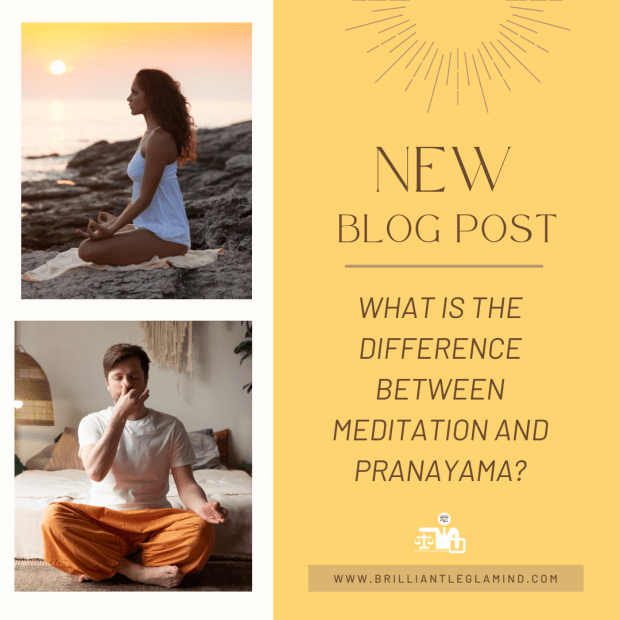
Having taught meditation now for nearly 5 years, I commonly get comments in my sessions with comments about practices that aren’t, strictly speaking, meditation. They will rave about the benefits of box breathing or mention that their therapist/coach/yoga teacher taught them 4-7-8 breathing and it changed their life. I always welcome these comments and express agreement with their efficacy, since getting into technical differences of the practices is not always beneficial.
Even so, questions like these have made me curious about the differences between pranayama and meditation. Because my experience with meditation has primarily been based on practices derived from Buddhism and yoga has never been my first love, I used pranayama very little in my own practice. This summer, I decided to change that and obtained a certification to teach pranayama to expand my knowledge on the subject.
In truth, there are distinct differences between meditation and pranayama and these differences matter. That is not to say, however, that the practices cannot be effectively combined. This blog post will explore the differences to give you context so that you can decide how best to use them both to support your own practice.
Differences
The first notable difference between pranayama and meditation is origin. This issue can be a little tricky, of course, since there are many types of pranayama and many types of meditation. The secular study of both yogic and Buddhist practices and concepts has also led to a the development of further practices that may intertwine some of these ideas further.
The first fundamental difference between meditation and pranayama is breath. Though meditation very commonly involves the breath, focus on the breath is not required for meditation. Practices like loving-kindness or body scan, for instance, don’t use the breath as a focal point and numerous other focal points (such as a mantra, candle flame, sounds, or mental images) can be used in place of the breath. Pranayama, on the other hand, is the practice of working with the breath.
A less obvious difference is that pranayama derives from yogic practices and most of the most popular forms of meditation (Vipassana, Zen, loving-kindness, tonglen, etc.) derive from Buddhist philosophy. This distinction may not matter so much for practitioners who just want relief or a good support, but the different origins shed light on the different focuses of the practices.
Clearly, different teachers and schools of thought can modify this idea, but yogic philosophy is much more concerned with clearing the mind while Buddhist meditation is more intended to make peace with the mind. Thus, Vipassana or Zen meditators are usually encouraged to observe the breath and allow the mind to calm on its own. With pranayama, however, the breath is used as a tool and often manipulated for the purpose of clearing the mind, balancing energy, and creating physical benefits.
Similarities
Though there are differences between pranayama and meditation, they are not entirely distinct and need not always be kept separate. The first thing that pranayama and meditation share are the potential benefits. Because they both address the fundamentals of human life, both meditation and pranayama can result in mental and physical benefits. Done correctly, both practices can help the mind and body sync up and calm down.
Another similarity is that pranayama and meditation go very nicely together. Yogic philosophy deems meditation as one of its eight limbs and so it is not uncommon for yoga classes to feature breath work and meditation. In the same way, many meditation teachers brought up in the Buddhist tradition (myself included) often incorporate pranayama into their guided meditation.
For instance, one way that I began experimenting with pranayama recently is to use it at the beginning of my meditation sessions as a way to quickly ground and relax myself. I have found ujayi breath to be a great tool for reconnecting with the breath due to its physical and auditory enhancements of the breath.
In short, pranayama and meditation are not the same. They have different origins and in many cases the purposes of the practices are distinct. Even so, they both have benefits for mental and physical health and they can complement each other nicely. Now that you understand how the practices are different but similar, the next step is to explore them both and determine what combination of practices work best for you.
Want to learn more about mindfulness and compassion? Check out my new book, A New Year’s Present, to learn about mindfulness from a heartwarming story. For a simple guide to creating a meditation practice of your own in 30 days, try How to Be a Badass Lawyer. And to share mindfulness with your little one, check out my new children’s book, Mommy Needs a Minute.
Like this post? Subscribe to the blog here or follow us on social media:
If you start a blog hoping for instant recognition, you are bound to experience disappointment. Even so, it’s nice when recognition comes along.
In 2022, Feedspot named the blog on the 25 Best Lawyer Mom Blogs. The list was recently updated for 2023 and the blog made the list again. You can check out the full list here.
Now, is the blog really a “lawyer mom” blog? Though I didn’t intend that classification when I launched the blog in 2020, I think it’s close enough. The sub-subtitle of my book, How to Be a Badass Lawyer, is “Written by a Lawyer Mom from Kentucky.” That’s because, as I write in the book, my experience with early motherhood is what prompted me to start meditating in the first place.
So, although I consider this blog a “mindfulness blog” first, I will proudly claim the title of lawyer mom blog too. Thanks to Feedspot for the continued recognition and to all the readers who have followed and supported the blog.
Want to learn more about mindfulness and compassion? Check out my new book, A New Year’s Present, to learn about mindfulness from a heartwarming story. For a simple guide to creating a meditation practice of your own in 30 days, try How to Be a Badass Lawyer. And to share mindfulness with your little one, check out my new children’s book, Mommy Needs a Minute.
Like this post? Subscribe to the blog here or follow us on social media: