If you do guided meditations or yoga, you are bound to be instructed to “check in with yourself” at some point. Most commonly, teachers use this as a starting point for a mind-body practice because it makes sense to start the practice where you are. The only problem is, of course, that not all teachers offer additional guidance to tell us how to check in with ourselves. This post is offered to clear up that mystery.
For those who know about interoceptive awareness, checking in with yourself may be the norm. But if you have never heard the word “interoceptive” before, then some additional explanation may be needed. The term interoceptive means awareness of your inner experience. While this might be second nature to many of us, it may feel weird and new to those of us accustomed to living busy and worldly lives. When someone instructs you to “check in with yourself”, they are telling you to activate and note your interoceptive awareness.
This gives you a general idea about how to begin checking in with yourself, but you may still need to know specifically where to focus. Ideally, when you check in with yourself, you can scan your mental, emotional, and physical states. First, this would require a pause and then a simple acknowledgement of the physical sensations, emotions, and thoughts that may arise for you.
Now, if you are new to this process, it may be challenging at first to interpret what you note in your interoceptive awareness. You may not immediately be able to put words to sensations or clearly identify all emotions. That’s okay. The point isn’t to self-diagnose on a deep level, but instead just to touch in with your inner experience and see what’s there. If you stay open-minded and make the practice of checking in a habit, you’ll soon notice patterns that will help you understand more about what your mind, body, and emotions are telling you.
Why is checking in important? If you are using it at the start of your meditation or yoga practice, it may help you understand what kind of practice you need. Do you need a rigorous practice or a gentle one? Do you need to stretch yourself or give yourself a break? Do you need a specific focal point or can you just rest in open experience? When you can more regularly note where you are, you are more likely to give yourself what you need and have a better experience with practice.
In much the same way, making a habit of checking in with yourself throughout your day is a great way to manage your energy levels and needs so you can be proactive about self-care. This may help you head off emotional reactivity caused by fatigue or hunger or notice the signs of loneliness, anxiety or growing anger. You can do this by briefly pausing for a few breaths, scanning through your body, asking yourself “how do I feel,” and listening to what arises.
My favorite way to check in with myself is first to look for rushing or pushing forward. If I notice it, I try to pause or intentionally slow down. Then I do a quick body sweep by scanning for sensations in the most emotionally reactive parts of my body: eyes, brow, jaw, neck, shoulders, hips, and hands. If there’s tension, I scan my mind and emotions for clues about what’s going on with me. This usually takes about twenty to thirty seconds at most but it’s enough time to change the way I’m relating to my day and myself.
The important thing about checking in with yourself, however, is not the procedure you follow but the habit of checking in regularly. One of the reasons that mindfulness practices can be so transformational is that they create mental space to check in with your inner experience regularly. Now you know what the teachers mean when they tell you to “check in with yourself” at the beginning of your guided meditation or yoga practice. You can now use these steps to check in with yourself to improve your meditation experience and bring more awareness to your life.
Want to learn more about mindfulness and compassion? Check out my new book, How to Be a Badass Lawyer, for a simple guide to creating a meditation practice of your own in 30 days. And to share mindfulness with your little one, check out my new children’s book, Mommy Needs a Minute.
Like this post? Subscribe to the blog here or follow us on social media:
On a blog about mindfulness, the title for this post may be surprising. I have touted the benefits of meditation for more than two years now and explained myriad meditation practices. Nevertheless, I seem to be admitting here that meditation is not a solution for all problems.
To be perfectly clear, I am not merely seeming to make this admission; I am freely and fully admitting it. Meditation is not always the answer. Over the last ten years, meditation has served so many purposes in my life that I probably couldn’t account for them all if I tried to compile a list. It was foundational to personal growth and healing and it has served as the hub for developing other useful habits, like exercise.
Even so, one of biggest power moves I made in my meditation practice was learning when meditation wasn’t the answer. Ironically, this happened because cultivating mindfulness helped me pay more attention to what I needed and what practices supported me best in different situations.
To help support your own discernment in this manner, here is the list of situations in which meditation is not my first go-to practice.
1. Too Much Energy.
If I am feeling physically energetic, the last thing I want to do is sit for an extended period of time. This could be because I am experiencing stress or anger or even excitement. When you pay attention, you may notice that all of these states create physical energy in the body. My experience has taught me that it works better to go with the energy rather than fight against it. For me, this usually means I need some form of movement.
So, when I feel too jittery, I don’t push meditation. Instead, I take it as an opportunity to get my workout done for the day. If I am strapped for time, I may take a brief walk or do a quick stretch. This is not a hard and fast rule, but using up energy when I feel amped up is using mindfulness as self-care even if I choose not to meditate in that moment.
But when the energy is high–signified by the volume, amount, or quality of the thoughts–I don’t meditate first. Instead, I have experienced greater relief and clarity from letting the thoughts go in other ways. The option that is most convenient and fully within my control is writing. I will write or type out any thoughts that come to mind for a few minutes just to get them out. If you aren’t a writer, you can also just say the thoughts out loud or do a voice memo if you don’t like talking to yourself.
If you’re lucky, you may end up writing something pretty darn good. Regardless, there’s no need for you to show what you write to anyone or even look at it again yourself. The point here isn’t to create a perfect monologue but just to get some distance from the thoughts. When the thoughts are spiraling hard, I use this strategy first before I meditate.
I have struggled with this in the past because I had the seemingly logical but misleading idea that talking about a situation wouldn’t help. While sadly true in many cases, this thought is misleading. There is more than one way to address a problem. You can address the root cause or the symptoms. Even if talking with a confidant won’t solve the problem, it may help you handle the symptoms.
Meditators may also have the idea that they need to learn to handle their emotions by themselves. This too is misleading. While it’s empowering and commendable to develop skills for emotional self-care, knowing when to seek support from others is part of that skill set. Sitting in meditation is one great part of your toolkit, but when emotions approach overwhelm seeking social support may serve you better.
4. It’s Time for Action.
Meditation helps you get clarity about a lot of things, but the practice in itself won’t create any change unless conduct follows. Sometimes in mediation practice, you may experience difficulty because you recognize things that need to change. Perhaps you feel regret or guilt because of something you did. Or perhaps you notice real hurt or difficulty in your life that being busy in life had allowed you to overlook.
Meditation practice is intended to cultivate present moment awareness, but if we let it, it can also cultivate wisdom too. Sometimes that wisdom is trying to tell us we need to take action out in the world. If I recall a recent situation and feel strong feelings of guilt, self-compassion may help me in my meditation practice. But in my life, a conversation with the affected person and an apology will serve me better.
If you are reeling from a personal loss, mental health challenge, or major life decision, meditation may also not be ideal (at least on its own). For those new to the practice, trying meditation in such circumstances may just add stress to life. Even very experienced meditators may struggle with the practice in challenging life circumstances. In short, sometimes it makes more sense to focus on cultivating stability in our lives before or instead of cultivating mindfulness in meditation practice.
In short, though I stand by my years of proclaiming the benefits of meditation, I admit that the practice is no panacea. If you practice meditation long enough, you are bound to see that other supports may be more helpful to you in certain situations. Thus, as you work to cultivate mindfulness in your life, never forget to develop self-compassion and wisdom too. Meditation is there as a practice to support a good life and it’s a good thing that it’s not the only one.
Want to learn more about mindfulness and compassion? Check out my new book, How to Be a Badass Lawyer, for a simple guide to creating a meditation practice of your own in 30 days. And to share mindfulness with your little one, check out my new children’s book, Mommy Needs a Minute.
Like this post? Subscribe to the blog here or follow us on social media:
The American way to start any new healthy habit is to scour the internet for the best gear. When it comes to meditation, this isn’t really necessary. As I have explained before, you can meditate in any position that makes you feel safe, supported, and comfortable.
This means you can meditate sitting, standing, lying down, or even walking. You can use a comfy chair, your bed, the floor, some nice cushions you have around the house, including some you use for restorative yoga, a porch swing or rocking chair, a parked car, or my personal favorite, the bath tub.
Though I have meditated in a variety of settings, it has been supportive to my practice to designate a particular spot as the one I use for regular practice. My spot is a little corner in my bedroom tucked away behind a large wardrobe. In it, I have my meditation cushion, a light blanket, and access to an outlet so that I can use my phone for guiding or sounds when I need it.
If you look on Pinterest, however, you can quickly overwhelm yourself with images of decked out meditation spots chock full of Mandalas, smiling Buddhas, incense, and LED lights. To the extent that this makes your practice more pleasant and you enjoy decorating, go for it. But a meditation space that would make an influencer blush is not really necessary, especially if nobody will see it but you.
Assuming you are into utility like me, what you really want from a meditation spot is something that offers support, creates comfort, and engenders focus. In general, then, you’ll want a large, flat layer to provide warmth and cushion for your ankles and knees in the sitting position. Then you will want something on top to lift the hips and support the natural curve of your back. This is to ensure that you have a clear airway to make breathing as easy and restful as possible.
This is the point of the meditation cushion, which commonly includes the zafu and zabuton. The zabuton is the large flat cushion, typically filled with a cotton-like substance and the zafu is a smaller pillow (often round or crescent-shaped) that is usually filled with seeds, beans, or buckwheat hulls. If you feel more comfortable in a kneeling position, you can get a similar result from using a meditation bench with a mat or blanket under your legs and knees.
These days, it is easy to find meditation cushions and benches online in a variety of colors, materials, and shapes. If, like me, you hate scouring the internet for products, I bought my zafu and zabuton from Still Sitting about 10 years ago and I can report that their name is accurate: I’m still using it. I went for the crescent-shaped zafu with a buckwheat fill because it fits my body better. Due to an old knee injury, I also added an extra mini zafu for some support under my right knee.
Can you achieve the same level of comfort with items you have around the house? Very likely. A few layers of old blankets, a folded yoga mat, or flat pillows could double for a zabuton. A sturdier and smaller cushion, a bolster, or yoga blocks could work for a zafu.
In short, you don’t truly need a meditation cushion or bench to start a meditation practice. Ideally, meditation is something you bring into your life and don’t only use in one spot in your home. Even so, a designated spot is a great way to turn meditation into a habit and a quality meditation cushion can support the body to help your mind focus and relax.
Thus, if you are really new to meditation, I would not recommend spending a lot of money on new gear. Once your practice becomes regular and you can sit for more than a few minutes each session, a cushion may be a great way to support your meditation practice and invest in it long-term.
Want to learn more about mindfulness and compassion? Check out my new book, How to Be a Badass Lawyer, for a simple guide to creating a meditation practice of your own in 30 days. And to share mindfulness with your little one, check out my new children’s book, Mommy Needs a Minute.
Like this post? Subscribe to the blog here or follow us on social media:
It was a busy week but a great week for me. I got to celebrate Well-Being Week in Law in several different ways.
First, I got to present on mindfulness and confidence for a law firm. The session was well-attended and the engagement from the audience was excellent. I shared how mindfulness can help build confidence because it can help you break down fear and doubt into component parts and learn strategies to care for each aspect.
Well-Being Week in Law Event Number 1
On Wednesday, I connected with Kristin Tyler, a founder of LAWCLERK Legal and a long-time friend of the blog, and coach and one of my co-authors from the book #Networked, Olivia Vizachero, to discuss mental health in the legal profession.
We discussed everything from strategies for time management and reducing decision fatigue to the practices that support our personal and professional well-being. It was a fun conversation and I was so proud that LAWCLERK chose my book, How to Be a Badass Lawyer, as a giveaway item to support attorney wellness.
You can watch the recording of event here on YouTube:
Well-Being Week in Law Event Number 2
For my last event of the week, I came back home. Specifically, I did a brief talk and guided meditation for my local bar association. I’m a proud member of the Northern Kentucky Bar Association Lawyers Living Well Committee. I talked about how to manage the early phases of meditation practice when you may not immediately feel calm and relaxed. In the guided meditation, I focused on ways to learn to practice relaxation and rest.
To listen to the talk and try the meditation, check out the recording of the event here:
Did you do any special activities this week? Leave a comment to let us know what you tried.
Want to learn more about mindfulness and compassion? Check out my new book, How to Be a Badass Lawyer, for a simple guide to creating a meditation practice of your own in 30 days. And to share mindfulness with your little one, check out my new children’s book, Mommy Needs a Minute.
Like this post? Subscribe to the blog here or follow us on social media:
It’s Well-Being Week in Law this week. If you are familiar with the mental health challenges in the legal profession, this may not be surprising. Even so, you may ask yourself what exactly does “well-being” mean?
There are many ways to define this. Some take the approach of creating buckets or categories which ensure that the various aspects of lawyers’ lives are addressed. This includes everything from physical, mental, emotional, to spiritual and even financial needs.
As someone who has always been skeptical about the idea of work-life balance, I prefer something a bit more flexible. Instead of filling buckets, I prefer a process based on habits and practices that flow into and support one another. A process like this can shift and change with the seasons of life. Like the bucket approach above, however, it is premised on the assumption that lawyers are humans first and their human needs must be met.
5 Steps of Lawyer Well-Being
So what are our human needs? We need to take care of our bodies, minds, and hearts. But to be happy we also need to connect with others in community and grow. These five steps cycle into each other to form my process for lawyer well-being, which I share below.
1. Feeling Is Fundamental to Well-Being
Lawyers can struggle with well-being for a fundamental reason: we are often lost in our thoughts. Attunement to our bodily experiences is, thus, an important place to start for improving personal wellness. Even if you struggle with this, small changes over time can increase body awareness, which can help you identify and tend to personal needs on an ongoing basis.
This may sound basic and that’s because it is. This aspect is about reconnecting with the actual experience of life every day. Technology and the rush of our lives do not lend themselves well to staying present in our bodily experiences. Everything from alcohol to Netflix can serve as a numbing tool if we don’t reflect on how we use them.
2. Rest Is Essential for Lawyers
A billable hour system means that we are validated by productivity and can easily correlate hours worked with worth. Without rest, however, performance, productivity, and creativity suffer. Rest, of course, is only effective when we truly can allow ourselves to relax and recharge.
Sleep is a huge part of the rest we need as humans. With our very active minds, however, we lawyers may also need to develop practices to learn how to deeply relax. If our nervous system stays on high alert, it can prevent us from relaxing or sleeping, and lead to other health problems. With our heavy reliance on technology, rest may not always be just “doing nothing”, but instead might include doing another activity “in real life” and without any screens.
One of the reasons that healing is hard for lawyers is that processing emotions takes time and patience. Some emotional experiences won’t make sense to us if we are not attuned to our bodies and don’t have the time to sit with them. Stigma and feeling like we always must present as being in control and competent can make this a challenge too.
4. Connection Is Critical
Lawyers are often around other people. To do our jobs, we often have to deal with a variety of personalities. We usually must also network and build our reputations broadly across groups. Despite this, lawyers experience loneliness more than other professions.
Real connection means that we feel we are able to be ourselves. It also requires a sense of belonging in our firms, families, and communities. It means that there must be some meeting point for our inner experience and the outer world.
Because our lives are busy, we may have to plan ahead to schedule in activities even with people we love. In addition, life changes rapidly so social dynamics do too. On top of this, some of the social institutions humans have looked to for belonging are no longer as prominent as they once were. Though it can feel strange that keeping in touch with friends may take work, the effort is well worth it. Do not take feelings of disconnection to mean there is something wrong with you.
The profession and most firms are experiencing rapid change right now, which often presents opportunities for growth. One thing to remember, though, is that growth is not necessarily always pleasant. Because it can be scary, stressful and volatile, we may need to have periods of rest and relative inactivity and to rely on the other skills and supports to assist as we establish equilibrium.
Want to learn more about mindfulness and compassion? Check out my new book, How to Be a Badass Lawyer, for a simple guide to creating a meditation practice of your own in 30 days. And to share mindfulness with your little one, check out my new children’s book, Mommy Needs a Minute.
Like this post? Subscribe to the blog here or follow us on social media:
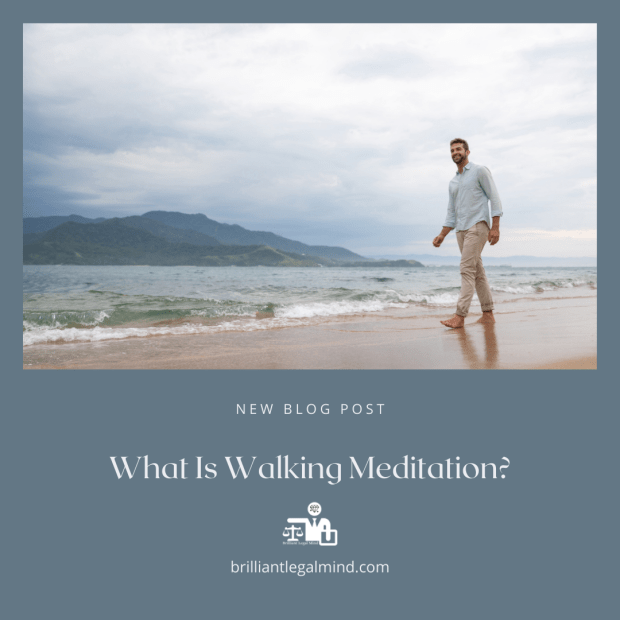
Friends tell me all the time that they like to go out for a “walking meditation.” My automatic reaction internal is this: “No, you’re not, but good for you.” Of course, I would never say this to someone unless asked but walking meditation is not the same thing as a walk outside.
One reason I would never offer this advice unsolicited in normal social circumstances is that I will never discourage anyone from (a) moving; or (b) getting outside. Taking a walk outside is awesome for you in every way. It’s good exercise and being outside is good for your mentally, emotionally, and spiritually. In the right circumstances, a walk outside can slow the mind and elicit mindfulness and calm.
Walking Meditation Is Not Just Taking a Walk
In short, walking meditation and a walk may overlap in some ways but they aren’t the same. The most prominent distinction is speed. With walking meditation, you don’t walk at your normal pace. You walk in slow motion.
If you have done a practice where you focused on your breath, I bet you noticed all sorts of things about breathing you had never noticed before. You may have noticed that a breath cycle affects various parts of your breath. You may have noticed that it feels kind of good. You may have noticed that you needed to learn to let yourself take deep, full breaths.
You’ll notice your feet on the floor. You’ll notice the push forward, lifting and rotation of your foot, and then landing it firmly on the group. As you do this, repeatedly, you’ll learn that it can settle your mind just like sitting meditation.
Why Is Walking Meditation Helpful?
Now, you may be wondering why anyone would do this practice. To be sure, if you actually did walking meditation out in your neighborhood, your neighbors would probably come check on you to be sure you were okay. It looks funny and feels awkward.
The most likely place that you would experience walking meditation is on retreat and for a very practical reason: one cannot sit comfortably for hours on end. Many retreat centers will structure the program to include intervals of sitting and walking meditation to allow movement and keep the mind from becoming too dull.
The other great benefit of walking meditation, though, is that it can help you bring mindfulness into your life. Walking meditation may feel strange but it is a bridge between sitting meditation and real life. It encourages you to continue your mindfulness practice even as you move and go about your daily activities.
Walking Meditation Offers an Option for People Who Struggle to Sit Still
Want to learn more about mindfulness and compassion? Check out my new book, How to Be a Badass Lawyer, for a simple guide to creating a meditation practice of your own in 30 days. And to share mindfulness with your little one, check out my new children’s book, Mommy Needs a Minute.
Like this post? Subscribe to the blog here or follow us on social media:
For most of the pandemic, I was good about working out but struggled with motivation to do strength training. I kept trying to incorporate strength into my routine but inevitably fell out of the habit. This was until last year when I finally cracked the code of inconsistency and developed a pattern of doing 3 days focusing on strength, and 3 days focusing on cardio. Fortunately, the realities of math and my calendar led to me designating Friday as my day of rest.
And you know what? I loved it. It was nice to mix things up. It was nice to get back to a practice I hadn’t done for a while. It was nice to remind myself that my practice was mine and I could tailor it to suit my needs. After a long work week, it was nice to emphasize rest and my body more and my mind little bit less.
I have touted consistency on this blog before and I won’t depart from that wisdom any time soon. But meditation is a practice for life and it will come with ebbs and flows. At times, it may also come with boredom and malaise. Variety is one way to stave those things off or recover from them. In this way, even if the “rest day” is slightly less consistent, it is conducive overall to preserving mindfulness as a habit long-term.
Now, you may wonder how to incorporate a mental rest day if you aren’t a fan of restorative yoga. In truth, the name of a “mental rest day” is a bit of a misnomer because many mindfulness practices may include a rest for the mind. This is actually a good thing, though, because it means options for mixing up your meditation practice are myriad.
Here are some ideas beyond restorative yoga for trying your own mental rest day:
Try a guided meditation if you usually use silence. Try silence if you usually use guiding. Play some relaxing music while you meditate in place of either.
Try mindful movement, including walking meditation, qi gong, or tai chi.
Try a new kind of meditation practice. If you usually do breath practice, incorporate body scan, loving-kindness or a new kind of noting practice such as mindfulness of sounds.
When it comes to physical fitness, the idea of a “rest” day is so standard that it’s almost a no-brainer. The reason for this is clear: our bodies need time to recover from physical training and exertion. This same idea often holds true for our minds too. If you need a break or just want to try something new, consider incorporating a mental rest day into your mindfulness practice.
Want to learn more about mindfulness and compassion? Check out my new book, How to Be a Badass Lawyer, for a simple guide to creating a meditation practice of your own in 30 days. And to share mindfulness with your little one, check out my new children’s book, Mommy Needs a Minute.
Like this post? Subscribe to the blog here or follow us on social media:
People curious about my decision to quit drinking alcohol usually ask me (privately) some version of the same two questions: Why? and How?
THE “WHY”
The “Why” is different for everybody.
My “Why” was like an everything bagel – a really stale one.
Some people quit out of necessity. They get in legal trouble, their spouse threatens divorce, the doctor (or priest) says “it’s time,” they develop an allergy (that’s a real thing), they “accidentally” say something that incinerates a most-cherished relationship, their boss threatens them with termination, etc.
Others quit because they see the effects of alcohol around them and they just want to do things differently. They’re tired of the drama, the missed deadlines, the prurient behavior, the disappointments, the dishonesty, the worrying, etc. Alcohol weighs them down – indirectly, but in a powerful way. And it’s just plain exhausting.
Some quit for financial reasons. Regular boozing is expensive. I did the math for myself, and I figure (conservatively) that if I had never started drinking in the first place, I would have saved enough money to pay cash for law school.
Look: 21 years of drinking (I’m 42 and it actually started way earlier than that) x $25 (average) per day = $191,625. My law school charged me a whopping $120,000 (plus a boatload of compounding interest).
If that math sounds wonky to you, try this one: I quit 981 days ago. My sobriety tracker app estimates I’ve saved myself $24,425 since quitting. Think about what that means moving forward. I’m hoping to get another 50 years out of this ride!
Even moderate drinking drains the bank. A 6-pack of beer costs $6 – $10. If I bought one every other day (no more than three beers a day): that’s $18 – $40 a week; $936 – $2,080 a year; $46,800 – $104,000 in 50 years.
The numbers above don’t even account for lost productivity or the healthcare costs associated with regular or prolonged drinking. When I started my journey, I estimated I spent one hour a day drinking (it was way more). I’ve earned back almost 1,000 hours of my life – but it feels like a million. My productivity now is threefold what it was when I quit. I have three active boys, a busy law practice with my spouse, and a side-gig as an artist and marketer. I need all the energy I can get. And I love all of the energy that I have!
Truth is: there are a million different reasons to quit. No matter what yours are, have been or will be, keep a few things in mind:
1. Your “why” is the most important “why” for you, even if someone else tells you it is silly, stupid, meaningless, an overreaction etc. Nobody knows you like you. DO YOU. All the rest of it is just noise.
2. No one else’s “why” is better or worse than yours. Playing the comparison game will not – I repeat – will not help you. Compare yourself only to yourself and keep moving! It’s a game of progress not perfection.
3. Your “why” is not a point of shame – no matter how bad you think it is. YOUR WHY IS YOUR SUPERPOWER. Own it. Love it. Remember it. Honor it. Your “Why” got you where you are. And that, my friends, is a blessing – even if it hurts in the beginning. It won’t hurt forever, I promise!
4. You are allowed to share your “why” with others, but you don’t have to, especially if you’re not ready. Take your time. You may not even really understand your “why” fully until you’ve had some time to clear your mind and think about the impact of your choices and actions. Be patient with yourself and with others. Growth takes time. A lot of it. You’re allowed a little privacy in this process.
First,talk kindly to yourself. When you quit drinking, you are going to have feelings. Lots of them. Some may be painful or uncomfortable. And some may be wonderful beyond your wildest expectations. Positive self-talk is absolutely essential to riding this roller coaster. If you’re lucky, your parents taught you how to do this and you’re already good at it. But lots of folks are clueless when it comes to self-soothing. So, try this simple exercise: Imagine yourself 20 years into the future. Close your eyes and picture what you look like, how you feel and all of the wisdom you’ve earned over the years. Picture yourself happy, content, fulfilled and proud. Now, ask that future version of you to talk to the current you. Do it out loud. And keep it simple: “You can do this.” “I’m proud of you.” “This will pass.” “Just breathe.” Do this every. single. day. Keep in mind, there is no such thing as a right way or a wrong way. Just do your best and thank yourself for the effort!
Second, if you’re going to quit drinking, you’ve got to replace old habits with new ones. Use your hands. Try knitting, whittling, braiding leather, stringing beads, weaving. Get yourself a cheap sketchbook, a pocket-sized watercolor set, a notebook, a camera (your smart phone works!). Paint, write, draw, photograph, write poetry, imagine. Whatever you use, it needs to be portable, it needs to be mind-numbing and it needs to be with you all the time. Something you can carry through airport security (okay, maybe not a whittling knife). Every time you feel the old habit creep up, grab your “thing” and get those hands busy. Don’t stop until the urge passes. It will pass.
Third, there will be plenty of days when you want to drink. Have a plan. When I first decided to quit drinking, I took all the alcohol out of the house. We were in Covid lockdown so there was really no place for me to go to drink, so that made it easy (easier). But, if you know that going to Happy Hour on Thursdays with your coworkers will be a temptation for you, don’t go. Go see a movie instead or check out your local park or nature trail. If you do socialize with drinking friends, ask the bartender in advance to make you a fancy, refillable “mocktail.” I kept a pretty glass, soda water and fresh lemon and lime on hand at all times for the first year. Hot tea is a great sippy cup substitute also.
Fourth, sweat out that stress. You absolutely have to exercise. Make time. If you had time to drink yesterday, you have time to sweat today. At my drinking peak, I used alcohol daily to blunt a fairly heavy level of work/parenting stress. So when I quit, that energy had to go somewhere. I literally felt like I was going to explode. The first 60 days were the worst. Then my mom and sisters insisted we do remote cardio classes together. I cursed them for days. But it worked. With their help, I started a new habit, and prevented what I thought was sure to be a case of premature death by spontaneous combustion. Remember, exercise doesn’t have to be expensive. Cleaning house counts. Yard work counts. Just move. And make sure you’re sweating when you do it.
Fifth, ask for help if you need it. Everybody’s circumstances are different. You may have an unsupportive roommate or partner. Maybe you’re feeling overwhelmed and don’t know where to start (or how to stop). Maybe you feel trapped or ashamed or like you’re just not strong enough to weather the next storm. There are people who are ready to help you. Ask a doctor, a priest, a family member, a close friend, a local non-profit or a support group. Reach out to someone you trust. Loving arms will catch you.
Finally, think about how you see alcohol in your life. Look around. We are bombarded with advertising encouraging alcohol consumption in every one of life’s most glorious occasions: weddings, anniversaries, birthdays, the Super Bowl. We use it for celebration and in moments of sorrow. Did you get dumped? Blow that big presentation? Fail your final exam? There’s a concoction for that!
Alcohol. Is. Literally. Everywhere. I never really noticed this until I decided to quit. And then I asked myself, why do they want me to drink so much? It’s an odd thing, really.
I often wonder how things would be if, instead of asking “How” and “Why” a person quits drinking, we were to ask “How” and “Why” we all start drinking in the first place. The answer, of course, does not matter. All that matters is what you do today. And I have a question for you: What have you got to lose?
Author Bio: Christina T. Mazaheri is Managing Partner at Mazaheri & Mazaheri where she practices primarily in the areas of Employment & Civil Rights Law. She is a native South Carolinian and met her husband and law partner, Bernie, while working at the nation’s largest plaintiffs’ firm in Florida. Christina and her family (Bernie, their three boys and their Great Danes) moved to their “forever home” in the Bluegrass region of Kentucky in 2018. Christina handles cases in several states, and she has published articles and spoken on topics dealing with Wage & Hour, Age Discrimination, Arbitration and Family Medical Leave issues in the workplace. When she’s not practicing law, Christina takes an active role in educating her children, who are full-time practitioners of the Art of Fencing. Christina also enjoys creative urban agriculture, historic renovation, painting, music & textile arts, raising and showing Great Danes, and remaining active with her church.
This week, we offer a guest post from a friend and supporter of the blog who is doing great work out in the world. Joseline Jean-Louis Hardrick found me and the blog on LinkedIn and she’s been an active supporter of it. We love her work to promote diversity, inclusion, and wellness in the legal profession and want to support her back here. Welcome Joseline to Brilliant Legal Mind!
Many lawyers and other professionals are experiencing burnout. Are you going through a hard time in your life and career and are constantly struggling with chronic stress that leaves you feeling exhausted to the core and helpless to the extent where you think nothing can ever go right?
No job in this world is easy. Every task, every goal, and every journey has its fair share of struggles and obstacles. That said, being a lawyer has its troubles on another level. It is certainly not easy to tackle difficult cases, prepare strategies for your client, and stand strong in the grueling atmosphere of the courtroom. This job and your daily routine certainly take a toll on your well-being and can easily produce a state of complete burnout.
What Burnout Does to You
Burnout is a traumatizing state of mental, physical, and emotional exhaustion that makes you feel swamped and shattered. It is normal to have occasional or even routine bouts of stress, particularly in this line of work. However, things take an unexpected, undesirable turn when you do not manage your stress on time and soothe it daily.
When you don’t address the routine stress, it grows bigger and more monstrous. There then comes the point when you become so emotionally drained and overwhelmed that your body and mind keep you from going any further. You lose the motivation to take on any case; you feel withdrawn from even the activities you once found incredibly enjoyable, and you simply let go of the will to push yourself any harder.
You become cynical, hopeless, pessimistic, lethargic, exhausted, and even highly resentful. You do not wish to progress in life because you feel you don’t have that spark anymore. Burnout manifests itself in many different symptoms, including feeling drained, emotionally and physically, all the time; having muscular pain frequently, drastic changes in appetite, insomnia, lowered immunity, and a very low sense of self-esteem, among other things. If you experience any of these daily, it is clear you are not in a healthy physical, emotional, and mental state.
Whether you work as a litigator or as a transactional attorney, or you’re in academia or government, if you find yourself overwhelmed and cynical often, that’s because of burnout. Fortunately, a creative way out of this rut is a unique approach to soothe burnout and reclaim your energy, motivation, and life for good.
A Creative Solution to Handle Burnout
Having struggled with burnout excessively and frequently myself, I realized that I would have to find a unique fix for the problem to turn things around. When we are stuck in a bad rut, often, our go-to approach to get ourselves out of the problem is to push past the walls. We keep pushing ourselves forward to end the problem, but we only exhaust ourselves more in the process.
The right way to turn the tables around in your favor is to look for a new angle, just like you do in a deposition. Instead of beating around the bush, you bring up a completely new and creative perspective on the table and turn the odds in your favor. Similarly, to soothe your burnout, you need to adopt an innovative approach.
This approach is about finding joy in the journey by engaging yourself in useful activities that help you channel your stressful energy into something positive, meaningful, and productive. I call this approach “RENEWAL.”
What is Renewal?
The RENEWAL process involves the following:
R: Review your strengths, priorities, and talents and review your schedule to understand everything better.
E: Energize yourself by eating healthily, sleeping well, and taking care of your body.
N: Noticing things peacefully and becoming more mindful of yourself and your surroundings.
E: Expressing gratitude for everything you have to attain contentment from within.
W: Withdrawing yourself from the digital world to give yourself a break from the online media and different technological tools.
A: Assess your routine and responsibilities and prioritize things that matter to you.
L: Love is an essential requirement to live happily, so you need to infuse meaningful relationships and connections in your life.
This approach helps you change your thinking and behavior to modify your current state of life. Understand that nothing always happens as you plan it, but you need to let go of your former ideas and create a new you to improve on things.
While doing that, understand that you must have a clear goal moving forward, especially in the study and practice of law.
In case you’re wondering if any of these ideas are backed by research – they are! The anecdotal evidence and your personal lived experience tell you that being a law student and lawyer is stressful. But so do all the studies. The studies also show that the techniques can lead to lawyer satisfaction in their personal and professional lives.
One thing they noticed is that most law students and lawyers focus almost exclusively on external factors. These factors include money and status-such as earnings, partnership in a law firm, law school debt, class rank, law review membership, and U.S. News & World Report’s law school rankings. But the study shows almost no correlation between those external factors and lawyer well-being.
But they found that internal and psychological factors correlate to “happiness” and “satisfaction.” But unfortunately, focusing on the internal factors, such as autonomy, interest, freedom, a sense of worth, choices regarding family and personal life, erode in law school.
Interestingly, money and status factors and demographic differences were least important in lawyer happiness. Different practice types and settings further exemplified the issues that arise with a misplaced focus between internal and external factors. For example, lawyers in large firms and other prestigious positions were not “as happy” as public service attorneys. This held true even though the latter had much better grades and pay than the former group. And junior partners in law firms show no significant improvement in happiness than senior associates. Even with the higher pay, benefits, and prestige of a partner, there was no actual increase in the sense of satisfaction.
The bottom line is, lawyers are like everybody else. Despite specialized cognitive training and the common perception that lawyers are fundamentally different, we are people first and lawyers second.
So do yourself a favor, practice RENEWAL regularly to prevent and overcome burnout because the world needs and deserves, well-balanced attorneys.
If you’ve followed the blog, you probably know by now that I am a fan of Peloton. Historically, however, I haven’t really used the Peloton platform to support my meditation practice because I prefer unguided meditation. Late last year, however, one of my favorite yoga instructors Aditi Shah announced the new intro to meditation program. As a maven of meditation, I did the program myself so I could tell you about it here.
Here’s an overview of the program, a summary of what I liked and didn’t like, and a bottom line conclusion for those of you considering it for yourself.
Program Structure
The Intro to Meditation Program structure is available on the Peloton app or any Peloton device. You don’t need any equipment to use it, though some headphones and a meditation spot or cushion sure help. The program is designed to be completed over the course of 3 weeks and consists of short (5-minute) instructional videos to explain basic concepts and 5 or 10-minute guided meditations for practice. The concepts covered include mindfulness of thoughts, mindfulness of body, metta (loving-kindness), and them mindfulness of emotions.
What I Like About the Program
Overall, I think the Intro to Meditation is a good start for those new to meditation and mindfulness. Here’s what I liked most.
It Has the Right Stuff.
In my new book, I created a structure for creating a mindfulness practice in 30 days. It included basic mindfulness, body awareness, reconnecting with joy (i.e. mindfulness of emotions) and loving-kindness. The Intro to Meditation program has these same concepts, though the order is different and it is presented in a different way. Thus, in terms of essential ingredients, I think Aditi and the Peloton team ticked the right boxes for the program.
I don’t normally do guided meditations because I enjoy silence, so I was pleasantly surprised that the program meditations actually included some silent spaces. I have done some Peloton meditations in the past that I wouldn’t even call meditations because they were so infused with imagery or storytelling that there was no space for my own awareness. These were comparatively less filled with words and allowed some space to experience the concepts taught in the program.
Even though I am a fan of Peloton and adore Aditi, I have to admit that the program is not perfect. Here are the things that I didn’t love about it.
Aditi Sounds Rehearsed at Times.
Aditi sounds pretty natural when I take her yoga classes, but she sounded rehearsed for most of the explanation videos. And, though I understand that Peloton sells fitness apparel, I thought it was silly that Aditi was wearing a sports bra with no shirt or sweatshirt when she was teaching the passive activity of meditation. To be fair, this was likely the result of a new format and the fact that Aditi was teaching in a new way. In order to get the content delivered in a time efficient way, she almost certainly had to be reading from a script. In other words, the experience of watching the explanation videos lacks the connection you might get even from other prerecorded Peloton classes.
Information Was Conveyed But Real Teaching Was Rare.
Along the same lines as the point above, the Intro to Meditation program provides information about meditation but it doesn’t really teach the subject. Clearly, this is a result of the forum and the intent for the program to only be an introduction to meditation. Even so, the explanation videos could have provided a few more stories or examples to give the content more life. The few that Aditi offered in the videos appeared heartfelt and were effective, so I hope future Peloton programs will dig a bit deeper on this point.
The Order of the Program Felt Scattered.
As I experienced when writing my book, it can be hard to identify the “best” starting point when teaching meditation. Though meditation practices often select a single focal point, our experience is rarely so isolated and usually includes a mishmash of sensory information, body sensations, thoughts, emotions, and external stimuli. Though I like that the Program included the right topics, I found the order somewhat confusing and scattered.
The Structure May Not Be the Best Tool for Establishing a Habit.
The Intro to Meditation Program is an accessible tool to help the millions of Peloton users worldwide learn the basics of meditation practice. Though the Program doesn’t stand on its own to support a long-term meditation practice, that may not be a bad thing. It will likely leave users wanting more but meditation practice is to some degree about exploration. Because the Program makes trying meditation simple and easy, it is a good start for anyone new to meditation but hopefully not a final destination.
Want to learn more about mindfulness and compassion? Check out my new book, How to Be a Badass Lawyer, for a simple guide to creating a meditation practice of your own in 30 days. And to share mindfulness with your little one, check out my new children’s book, Mommy Needs a Minute.
Like this post? Subscribe to the blog here or follow us on social media: