Why Do We Focus on the Breath?

Cover image for blog post explaining why we focus on the breath in meditation

Nearly every guided meditation and meditation teacher out there tells you to focus on the breath. It’s something so basic that you may have never asked why. The breath calms us down, right? Doesn’t that make it the obvious focal point for mindfulness practice?.

Though a common assumption, that’s not entirely true. The reason we focus on the breath in meditation may surprise you.

The Breath Is a Link to Your Nervous System

The breath is a way to regulate our nervous systems. In fact, it is the only non-chemical way to do so. Our breath is directly linked to our autonomic nervous systems. And when I say linked, I mean it literally.

As you are reading. put your hand on your diaphragm in your mid to lower abdomen and pay attention to its position. Your diaphragm is below the lungs and heart and they all rest against your spinal column. The diaphragm is controlled by the phrenic nerve and, in turn, it can activate the vagus nerve.

This connection means that your breath sends signals to the your body and mind constantly. Any change in breath can create a domino affect that can affect your behavior, mood, emotions, and thoughts.

Image with quote explaining that the breath links the mind to the nervous system

The Breath Does More Than Calm Us Down

When I said above that it’s not “entirely true” that the breath calms you down, I wasn’t lying. In most daily experiences, we focus on the breath to calm down. That usually means we try to “catch our breath” by slowing down our rate of breathing and breathing more deeply.

Whether we notice this or not, in situations like this we may be focusing on the exhale in our breath. Focusing on the exhale and slowing down our rate of breath will calm us down. The exhale is linked to our parasympathetic nervous system. When our exhale becomes slower and longer than our inhale, it sends a signal to our body and brain that we are safe and can enter “rest and digest” mode.

The inhale, though, can do the opposite. If we try deeper and faster inhales, we may notice our heart rate start to increase and other bodily systems activating. While many lawyers try meditation and breathwork to calm down, there are some styles of practice intended to rev the body and mind back up.

An image explaining how the breath connects mind and body in mindfulness and meditation practice

Why Understanding the Breath Matters

So why is this important to know? It is useful for several reasons. First, remembering the breath’s role as a bodily function may help you see it more functionally in your meditation practice. If your breath is not smooth or slow or even, it can be very easy in meditation practice to get upset about that or feel like you are doing something wrong. Remembering the role of the breath from a functional anatomical perspective may help reduce judgment.

Another reason that understanding the purpose of breath focus helps is that it can help us give ourselves what we need. If you experience difficult feelings or thoughts during meditation, you can learn to use the breath like the break pedal in your car. Not only will focusing on the breath disrupt the thoughts and emotions; it can help you slow down and ease back in your body.

In the same way, you could use breathwork to re-energize yourself when you are in a slump. Instead of a coffee, you could try some breathwork with more intense inhales and see how it affects you. If pranayama is not your thing, try some physical movement or exercise to achieve the same thing. Even a walk around the block is likely to automatically trigger bigger and deeper inhales which will energize the body and mind.

Image with options for focusing on the breath for mindfulness and meditation practice

You Have Options for Breath Focus

As I have written before, the particular location of your focus is not essential to notice these things. You can focus on your breath at your nose, sinuses and throat, chest or shoulders, or belly. To bring attention to the energetic impacts of your breath though, pay particular attention to your inhale v. exhale, the lengths of each, and any pauses in between.

With this background, hopefully it is clearer now why meditations and teachers so frequently direct you to focus on your breath. Of course, it is always with you and that makes it a great focal point for formal and informal practice.

Practicing breath focus or breathwork, though, gives you a tool for self-regulation that can serve you well in formal practice and in life. If you can learn to notice your breath, you can also learn to manage it. That can give you greater agency for handling the stresses and energy slumps of life. And if you can do that, it opens doors for facing many other challenges with a little more skill and ease.

To try some breath focus practices, check out our meditations on Insight Timer or here:


Want to learn more about mindfulness and compassion? Check out my new book, How to Be a Badass Lawyer, for a simple guide to creating a meditation practice of your own in 30 days. And to share mindfulness with your little one, check out my new children’s book, Mommy Needs a Minute.

Like this post? Subscribe to the blog here or follow us on social media:

Four Reasons You May Love Meditating with a Group

Technology is a wonderful thing. It has enabled people from all over the world to learn about the practice of meditation. Think about it. You can now have access to some of the world’s best meditation teachers in any number of means which are immediately available. You have a selection of apps that can teach practices and provide guided meditations. You can buy books from thinkers and teachers across the centuries. And if you look online, you’ll find any number of courses from any tradition you may wish to try.

I have used all of these things. I still do. I have benefitted from them immensely. I’m not here to tell you that they are not good. But I am here to say that they are not as good as learning meditation with friends.

I started meditation entirely on my own ten years ago. At the time, I was too embarrassed to tell anyone I was trying meditation. I didn’t even tell my husband until my dabbling with meditation at 1 or 2 minutes at a time evolve into a habit. It took me even longer to tell others about my practice, but by then the results were so clear I couldn’t help myself.

Eventually, I decided I was ready for more and I signed up for a 1-day intensive in my area. Over time, I attended longer retreats and then some courses. During the pandemic, I tried more options online, from courses to virtual retreats. More recently, I have resumed my in-person meditation events and I remembered how helpful it is.

I know it can be hard to find a meditation group in some areas and even harder to show up as a stranger to a new place. I’m writing this post to let you know what you might find if you work up the courage to find and join a meditation group in your area. Here are the 4 reasons why meditating with a group can be helpful.

1. Peer Pressure Can Be Good.

If you meditate in person, the odds are that there will be some nerves and jitters at first as you adjust to sitting and breathing with other people. Eventually, though, you may find as I did that your mind settles down far more easily in a group than by yourself. Why?

Of course, humans are mammals. As social creatures, we are made to be together. Have you ever been to a concert or sports event and found yourself overcome with the emotion of the crowd? The same is true in reverse. Meditation in a group can help you relax and settle because everyone else is relaxed and settled.

And even on the times you aren’t relaxed and settled, you may find the group helpful too. When you are struggling with a session, being in a group may help you stick with the practice simply to avoid disrupting others. Clearly, if you need a break or have to move, that’s not out of bounds. But sometimes with habits, we just need one more reason to keep saying yes and being in a group offers that in the hard sessions.

2. It Can Add Variety to Your Practice.

If you sit and do nothing for long enough, you are bound to notice one thing: meditation can be boring. This is not a reason to quit but your mind will tell you it is. In reality, though, boredom is an amazing reaction to watch. We often think of boredom as the end of the story, but in reality it’s an opening question.

Boredom is really more about our judgments and reactions than the thing we think is boring. So, if meditation is boring, one question might be: how many things can you do entirely on your own and not get bored? If you are being honest, there probably aren’t too many.

Pure and simple, meditation in a group is a way to add variety to your practice. It may mean you are meditating in a new space, there may be new people, there might be some new rituals (i.e. chanting, bowing, etc.), and you may try new practices or modalities. This variety offers the chance of building skills and seeing your practice in a new way.

3. You Learn You Aren’t So Weird.

This one may be my favorite. No shade to Tara Brach or Sharon Salzberg or any of the other world-renowned teachers I adore. But I may have learned more from the other meditators on retreat who asked questions about practice.

These people overtly stated that they did not know the answers. They announced their struggles to the group. These people were asking for guidance. Why was this so amazing?

Well, first of all, it was amazing for me to hear people admit that they weren’t perfect and didn’t have it all figured out. It helped to see the teachers respond with humanity, compassion, and often humor to try to help. Because these people were brave enough to ask questions, it made me feel brave enough to ask my own.

The other thing that really helped though was that most of the questions related to things I had struggled with too. Was I allowed to swallow? Was I allowed to scratch an itch? What if I had a train of thought that would not stop? What if I kept falling asleep or spacing out? All these questions and more told me that my problems weren’t weird at all but a normal part of the practice.

4. You Meet Awesome People.

I was wrong. This one is my real favorite. One thing I have learned about venturing forth with my own hobbies and interests is that you meet cool people in the process. Even for an introvert like me, meeting and bonding with new people is easy when I am doing something I enjoy.

If you find a meditation group to learn with or sit with, you are bound to get to know some great people. This might be at your yoga studio, church, local Dharma center, or your office. If you sit with the same group for long enough, you will get to know people. Chit chat happens or sometimes you make friends through Q&A sessions at the end of a practice.

In general, the people I have met in meditation groups or courses have been thoughtful, kind, warm, and open. They are people looking to heal, grow, and lead intentional lives in community with others. With all the division, difficulty and strife in life and work, I have found it heartening to see and sit with people who are trying to create peace for themselves and others.

These are the four reasons I keep looking for opportunities to learn and practice meditation in a community. If you are looking for the same thing, you may try looking for courses or open sits in your area at your local yoga studio, church or worship space, or a Dharma or Zen Center.

There are also many online and virtual options for courses, retreats, and sits. These may not offer the same support as an in-person event, but they offer convenience and a chance to preview group meditation with minimal effort. Lawyers interested in trying this out should check out the Mindfulness in Law Society Virtual Sits every Monday and Wednesday afternoon.


Want to learn more about mindfulness and compassion? Check out my new book, How to Be a Badass Lawyer, for a simple guide to creating a meditation practice of your own in 30 days. And to share mindfulness with your little one, check out my new children’s book, Mommy Needs a Minute.

Like this post? Subscribe to the blog here or follow us on social media:

Why Overthinking Lawyers Will Love Noting Practice

Founder’s Note: This is the blog’s 150th post and somehow I managed to publish it on World Mindfulness Day and have a new meditation to share too. Sometimes little ideas you have grow and sometimes things work out. Thanks to all of the blog’s readers, followers, contributors, and friends.

If you try meditation practice long enough, you are bound to encounter the practice of “noting.” With this practice, you pick a focal point (most commonly the breath though any focal point would do). Then when a distraction arises, you simply note it and and return to the focal point.

In many cases, the instruction to note generally means to briefly identify the distraction and let it go. For example, you might be instructed to categorize the experience as either a thought, emotion, sensation, sound, or mental scene. Though many of us may be familiar with this practice, we may not always know why it’s a good one to do. That’s what this blog post will address.

What Is Noting Practice?

Noting is a mindfulness practice. Like breath practice, noting will help you cultivate awareness and focus. It can also help you cultivate self-compassion as you manage the inevitable frustration that may arise with meditation. Noting, however, offers something more too.

With noting, the act of categorizing mental experiences may help you recognize mental experiences for what they are. For example, anyone who has meditated even once knows that it is not always easy to differentiate awareness of your breathing from thinking about your breathing.

Similarly, it can be hard to realize that you are experiencing a memory or fantasy about the future when you are in it. Once you can get outside of the mental images or thoughts, it can be easy to acknowledge their unreality or challenge their logic. But, when you are absorbed by the thought or scene or sensation or emotion, your ability to manage the situation is much harder.

Noting Practice Can Help You Manage Thoughts.

Noting practices the skill of recognizing when you are having an inner experience and zooming out from it. By looking for and categorizing inner experiences, you can note them without getting sucked into the details. In other words, noting helps you practice seeing a trap for your attention and stepping around it.

In this way, noting is different from self-analysis. It is not seeing a thought and applying more thought to ask why the thought pattern occurs. Instead, the practice is simply note it as a “thought” and then let it go. You avoid the juicy details of the story underlying the thought and you focus instead on the reality that the story is one totally of your mind’s own making.

This is not to say that all of your thoughts are bad or wrong. Thinking and thoughts aren’t inherently bad. The problem that many of us encounter, however, is that we aren’t usually aware when we are thinking. As such, we often assume that our thoughts are correct and helpful. When we look at thoughts critically, though, we are bound to see that some are based on incomplete information, affected by our emotions, or infused with biases.

Any lawyer reading this probably knows why this is an essential skill. We think so much in our jobs that it can be a challenge to stop thinking. If, like me, you have ever struggled with overthinking, learning to just see that you are thinking can be a benefit in and of itself.

Noting Practice Can Help Manage Overwhelm.

The other thing that is helpful about noting practice is that it can separate aspects of our inner experience. Life does not send us experiences in neatly labeled and clearly delineated boxes. To the contrary, we can be inundated with thoughts, emotions, and sensory information all at once.

The cool thing about attention, though, is that it can really only focus on one thing at a time. So, even if you are inundated with a slew of inner experiences at once, your mind can focus on just one. In daily life, this may be hard to see because things may happen so rapidly. With meditation, though, we can slow things down and take experiences one by one.

Over time, this can help us build inner resources for dealing with difficult situations. We may notice a challenging sensation caused by emotion and then see that our thoughts are starting to spiral. We can internally “note” the situation and choose to use an inner resource to maintain steadiness.

Conclusion

Am I saying that noting practice should become a mainstay of your practice? Probably not, but it is one to try because noting is a good skill to keep sharp. I recommend trying the practice out a few times to learn and implement the strategy. Once the skill of noting is developed, you can do it occasionally to keep the skill sharp.

Even if you don’t practice noting regularly, you can use the strategy of noting in your life to catch yourself in rumination or bring nonjudgmental awareness to physical sensations. This is where the benefits of noting practice can really pay off.

If you want to give noting practice a try, check out our new Noting Practice Guided Meditation here:

Want to learn more about mindfulness and compassion? Check out my new book, How to Be a Badass Lawyer, for a simple guide to creating a meditation practice of your own in 30 days. And to share mindfulness with your little one, check out my new children’s book, Mommy Needs a Minute.

Like this post? Subscribe to the blog here or follow us on social media:

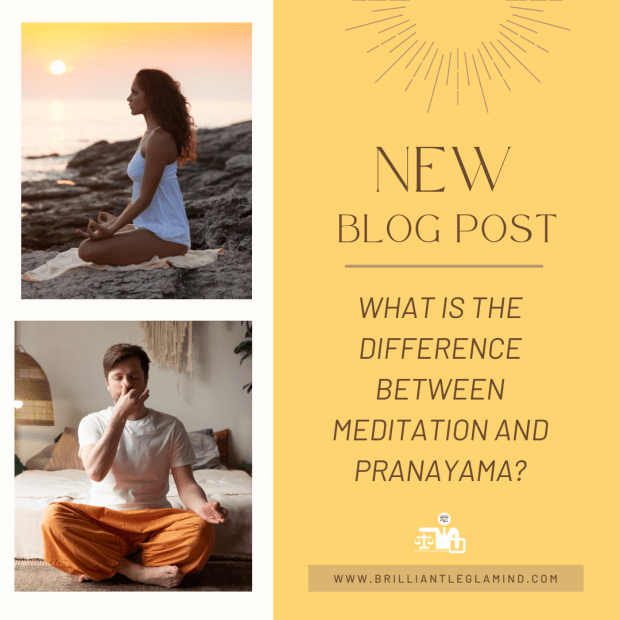
What Is the Difference Between Pranayama and Meditation?

Having taught meditation now for nearly 5 years, I commonly get comments in my sessions with comments about practices that aren’t, strictly speaking, meditation. They will rave about the benefits of box breathing or mention that their therapist/coach/yoga teacher taught them 4-7-8 breathing and it changed their life. I always welcome these comments and express agreement with their efficacy, since getting into technical differences of the practices is not always beneficial.

Even so, questions like these have made me curious about the differences between pranayama and meditation. Because my experience with meditation has primarily been based on practices derived from Buddhism and yoga has never been my first love, I used pranayama very little in my own practice. This summer, I decided to change that and obtained a certification to teach pranayama to expand my knowledge on the subject.

In truth, there are distinct differences between meditation and pranayama and these differences matter. That is not to say, however, that the practices cannot be effectively combined. This blog post will explore the differences to give you context so that you can decide how best to use them both to support your own practice.

Differences

The first notable difference between pranayama and meditation is origin. This issue can be a little tricky, of course, since there are many types of pranayama and many types of meditation. The secular study of both yogic and Buddhist practices and concepts has also led to a the development of further practices that may intertwine some of these ideas further.

The first fundamental difference between meditation and pranayama is breath. Though meditation very commonly involves the breath, focus on the breath is not required for meditation. Practices like loving-kindness or body scan, for instance, don’t use the breath as a focal point and numerous other focal points (such as a mantra, candle flame, sounds, or mental images) can be used in place of the breath. Pranayama, on the other hand, is the practice of working with the breath.

A less obvious difference is that pranayama derives from yogic practices and most of the most popular forms of meditation (Vipassana, Zen, loving-kindness, tonglen, etc.) derive from Buddhist philosophy. This distinction may not matter so much for practitioners who just want relief or a good support, but the different origins shed light on the different focuses of the practices.

Clearly, different teachers and schools of thought can modify this idea, but yogic philosophy is much more concerned with clearing the mind while Buddhist meditation is more intended to make peace with the mind. Thus, Vipassana or Zen meditators are usually encouraged to observe the breath and allow the mind to calm on its own. With pranayama, however, the breath is used as a tool and often manipulated for the purpose of clearing the mind, balancing energy, and creating physical benefits.

Similarities

Though there are differences between pranayama and meditation, they are not entirely distinct and need not always be kept separate. The first thing that pranayama and meditation share are the potential benefits. Because they both address the fundamentals of human life, both meditation and pranayama can result in mental and physical benefits. Done correctly, both practices can help the mind and body sync up and calm down.

For this very reason, both meditation and pranayama can be important and beneficial supports for individuals. They both deserve a place in a regular self-care regimen and they both can be used in the moment to maintain balance during difficult times. As one example, I really enjoy using alternate nostril breath during the day as a quick break to refresh myself and take a pause.

Another similarity is that pranayama and meditation go very nicely together. Yogic philosophy deems meditation as one of its eight limbs and so it is not uncommon for yoga classes to feature breath work and meditation. In the same way, many meditation teachers brought up in the Buddhist tradition (myself included) often incorporate pranayama into their guided meditation.

For instance, one way that I began experimenting with pranayama recently is to use it at the beginning of my meditation sessions as a way to quickly ground and relax myself. I have found ujayi breath to be a great tool for reconnecting with the breath due to its physical and auditory enhancements of the breath.

In short, pranayama and meditation are not the same. They have different origins and in many cases the purposes of the practices are distinct. Even so, they both have benefits for mental and physical health and they can complement each other nicely. Now that you understand how the practices are different but similar, the next step is to explore them both and determine what combination of practices work best for you.

Want to learn more about mindfulness and compassion? Check out my new book, How to Be a Badass Lawyer, for a simple guide to creating a meditation practice of your own in 30 days. And to share mindfulness with your little one, check out my new children’s book, Mommy Needs a Minute.

Like this post? Subscribe to the blog here or follow us on social media:

What Does It Mean to “Check in With Yourself”?

If you do guided meditations or yoga, you are bound to be instructed to “check in with yourself” at some point. Most commonly, teachers use this as a starting point for a mind-body practice because it makes sense to start the practice where you are. The only problem is, of course, that not all teachers offer additional guidance to tell us how to check in with ourselves. This post is offered to clear up that mystery.

For those who know about interoceptive awareness, checking in with yourself may be the norm. But if you have never heard the word “interoceptive” before, then some additional explanation may be needed. The term interoceptive means awareness of your inner experience. While this might be second nature to many of us, it may feel weird and new to those of us accustomed to living busy and worldly lives. When someone instructs you to “check in with yourself”, they are telling you to activate and note your interoceptive awareness.

This gives you a general idea about how to begin checking in with yourself, but you may still need to know specifically where to focus. Ideally, when you check in with yourself, you can scan your mental, emotional, and physical states. First, this would require a pause and then a simple acknowledgement of the physical sensations, emotions, and thoughts that may arise for you.

Now, if you are new to this process, it may be challenging at first to interpret what you note in your interoceptive awareness. You may not immediately be able to put words to sensations or clearly identify all emotions. That’s okay. The point isn’t to self-diagnose on a deep level, but instead just to touch in with your inner experience and see what’s there. If you stay open-minded and make the practice of checking in a habit, you’ll soon notice patterns that will help you understand more about what your mind, body, and emotions are telling you.

Why is checking in important? If you are using it at the start of your meditation or yoga practice, it may help you understand what kind of practice you need. Do you need a rigorous practice or a gentle one? Do you need to stretch yourself or give yourself a break? Do you need a specific focal point or can you just rest in open experience? When you can more regularly note where you are, you are more likely to give yourself what you need and have a better experience with practice.

In much the same way, making a habit of checking in with yourself throughout your day is a great way to manage your energy levels and needs so you can be proactive about self-care. This may help you head off emotional reactivity caused by fatigue or hunger or notice the signs of loneliness, anxiety or growing anger. You can do this by briefly pausing for a few breaths, scanning through your body, asking yourself “how do I feel,” and listening to what arises.

My favorite way to check in with myself is first to look for rushing or pushing forward. If I notice it, I try to pause or intentionally slow down. Then I do a quick body sweep by scanning for sensations in the most emotionally reactive parts of my body: eyes, brow, jaw, neck, shoulders, hips, and hands. If there’s tension, I scan my mind and emotions for clues about what’s going on with me. This usually takes about twenty to thirty seconds at most but it’s enough time to change the way I’m relating to my day and myself.

The important thing about checking in with yourself, however, is not the procedure you follow but the habit of checking in regularly.  One of the reasons that mindfulness practices can be so transformational is that they create mental space to check in with your inner experience regularly. Now you know what the teachers mean when they tell you to “check in with yourself” at the beginning of your guided meditation or yoga practice. You can now use these steps to check in with yourself to improve your meditation experience and bring more awareness to your life.

If you want to try this in a meditation practice, check out our Check in with Yourself Guided Meditation on YouTube or Insight Timer:

Want to learn more about mindfulness and compassion? Check out my new book, How to Be a Badass Lawyer, for a simple guide to creating a meditation practice of your own in 30 days. And to share mindfulness with your little one, check out my new children’s book, Mommy Needs a Minute.

Like this post? Subscribe to the blog here or follow us on social media:

Do You Really Need a Meditation Cushion?

The American way to start any new healthy habit is to scour the internet for the best gear. When it comes to meditation, this isn’t really necessary. As I have explained before, you can meditate in any position that makes you feel safe, supported, and comfortable.

This means you can meditate sitting, standing, lying down, or even walking. You can use a comfy chair, your bed, the floor, some nice cushions you have around the house, including some you use for restorative yoga, a porch swing or rocking chair, a parked car, or my personal favorite, the bath tub.

Though I have meditated in a variety of settings, it has been supportive to my practice to designate a particular spot as the one I use for regular practice. My spot is a little corner in my bedroom tucked away behind a large wardrobe. In it, I have my meditation cushion, a light blanket, and access to an outlet so that I can use my phone for guiding or sounds when I need it.

If you look on Pinterest, however, you can quickly overwhelm yourself with images of decked out meditation spots chock full of Mandalas, smiling Buddhas, incense, and LED lights. To the extent that this makes your practice more pleasant and you enjoy decorating, go for it. But a meditation space that would make an influencer blush is not really necessary, especially if nobody will see it but you.

Assuming you are into utility like me, what you really want from a meditation spot is something that offers support, creates comfort, and engenders focus. In general, then, you’ll want a large, flat layer to provide warmth and cushion for your ankles and knees in the sitting position. Then you will want something on top to lift the hips and support the natural curve of your back. This is to ensure that you have a clear airway to make breathing as easy and restful as possible.

This is the point of the meditation cushion, which commonly includes the zafu and zabuton. The zabuton is the large flat cushion, typically filled with a cotton-like substance and the zafu is a smaller pillow (often round or crescent-shaped) that is usually filled with seeds, beans, or buckwheat hulls. If you feel more comfortable in a kneeling position, you can get a similar result from using a meditation bench with a mat or blanket under your legs and knees.

These days, it is easy to find meditation cushions and benches online in a variety of colors, materials, and shapes. If, like me, you hate scouring the internet for products, I bought my zafu and zabuton from Still Sitting about 10 years ago and I can report that their name is accurate: I’m still using it. I went for the crescent-shaped zafu with a buckwheat fill because it fits my body better. Due to an old knee injury, I also added an extra mini zafu for some support under my right knee.

Can you achieve the same level of comfort with items you have around the house? Very likely. A few layers of old blankets, a folded yoga mat, or flat pillows could double for a zabuton. A sturdier and smaller cushion, a bolster, or yoga blocks could work for a zafu.

In short, you don’t truly need a meditation cushion or bench to start a meditation practice. Ideally, meditation is something you bring into your life and don’t only use in one spot in your home. Even so, a designated spot is a great way to turn meditation into a habit and a quality meditation cushion can support the body to help your mind focus and relax.

Thus, if you are really new to meditation, I would not recommend spending a lot of money on new gear. Once your practice becomes regular and you can sit for more than a few minutes each session, a cushion may be a great way to support your meditation practice and invest in it long-term.

Want to learn more about mindfulness and compassion? Check out my new book, How to Be a Badass Lawyer, for a simple guide to creating a meditation practice of your own in 30 days. And to share mindfulness with your little one, check out my new children’s book, Mommy Needs a Minute.

Like this post? Subscribe to the blog here or follow us on social media:

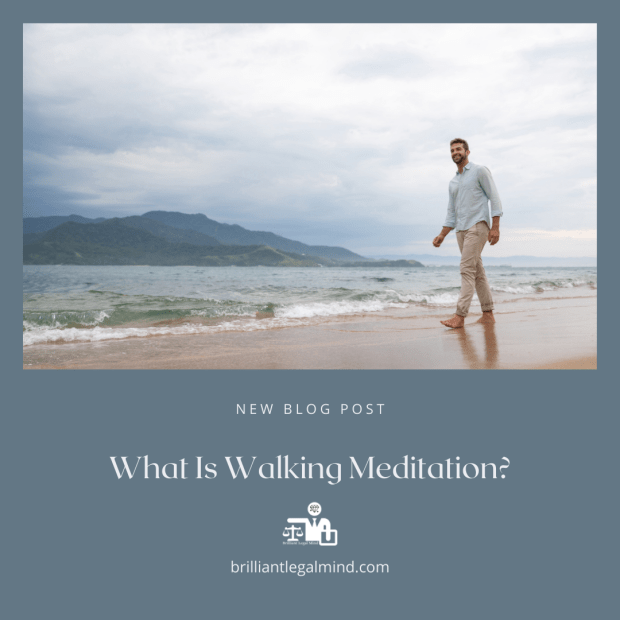
What Is Walking Meditation?

Cover image for blog post entitled "What is walking meditation?"

Friends tell me all the time that they like to go out for a “walking meditation.” My automatic reaction internal is this: “No, you’re not, but good for you.” Of course, I would never say this to someone unless asked but walking meditation is not the same thing as a walk outside.

One reason I would never offer this advice unsolicited in normal social circumstances is that I will never discourage anyone from (a) moving; or (b) getting outside. Taking a walk outside is awesome for you in every way. It’s good exercise and being outside is good for your mentally, emotionally, and spiritually. In the right circumstances, a walk outside can slow the mind and elicit mindfulness and calm.

Walking Meditation Is Not Just Taking a Walk

In short, walking meditation and a walk may overlap in some ways but they aren’t the same. The most prominent distinction is speed. With walking meditation, you don’t walk at your normal pace. You walk in slow motion.

The point of walking meditation isn’t exercise or enjoying the scenery. Rather, much like with sitting meditation, the point of walking meditation is to cultivate mindfulness by focusing very closely on what you are doing.

Image comparing walking meditation and simply taking a walk

If you have done a practice where you focused on your breath, I bet you noticed all sorts of things about breathing you had never noticed before. You may have noticed that a breath cycle affects various parts of your breath. You may have noticed that it feels kind of good. You may have noticed that you needed to learn to let yourself take deep, full breaths.

Walking Meditation Is Mindfulness with Movement

Walking meditation is similar. As you slow down the process of walking and pay attention to each step, you notice how much of your body is involved with walking.

You’ll notice your feet on the floor. You’ll notice the push forward, lifting and rotation of your foot, and then landing it firmly on the group. As you do this, repeatedly, you’ll learn that it can settle your mind just like sitting meditation.

Why Is Walking Meditation Helpful?

Now, you may be wondering why anyone would do this practice. To be sure, if you actually did walking meditation out in your neighborhood, your neighbors would probably come check on you to be sure you were okay. It looks funny and feels awkward.

A quote about walking meditation that contrasts it to sitting meditation and explains the benefits of the practice

The most likely place that you would experience walking meditation is on retreat and for a very practical reason: one cannot sit comfortably for hours on end. Many retreat centers will structure the program to include intervals of sitting and walking meditation to allow movement and keep the mind from becoming too dull.

The other great benefit of walking meditation, though, is that it can help you bring mindfulness into your life. Walking meditation may feel strange but it is a bridge between sitting meditation and real life. It encourages you to continue your mindfulness practice even as you move and go about your daily activities.

Walking Meditation Offers an Option for People Who Struggle to Sit Still

In addition, if you struggle with fidgeting during meditation or have pain associated with sitting for long periods, walking meditation may be a great alternative. My preferred way to use it at home is to do a few minutes of walking meditation to break up periods of sitting so that I can meditate for a longer period of time overall.

If you want to learn more about walking meditation, you can check the two-minute instructional video and presentation on our Learn to Meditate in Less than 2 Minutes page and YouTube channel.

Want to learn more about mindfulness and compassion? Check out my new book, How to Be a Badass Lawyer, for a simple guide to creating a meditation practice of your own in 30 days. And to share mindfulness with your little one, check out my new children’s book, Mommy Needs a Minute.

Like this post? Subscribe to the blog here or follow us on social media:

What Does Compassion Feel Like?

As a teacher of mindfulness and compassion, I have learned that a big part of the job is addressing assumptions. When it comes to compassion, this is even more critical since it tends to get less attention than mindfulness. In addition, though compassion is essential and can be incredibly powerful, many people assume it’s just like empathy or no different from being warm, soft, and nice. Even those who have felt the power of a compassionate response may think it’s impossible to cultivate it or show it when needed because we can’t train ourselves to feel a certain way on cue.

I get these concerns because I struggled with them in the past. That’s why I am writing this post to help you identify the things to look for when you practice compassion in your own life. In truth, compassion is not an emotion and does not require a specific bodily response. With time and experience, however, you can identify the experience more clearly so you can understand it better and cultivate it.

A common area of confusion when it comes to compassion is the idea that it is an emotional reaction. The reason that this presents a problem is that people often assume that compassion requires them to respond with certain emotions. In reality, the clinical definition of compassion is the response to suffering coupled with the willingness to help. This means that emotions that are often involved but they don’t have to manifest in any specific way.

In fact a common sign of compassion is not emotional volatility at all, but rather calm and stability. Since compassion is the response to suffering, this calm is something that can aid in producing a response that can help the suffering individual. After all, if we are to help a person in need (including ourselves) it helps to really understand what’s going on, doesn’t it? Thus, what might seem like a lack of emotional response can be a beneficial and profoundly compassionate reaction to suffering.

Even when physical sensations and emotions are present, you may also find that they don’t stay the same throughout the compassion response. Since compassion is about suffering, the first reaction may be one of pain, discomfort, or concern. In many cases, though, these difficult emotions can shift or transform into something closer to love or connection. This means a variety of bodily sensations are likely to occur, including sensations in the belly and chest and changes to breath and heart rate.

At the end of a compassion response, many people report (and I have personally experienced) feelings of wellbeing and serenity. This is because the compassion response causes the release of the hormones oxytocin, dopamine, and serotonin which are associated with love, rewards, and satisfaction. The most common place to look for these sensations is in the area of the heart, but those can range from feelings of fullness to a sense of expansion or lightness or even warmth or tingling throughout the body.

So, what does all of this tell us about what compassion feels like? First, compassion includes present and embodied awareness. Critically, this is an awareness rooted in your own experience that is not entirely absorbed by the situation of a suffering third party. In addition, the compassion response may not be a singular response at all but could by a dynamic unfolding from discomfort and concern into opening and, where necessary and appropriate, action.

For all these reasons, I can’t tell you what compassion feels like because compassion is not merely a feeling and the details of its manifestation may vary. Because compassion is a response to suffering, the particular suffering at issue may affect how it appears. The way to understand compassion best is to pay attention to how it manifests in you as you cultivate it. In short, the big question isn’t how compassion is supposed to feel, but instead how it tends to feel for you.

Want to learn more about mindfulness and compassion? Check out my new book, How to Be a Badass Lawyer, for a simple guide to creating a meditation practice of your own in 30 days. And to share mindfulness with your little one, check out my new children’s book, Mommy Needs a Minute.

Like this post? Subscribe to the blog here or follow us on social media:

Four Simple Words to Help You Start a Meditation Practice

This post was originally published as a guest piece for Constellation Marketing in July, 2021. It still rings true today and is perfect for anyone considering meditation for the new year.

I get all kinds of questions from lawyers who are interested in starting a meditation practice. It’s normal to have questions with anything new;  and us lawyers love exploring things as concepts before we jump in with both feet.

So, they ask me all the things: how often should I sit? How long for each session? What’s the best app? Do I need a cushion? What if I can’t clear my mind? What if I get fidgety? And on and on. I answer these questions with understanding because I once had them too, but I think the best way to answer them all is with 4 simple words:

  1. Just start.
  2. Start small.

Why Getting Started Is Essential for Meditation

There are a many ways to learn about meditation. At first, I learned the practice from books and podcasts. Those offer great tips and tools, but nothing changed in my life until I started meditating consistently. That’s because meditation is an experiential practice – you have to do it to understand it.

It’s sort of like civil procedure. Do you remember how hard it was to make sense of the civil rules in law school from just reading about them? I do, but I’m a litigator now and they make sense (at least most of the time) because I have used the rules when litigating real cases. In much the same way, you will not fully understand meditation until you do it for yourself. So just start.

Learning the Right Way to Meditate Requires Experience

Maybe it’s true that you don’t know how to do it “right” but if you start to sit, you’ll notice things about your mind, your body, and your life. Over time, you will learn what it is right for you because you’ll notice what you need more or less of to be a happier, healthier person. Besides, in the beginning, all you really need to do is build up some tolerance for sitting and doing nothing, develop some inner resources for handling adversity, and get acquainted with your mind.

Don’t worry about doing it wrong because, if you make meditation a lasting habit, you will 100% do things wrong or learn that aspects of your practice need to change. That’s not just okay and part of being human, it is the path you have to take to learn any new skill, including meditation.

Starting Small with Meditation Makes Sense

If this sounds scary, remember that my next tip is to start small. And by this, I mean very small. If you can sit for 5 minutes right away, go for it. I started with 1 minute because it was all I could handle. My thoughts were copious and judgmental and doing nothing was not my forte. But I quickly discovered benefits from tolerating the awkwardness and added minutes until I eventually worked up to 30.

In other words, starting small doesn’t mean staying small. It’s just a foot in the doorway to a life with an active meditation practice. Once you get started and learn a few things, you can let your practice grow at a pace that works for you.

Starting Small Makes Sense for Lawyers

Starting small is not only less intimidating, it’s also practical. Small increments of time are easier to work into a busy calendar than big ones. In addition, short sessions are ones that you could conceivably do every day and that makes it much more likely that your experiment with meditation will become a habit.

Moreover, since the early part of practice is about building skills, you are less likely to get disgusted with yourself and meditation if you give yourself some time to adjust.

I love talking and writing about meditation. I love answering questions for other lawyers who want to learn how to bring mindfulness into their lives. But what I hope you get from this is that you don’t have to know everything (or honestly much of anything) about meditation to benefit from it.

Instead, what you really need is curiosity, a little bit of courage, some self-compassion, and an open mind. If you invoke those traits as you begin your practice, you will be able to answer questions about meditation and so much more for yourself.


Want to learn more about mindfulness and compassion? Check out my new book, How to Be a Badass Lawyer, for a simple guide to creating a meditation practice of your own in 30 days. And to share mindfulness with your little one, check out my new children’s book, Mommy Needs a Minute.

Like this post? Subscribe to the blog here or follow us on social media:

Why You Can’t Clear Your Mind in Meditation and You Don’t Really Want To

The other day, my good friend Talar Herculian Coursey shared a post on LinkedIn about the most common problem new meditators experience: the inability to “clear one’s mind.” In response, numerous people commented that they “couldn’t” meditate for this very reason. As I shared in my new book, I tried my best to explain that this isn’t the purpose of meditation. Nevertheless, the comments kept coming, so I am explaining here why you can’t clear your mind in meditation and you don’t really want to anyway.

When I speak about mindfulness, I often joke that this isn’t really a bad thing because it’s a surefire way to know that you are still alive. If you meditate long enough, you’ll eventually come to the realization that one of the functions of the mind is to generate thoughts. So, a thinking mind, annoying as it can sometimes be, is a healthy one.

Even so, many of us lawyers don’t have the best relationship with our minds. Some of us may view our minds as bullies who boss us around, shame us, call us names, and annoy us when we are trying to focus or sleep. When we sit to meditate, we may have grand delusions of regaining control over our lives by silencing the bully in our minds.

But if the mind is a bully–and I have had my own experience with this–does it really make sense to think more bullying is going to solve the problem? I mean, if we want our minds to be kinder and gentler to us, doesn’t it make sense instead to learn to be kinder and gentler with our minds?

After I had meditated long enough, I started to see my mind much less like a bully and more like a child. Sometimes my mind wanted to babble and play and make up nonsense songs like a baby or toddler. Sometimes it wanted to create stories and share them like an excited little kid. And sometimes it would argue for the things it wanted or call names when things didn’t go its way.

What’s the big difference here between bully and child? The difference is that I was bothered, incredibly bothered, by the bully mind, but I could let the child mind be. In a word, the difference is acceptance. At a certain point, and I can’t tell you exactly when, meditation helped me see that the mind just made thoughts and they didn’t always have to control what I did or how I felt.

Once I came to this realization, the whole dynamic changed. I could hear my mind tell me I am an awful person and a failure at life and I didn’t automatically believe it. That would empower me to challenge it with logic, console myself, or reach out for support. I could see my mind spin stories about how my plans would all come to ruin and my loved ones would reject me. And I could just reflect on the fact that my mind was spinning yarns again and redirect my attention to the present moment.

How did this magical power emerge? It came from never learning to clear my mind. I’ve been meditating for a decade. I have undertaken special training. I have not found a way to clear my mind and I don’t think there is one. My goal at this point is to convince everyone else of the same thing.

What you can learn to do, however, is to find clarity about your mind. Meditation can help you do that because (certain forms of it) require you to sit and watch your mind. Though it seems like it sometimes, this is not a cruel joke. You aren’t supposed to learn how to clear your mind. You’re supposed to see that the nature of the mind is not to be empty, but you can still find clarity in it.

Clarity comes from meditation practice because, if you don’t give up, you will eventually learn that there is no choice but to accept your mind as it is. In other words, you learn to stop fighting all the thoughts. You learn that control, the strategy that you have relied on for too many things for most of your life, is not the only way. Because what happens when you stop fighting all the thoughts? Most often, that’s when they settle down. That’s when you are likely to experience periods of clarity. That’s when you will experience what space between you and your thoughts looks and feels like, so you can more often be aware in your daily activities when your thinking mind is activated.

If you start meditating and you notice that you can’t clear your mind, perhaps consider this as something other than a pain point or a personal failure. Instead, it’s a preliminary realization that can lead to far more significant insights if you let it. Yes, you can’t clear your mind, so stop trying to clear your mind. Accept it. Accept yourself. Go back to the breath. And see what happens next.  

Want to learn more about mindfulness and compassion? Check out my new book, How to Be a Badass Lawyer, for a simple guide to creating a meditation practice of your own in 30 days. And to share mindfulness with your little one, check out my new children’s book, Mommy Needs a Minute.

Like this post? Subscribe to the blog here or follow us on social media: