The American way to start any new healthy habit is to scour the internet for the best gear. When it comes to meditation, this isn’t really necessary. As I have explained before, you can meditate in any position that makes you feel safe, supported, and comfortable.
This means you can meditate sitting, standing, lying down, or even walking. You can use a comfy chair, your bed, the floor, some nice cushions you have around the house, including some you use for restorative yoga, a porch swing or rocking chair, a parked car, or my personal favorite, the bath tub.
Though I have meditated in a variety of settings, it has been supportive to my practice to designate a particular spot as the one I use for regular practice. My spot is a little corner in my bedroom tucked away behind a large wardrobe. In it, I have my meditation cushion, a light blanket, and access to an outlet so that I can use my phone for guiding or sounds when I need it.
If you look on Pinterest, however, you can quickly overwhelm yourself with images of decked out meditation spots chock full of Mandalas, smiling Buddhas, incense, and LED lights. To the extent that this makes your practice more pleasant and you enjoy decorating, go for it. But a meditation space that would make an influencer blush is not really necessary, especially if nobody will see it but you.
Assuming you are into utility like me, what you really want from a meditation spot is something that offers support, creates comfort, and engenders focus. In general, then, you’ll want a large, flat layer to provide warmth and cushion for your ankles and knees in the sitting position. Then you will want something on top to lift the hips and support the natural curve of your back. This is to ensure that you have a clear airway to make breathing as easy and restful as possible.
This is the point of the meditation cushion, which commonly includes the zafu and zabuton. The zabuton is the large flat cushion, typically filled with a cotton-like substance and the zafu is a smaller pillow (often round or crescent-shaped) that is usually filled with seeds, beans, or buckwheat hulls. If you feel more comfortable in a kneeling position, you can get a similar result from using a meditation bench with a mat or blanket under your legs and knees.
These days, it is easy to find meditation cushions and benches online in a variety of colors, materials, and shapes. If, like me, you hate scouring the internet for products, I bought my zafu and zabuton from Still Sitting about 10 years ago and I can report that their name is accurate: I’m still using it. I went for the crescent-shaped zafu with a buckwheat fill because it fits my body better. Due to an old knee injury, I also added an extra mini zafu for some support under my right knee.
Can you achieve the same level of comfort with items you have around the house? Very likely. A few layers of old blankets, a folded yoga mat, or flat pillows could double for a zabuton. A sturdier and smaller cushion, a bolster, or yoga blocks could work for a zafu.
In short, you don’t truly need a meditation cushion or bench to start a meditation practice. Ideally, meditation is something you bring into your life and don’t only use in one spot in your home. Even so, a designated spot is a great way to turn meditation into a habit and a quality meditation cushion can support the body to help your mind focus and relax.
Thus, if you are really new to meditation, I would not recommend spending a lot of money on new gear. Once your practice becomes regular and you can sit for more than a few minutes each session, a cushion may be a great way to support your meditation practice and invest in it long-term.
Want to learn more about mindfulness and compassion? Check out my new book, A New Year’s Present, to learn about mindfulness from a heartwarming story. For a simple guide to creating a meditation practice of your own in 30 days, try How to Be a Badass Lawyer. And to share mindfulness with your little one, check out my new children’s book, Mommy Needs a Minute.
Like this post? Subscribe to the blog here or follow us on social media:
Editor’s Note: I was never a big Judy Blume fan but the movie Are You There God? It’s me, Margaret came out the week of my daughter’s 11th birthday. I quickly read the audiobook in anticipation and went to see it with my daughters, mom, sister, and niece. Needless to say, it had an impression. Whether you love Judy Blume or not, anyone who lived through or is raising a child in adolescence can understand. By the way, call your mom or mom figure and say “Thanks. I love you.”
Are you there God? It’s me, Mom.
I have an eleven-year-old now. God, how did you let that happen? I am certain that it was a mere few days ago when she was guzzling a bottle, learning to walk, or heading off to kindergarten. But suddenly, she’s almost a teenager.
I’ve been eleven before, God. I know you can survive middle school. But now there’s TikTok and AI and every kid has a cell phone. To say the least, I feel ill-equipped to handle it all. So, I ask again: how did you let this happen? And I’ll add: what am I supposed to do about it?
When she was little, I could guide her. I was her favorite person. She not only listened to me; she thought I was interesting and—dare I say it—cool and fun. We went on adventures. We explored museums and parks. Even picking flowers in the yard seemed like a big deal.
But now, in the blink of an eye, I am the worst. I don’t know anything. I’m always wrong. I don’t get it. I only want to block her fun and get her in trouble. If I told her the sky was blue, I’m pretty sure she’d supply some Google link to an obscure study that shows me I am wrong.
How do I help a child raised in this age of information learn some wisdom? How do you teach a kid humility when they feel like they can answer anything with a few keystrokes? And, by the way God, she already types faster than I do as a practicing lawyer, blogger, and book author. Can you tell me how to manage this?
I’ll wait, God. I’m sure your answer will be forthcoming.
Okay. This is ridiculous. I’ve been sitting in silence for a long time. I have a pretty good amount of patience by now. I sat. I waited. You didn’t tell me a thing. Seriously? You create this situation where I can make a kid and then offer no advice at all when that kid starts to look more like a grownup and needs some real help?
Fine. I’ll think this through since you so clearly don’t want to help. I’ll try silence again.
What comes up is a memory of how I was at eleven. I was smart and curious and scared and lonely and silly and creative and wanted to try everything. I made so many mistakes and did some things I regret. But eventually I learned by making mistakes. Sometimes my parents told me I made mistakes and sometimes they just loved me as I made them.
Oh geez, God. Is this your answer? I have to just be there to watch all of this? I have to watch her—my baby girl—make mistakes? I have to watch her—my first born—sometimes get hurt? I have to sit and try to stay calm and look like I know what I am doing as she starts to go out on adventures in this big crazy world without me? And just hope she runs into good and decent people along the way? Thanks for nothing, God. Really. Worst advice ever.
Okay, that last one hurts a bit. Experience teaches. I see what you’re doing, God. Even though you’re right, I don’t like it. I have to learn to let go a bit. I have to show what stability and kindness means, which means I need some support from my family and other mom friends. My daughter won’t listen to what I say (obviously), but she’ll remember what I do. And if she remembers that, maybe when she really needs it, she’ll let me help her.
I get it now. The answer is hard but I think I feel better. Thanks, God. Sorry I yelled. If you are there, keep watching because it’s going to be a fun ride. And if you don’t mind doing something about the Tiktok and AI situation, I’d really appreciate it.
If you need some extra help managing your experience as a caregiver, check our Guided Meditation for Caregivers here.
Want to learn more about mindfulness and compassion? Check out my new book, A New Year’s Present, to learn about mindfulness from a heartwarming story. For a simple guide to creating a meditation practice of your own in 30 days, try How to Be a Badass Lawyer. And to share mindfulness with your little one, check out my new children’s book, Mommy Needs a Minute.
Like this post? Subscribe to the blog here or follow us on social media:
It was a busy week but a great week for me. I got to celebrate Well-Being Week in Law in several different ways.
First, I got to present on mindfulness and confidence for a law firm. The session was well-attended and the engagement from the audience was excellent. I shared how mindfulness can help build confidence because it can help you break down fear and doubt into component parts and learn strategies to care for each aspect.
Well-Being Week in Law Event Number 1
On Wednesday, I connected with Kristin Tyler, a founder of LAWCLERK Legal and a long-time friend of the blog, and coach and one of my co-authors from the book #Networked, Olivia Vizachero, to discuss mental health in the legal profession.
We discussed everything from strategies for time management and reducing decision fatigue to the practices that support our personal and professional well-being. It was a fun conversation and I was so proud that LAWCLERK chose my book, How to Be a Badass Lawyer, as a giveaway item to support attorney wellness.
You can watch the recording of event here on YouTube:
Well-Being Week in Law Event Number 2
For my last event of the week, I came back home. Specifically, I did a brief talk and guided meditation for my local bar association. I’m a proud member of the Northern Kentucky Bar Association Lawyers Living Well Committee. I talked about how to manage the early phases of meditation practice when you may not immediately feel calm and relaxed. In the guided meditation, I focused on ways to learn to practice relaxation and rest.
To listen to the talk and try the meditation, check out the recording of the event here:
Did you do any special activities this week? Leave a comment to let us know what you tried.
Want to learn more about mindfulness and compassion? Check out my new book, A New Year’s Present, to learn about mindfulness from a heartwarming story. For a simple guide to creating a meditation practice of your own in 30 days, try How to Be a Badass Lawyer. And to share mindfulness with your little one, check out my new children’s book, Mommy Needs a Minute.
Like this post? Subscribe to the blog here or follow us on social media:
It’s Well-Being Week in Law this week. If you are familiar with the mental health challenges in the legal profession, this may not be surprising. Even so, you may ask yourself what exactly does “well-being” mean?
There are many ways to define this. Some take the approach of creating buckets or categories which ensure that the various aspects of lawyers’ lives are addressed. This includes everything from physical, mental, emotional, to spiritual and even financial needs.
As someone who has always been skeptical about the idea of work-life balance, I prefer something a bit more flexible. Instead of filling buckets, I prefer a process based on habits and practices that flow into and support one another. A process like this can shift and change with the seasons of life. Like the bucket approach above, however, it is premised on the assumption that lawyers are humans first and their human needs must be met.
5 Steps of Lawyer Well-Being
So what are our human needs? We need to take care of our bodies, minds, and hearts. But to be happy we also need to connect with others in community and grow. These five steps cycle into each other to form my process for lawyer well-being, which I share below.
1. Feeling Is Fundamental to Well-Being
Lawyers can struggle with well-being for a fundamental reason: we are often lost in our thoughts. Attunement to our bodily experiences is, thus, an important place to start for improving personal wellness. Even if you struggle with this, small changes over time can increase body awareness, which can help you identify and tend to personal needs on an ongoing basis.
This may sound basic and that’s because it is. This aspect is about reconnecting with the actual experience of life every day. Technology and the rush of our lives do not lend themselves well to staying present in our bodily experiences. Everything from alcohol to Netflix can serve as a numbing tool if we don’t reflect on how we use them.
2. Rest Is Essential for Lawyers
A billable hour system means that we are validated by productivity and can easily correlate hours worked with worth. Without rest, however, performance, productivity, and creativity suffer. Rest, of course, is only effective when we truly can allow ourselves to relax and recharge.
Sleep is a huge part of the rest we need as humans. With our very active minds, however, we lawyers may also need to develop practices to learn how to deeply relax. If our nervous system stays on high alert, it can prevent us from relaxing or sleeping, and lead to other health problems. With our heavy reliance on technology, rest may not always be just “doing nothing”, but instead might include doing another activity “in real life” and without any screens.
One of the reasons that healing is hard for lawyers is that processing emotions takes time and patience. Some emotional experiences won’t make sense to us if we are not attuned to our bodies and don’t have the time to sit with them. Stigma and feeling like we always must present as being in control and competent can make this a challenge too.
4. Connection Is Critical
Lawyers are often around other people. To do our jobs, we often have to deal with a variety of personalities. We usually must also network and build our reputations broadly across groups. Despite this, lawyers experience loneliness more than other professions.
Real connection means that we feel we are able to be ourselves. It also requires a sense of belonging in our firms, families, and communities. It means that there must be some meeting point for our inner experience and the outer world.
Because our lives are busy, we may have to plan ahead to schedule in activities even with people we love. In addition, life changes rapidly so social dynamics do too. On top of this, some of the social institutions humans have looked to for belonging are no longer as prominent as they once were. Though it can feel strange that keeping in touch with friends may take work, the effort is well worth it. Do not take feelings of disconnection to mean there is something wrong with you.
The profession and most firms are experiencing rapid change right now, which often presents opportunities for growth. One thing to remember, though, is that growth is not necessarily always pleasant. Because it can be scary, stressful and volatile, we may need to have periods of rest and relative inactivity and to rely on the other skills and supports to assist as we establish equilibrium.
Want to learn more about mindfulness and compassion? Check out my new book, A New Year’s Present, to learn about mindfulness from a heartwarming story. For a simple guide to creating a meditation practice of your own in 30 days, try How to Be a Badass Lawyer. And to share mindfulness with your little one, check out my new children’s book, Mommy Needs a Minute.
Like this post? Subscribe to the blog here or follow us on social media:
Q. Joel, tell us a bit about yourself, including your status now and a brief history of your work. Where were you in your life and career when you received your diagnosis?
For the great majority of my career, I was a corporate attorney leading large groups of legal and contract management personnel. I started off at Allstate Insurance Company and then was General Counsel of a Sears/IBM telecommunications and data processing joint venture. I then moved onto Accenture where I was the Deputy General Counsel managing the Americas legal team, global contract management team and COO of the legal group. After achieving everything I wanted to achieve in my legal career, I became the CEO of the National Association of Minority and Women Owned Law Firms – a non-profit organization now made up of over 215 minority and women-owned law firms seeking the opportunity to compete for and win business from fortune 500 corporations.
I have always been passionate about DEI and frustrated by the lack of progress in the legal profession so decided to become the change in the world I wanted to happen and make DEI my full-time focus. I also thought it was critical for me (a white male) to play a role in this because change is not going to happen without everyone in the fight. Affinity groups are critical, but they can’t move the ball forward without the majority working towards the same goals. I’m proud of the work I have done at NAMWOLF and for my DEI efforts generally but there is so much more to do. Even though I am retired, I am still actively involved in DEI efforts by serving on an internal advisory board and as a mentor for Diversity Lab’s On-Ramp Fellowship program.
In November of 2020, I was diagnosed with stage IV renal cell carcinoma (“RCC”). I was having terrible back pain that I thought was just a continuation of history with my back. When they did an MRI of my spine, they found a large tumor destroying my iliac bone. When they biopsied the tumor, they concluded it was kidney cancer and I had several tumors up and down my spine from the back of my skull down to the hip. I also had a small kidney tumor that was causing no harm to my kidney. Coincidentally and thankfully, the diagnosis came three months before my long-awaited retirement from NAMWOLF, so I was able to seamlessly transition my job duties to my successor and begin to focus on my battle with stage IV cancer.
Q What were the most important practices or supports that helped you cope with the diagnosis and treatment?
The stages of dealing with cancer are real: shock, anger, sadness, anxiety, depression and then “I’m going to kick the you-know-what” out of this disease. Some get to the last stage sooner than others. It took me four months to get to that stage and I remain at the stage today. But for many, including me, you must get into some pretty dark areas before you can finally see the light.
Several things helped me get through this. First, I have an incredible family (“team Stern”) who refused to let me get too down in the dumps. They pushed me when I needed to be pushed and let me rest and wallow in self-pity when I needed to. Second, I have a great group of friends who were very helpful in supporting me. Third, having an excellent medical team composed of experts in the disease who combine great skill and bedside manner is critical. I’m a great believer in large teaching hospitals in big cities if possible.
I also must thank my mother for teaching me how to fight this disease. She was diagnosed with breast cancer when I was five and fought the disease for 15 years as it spread throughout her body. She never complained about her plight, raised three sons while fighting, and fought until the very end. While I never appreciated her lessons while she was alive, my mother is a role model now that I am going through a very similar fight. I also love to write about my disease. Writing has been extremely cathartic for me and helps me deal with and express emotions that I would struggle to say verbally.
Q. What made you decide to write a book to share your experience?
I joined a Facebook community of stage IV RCC patients and caregivers and started to write “thankful Friday” posts every week. I shared the lessons I learned and how, in some ways, I am a better person now that I have this disease. The group suggested I compile the 18 months of weekly posts and put them in a book and my family supported it.
I decided to self-publish and donate all proceeds to kidney cancer non-profits. I have been pleasantly surprised by the number of people who have written to me, saying they have gotten a lot out of the book even though they don’t have cancer. I know doctors around the country are recommending this book to their patients.
I wrote the book for three reasons: (1) to inspire people dealing with life’s challenges not to give up and find the sun in an otherwise very cloudy day whether cancer or not; (2) to collect the lessons I learned as a reminder during tough times; and (3) to leave a gift for my three grandchildren so they would know who I was as a person in case I am not around when they are adults.
Q. We often hear about the bad aspects of social media, but part of your story includes a support network you found on Facebook. Can you share a bit about why that group was so important to you?
I was a very late joiner of Facebook and started post-COVID because I had more time on my hands. When I got my diagnosis, I used Facebook to see if there were communities that could be of help to me and was pleased to find several. The group I am currently in “Our Stage 4 Journey Renal Cell Carcinoma” is a community of kind and informative RCC patients and caregivers who love to share, listen, and help others.
I admit I am addicted to this group, but have found it extremely helpful in dealing with this disease. We have members around the globe and I’m proud to say that we truly respect and love each other, and our primary motivations are to help people dealing with RCC. It is an incredible group of people who are passionate, caring, loving, helpful and are all warriors. It’s a private community, but if you have kidney cancer or are a caregiver, please join.
Q. You have written a lot about having a positive outlook in response to your diagnosis. This is one of the most impressive things I noticed in reading your book. Do you have any secrets or wisdom you can share about how to do this when life does not make it easy?
While there may be no empirical evidence definitively confirming that having a positive attitude makes a difference with having a prolonged and quality life with a terminal disease, my doctor and many others believe having that positive attitude truly makes a difference. I agree. Having a positive attitude allows you to dream, make plans, get out of the house when you want to stay in bed all day, give the next new treatment a chance to work, not give up before it’s time and find opportunities to enjoy time with friends and family.
I believe dreaming is one of the most important pieces of dealing with this disease. If you are always negative, you can’t dream; if you don’t dream, you will not accomplish. And, assuming I am wrong and there is no correlation in attitude and response to diagnosis, what is the downside? Having this positive attitude has allowed me to have a great two plus years despite this disease. It has allowed me to watch my grandchildren grow up, take several vacations, go to my first Super Bowl, enjoy nature in ways that I never appreciated, and help others.
There are a few things I do to try to maintain the positive attitude. They include:
giving myself 30 minutes each day to think about the worst and be anxious, negative, angry or whatever. After thirty minutes, I don’t allow my brain to take me anywhere negative for the day. It’s not realistic to expect that we will never have down moments, but being able to compartmentalize them into just thirty minutes each day helps. I do this at 1 AM every morning and then done for the day.
appreciating that anxiety for tomorrow just ruins today and that anxiety is almost always worse than reality. When nervous, I repeat this as a mantra.
make a bucket list of things I want to accomplish in the next 12 months. This has been extremely helpful to me and I’m shocked at how many I have accomplished;
living in the moment and focusing on today and tomorrow and not the negatives that may occur six months out.
asking “why not?” versus “what if?” For example, “why not continue to beat this disease?” versus “what if I have progression?”
continuing to write my “thankful Friday” posts every Friday and help people.
focusing on my legacy and trying to ensure that I leave a positive imprint on the people I touch.
finding joy in all the positives that happen in my life every day which can be as simple as spending time with my grandchildren, having lunch with a friend, or reading a good book.
journaling my thoughts and having an open book with respect to sharing.
staying active both in DEI and the kidney cancer space. The Board I am on and speaking I do keep me going.
Q. Are there any resources, besides your book, that you would like to share with our readers?
Other than the Facebook community I already mentioned, two of my favorite books dealing with cancer are When Breath Becomes Air and Tuesdays with Morrie.
Joel Stern is an attorney with a 25-year career as a general counsel attorney for corporations. From 2014-2021, he served as CEO of NAMWOLF and his service to that organization and DEI efforts were recognized when the organization created a scholarship in his name in 2021. Currently, Joel is successfully waging a two year plus war against Stage IV RCC and writing and speaking about the challenges of dealing with a terminal disease. He recently published a book titled, My Journey with Renal Cell Carcinoma: How to Make the Most of a Dire Diagnosis. Joel sits on the Boards of the Kidney Cancer Association and the Judy Nicholson Kidney Cancer Foundation. Joel resides in the Chicago area with his wife, Donna, and his now three grown up daughters, who all live within twenty minutes of Joel’s home, Brittany, Amanda, and Taylor. He is a grandfather to five-year-old Aidan Joel, sixteen-month-old Oliver, and seven-month-old Lucas.
Want to learn more about mindfulness and compassion? Check out my new book, A New Year’s Present, to learn about mindfulness from a heartwarming story. For a simple guide to creating a meditation practice of your own in 30 days, try How to Be a Badass Lawyer. And to share mindfulness with your little one, check out my new children’s book, Mommy Needs a Minute.
Like this post? Subscribe to the blog here or follow us on social media:
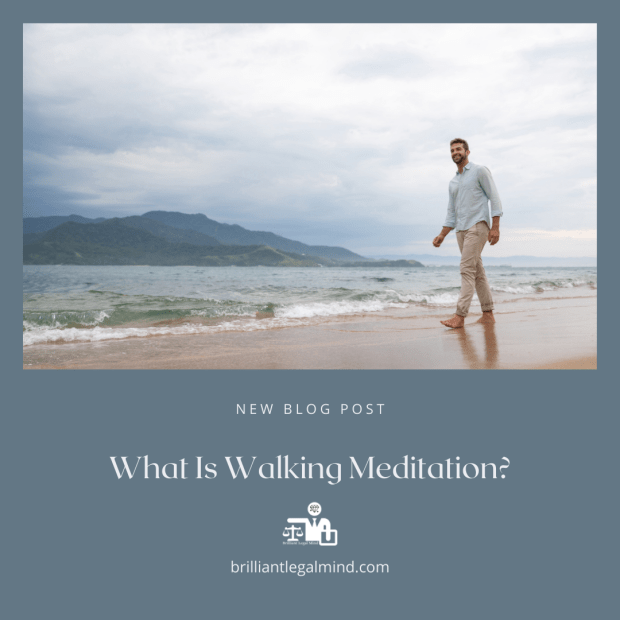
Friends tell me all the time that they like to go out for a “walking meditation.” My automatic reaction internal is this: “No, you’re not, but good for you.” Of course, I would never say this to someone unless asked but walking meditation is not the same thing as a walk outside.
One reason I would never offer this advice unsolicited in normal social circumstances is that I will never discourage anyone from (a) moving; or (b) getting outside. Taking a walk outside is awesome for you in every way. It’s good exercise and being outside is good for your mentally, emotionally, and spiritually. In the right circumstances, a walk outside can slow the mind and elicit mindfulness and calm.
Walking Meditation Is Not Just Taking a Walk
In short, walking meditation and a walk may overlap in some ways but they aren’t the same. The most prominent distinction is speed. With walking meditation, you don’t walk at your normal pace. You walk in slow motion.
If you have done a practice where you focused on your breath, I bet you noticed all sorts of things about breathing you had never noticed before. You may have noticed that a breath cycle affects various parts of your breath. You may have noticed that it feels kind of good. You may have noticed that you needed to learn to let yourself take deep, full breaths.
You’ll notice your feet on the floor. You’ll notice the push forward, lifting and rotation of your foot, and then landing it firmly on the group. As you do this, repeatedly, you’ll learn that it can settle your mind just like sitting meditation.
Why Is Walking Meditation Helpful?
Now, you may be wondering why anyone would do this practice. To be sure, if you actually did walking meditation out in your neighborhood, your neighbors would probably come check on you to be sure you were okay. It looks funny and feels awkward.
The most likely place that you would experience walking meditation is on retreat and for a very practical reason: one cannot sit comfortably for hours on end. Many retreat centers will structure the program to include intervals of sitting and walking meditation to allow movement and keep the mind from becoming too dull.
The other great benefit of walking meditation, though, is that it can help you bring mindfulness into your life. Walking meditation may feel strange but it is a bridge between sitting meditation and real life. It encourages you to continue your mindfulness practice even as you move and go about your daily activities.
Walking Meditation Offers an Option for People Who Struggle to Sit Still
Want to learn more about mindfulness and compassion? Check out my new book, A New Year’s Present, to learn about mindfulness from a heartwarming story. For a simple guide to creating a meditation practice of your own in 30 days, try How to Be a Badass Lawyer. And to share mindfulness with your little one, check out my new children’s book, Mommy Needs a Minute.
Like this post? Subscribe to the blog here or follow us on social media:
I really love appearing on podcasts and it’s not just because I’ve got some books to sell. I love answering questions. This sounds kind of weird but I love the way they put me on the spot. It’s almost like a jungle gym for the mind. If you give it an obstacle, you will be amazed to see the connections and insights it offers.
Many times when I am invited on podcasts, the hosts present me as an expert. Even so, I find that I learn so much from thinking about things in a new way and getting the perspective from the host. When I appeared on The Mindful Fire podcast with Adam Coelho, I was not disappointed.
Most frequently, I have appeared on podcasts with lawyers or for lawyers. Adam however, is not a lawyer and he’s somebody I never would have met but for LinkedIn. Adam works at Google and he teaches mindfulness there as part of the Search Inside Yourself program.
Like me, Adam has a side hustle and a goal to help other professionals use mindfulness to achieve financial independence and build the life they want. Because of this background, Adam knew the questions to ask to fully explore mindfulness and compassion practices to professionals of all kinds.
As such, we talked about various topics during the interview, including:
My favorite insight from the interview, though, was when Adam asked me what I would tell other people who were starting to build “a life they loved.” This is a great question for many reasons because it forces us to focus on two things: what we want in life and how we feel in our lives. It also assumes we can and deserve to be excited about our lives.
Though I didn’t feel any hesitation as I started to respond, my answer surprised me. The key, I explained, was meaning. Mindfulness and compassion helped me because the practices helped me manage stress, build inner resources, and connect with who I was. But mindfulness and compassion changed my life because all of those things allowed me to connect with my deepest values, build a community, and create meaning in my life.
Want to learn more about mindfulness and compassion? Check out my new book, A New Year’s Present, to learn about mindfulness from a heartwarming story. For a simple guide to creating a meditation practice of your own in 30 days, try How to Be a Badass Lawyer. And to share mindfulness with your little one, check out my new children’s book, Mommy Needs a Minute.
Like this post? Subscribe to the blog here or follow us on social media:
When you start to indulge your creative tendencies, you become a connoisseur of ideas. Just like food or wine, you notice the variations in intensity. You instinctively understand that some ideas, like an avocado, have to be used immediately upon peak ripeness. But some, like dried mushrooms or good vinegar, can be stashed away to be used in small doses when the time is right. My first children’s book, Mommy Needs a Minute (available for preorder now), was like the good vinegar that sat on the shelf of my mind until I had the right ingredients to turn it into something fantastic.
I had thought for a long time about writing a children’s book. I have several lawyer friends who have done so, including Becki Lee and Michelle Browning Coughlin who wrote the foreword for my book. The idea started to coalesce in 2021 when I wrote a post about the struggle of finding a quiet space to meditate in a house full of kids. At the time, I could see that this was fertile ground for a children’s story, but the idea was not quite ready to germinate.
The following year, I was distracted by transition to a new law firm and writing my first book. Clearly, I would not add another project to that situation, right? As it turns out, this is not how my brain saw it. The very week I gave notice at my old firm and as I was about to begin writing my book in earnest, I found myself with a spare 20 minutes before my daughters’ bedtime.
Perhaps it was that the book writing plans had primed the pump of creativity and churned old ideas up first. Perhaps I wanted a fun distraction at a stressful and emotional time. Or perhaps my brain just got on a roll making rhymes and couldn’t stop. Whatever the cause, I found myself opening a Word document and typing out a funny poem about a mom negotiating with her kids for a few quiet minutes so she could meditate.
I read it back to myself and saw instantly that, despite a few problems with meter and awkward rhymes, it wasn’t bad. Before doubt had time to set in, I sent it to a few of my adventurous and creative friends, including two that proved quite fortuitous. The first was my friend, Naomi L. Hudson, whose brain comes up with pictures like mine comes up with words. Naomi’s daughters had attended daycare with mine and we had been friends ever since. She had experience illustrating children’s books, so she gave me a green light and agreed to illustrate.
My other friend was J.W. Judge from Scarlet Oak Press. He had helped Becki Lee publish her books. I met him through LinkedIn and lawyer groups. His brain comes up with even more words than mine but his publishing company helps other lawyers easily self-publish books. He, too, gave me a thumbs up as well as much needed advice on rhyme, meter, length, and much more after Naomi finished the illustrations.
In the months that followed, I let Naomi work her magic. I gave her some general ideas about what I envisioned and suggested a few silly ideas, like adding my dog Lyra into the book because she has a funny habit of sitting on my lap when I meditate. Overall, though, I trusted Naomi to follow her instincts. This decision was a good one because it was fun to see how the pictures helped transform the poem into a story.
Ideas can sometimes take time to germinate in our minds until they are strong enough to take root. This is why making mental space through practices like meditation or exercise or journaling can make such a difference. We need space so we can clearly see when an idea is emerging and trust ourselves enough to let it come out.
And when that happens, it certainly helps to have some creative and adventurous friends around to help you turn your little seed of an idea into something fantastic. I’m lucky that I had both and that Mommy Needs a Minute will be out in the world very soon.
Want to learn more about mindfulness and compassion? Check out my new book, A New Year’s Present, to learn about mindfulness from a heartwarming story. For a simple guide to creating a meditation practice of your own in 30 days, try How to Be a Badass Lawyer. And to share mindfulness with your little one, check out my new children’s book, Mommy Needs a Minute.
Like this post? Subscribe to the blog here or follow us on social media:
Even so, I had a lot of doubts when I started writing about things that weren’t related to my law practice. I had ideas that I should devote most of my mental energy to building my law practices and serving clients and than anything leftover should go to my kids.
I’m no math genius, but anyone can immediately puzzle out the problem with this theory: it didn’t leave much for me. Now, you may not consider writing a very restful but for me it was. It let my brain and heart gradually stretch like you stretch your legs after a long trip. Though I read and write a lot for my law practice, I don’t do it the same way I write in a blog or social media post.
Want to learn more about mindfulness and compassion? Check out my new book, A New Year’s Present, to learn about mindfulness from a heartwarming story. For a simple guide to creating a meditation practice of your own in 30 days, try How to Be a Badass Lawyer. And to share mindfulness with your little one, check out my new children’s book, Mommy Needs a Minute.
Like this post? Subscribe to the blog here or follow us on social media:
There is a slightly evil thing that happens when you start writing. You love reading other people’s writing. You want to be generous in your judgment because you know how maddening the craft can be. But inevitably you find yourself evaluating the work both as a reader and a writer. In some cases, this can ruin the pure appreciation of the work.
When I found Ruth Ozeki’s novels, however, I was delighted to enjoy the inverse of this situation. I loved her books as a reader and, as a writer and teacher of mindfulness, I felt nothing short of awe. Ruth Ozeki is a Zen teacher, author and filmmaker from California. Her novels tell tales of tragedy engendered by modern life and the unexpected beauty and hope that can be found therein. The key, as Ozeki shows us, is that we have to look closely and lovingly in the places we’d rather ignore.
That’s exactly what Ozeki’s novels do. She covers the isolation and alienation of contemporary life, including our throwaway and commercialist culture that leads to massive garbage patches in our oceans and hoarding in our homes. Her novels explore inhumanity in our meat industry, media outlets, modern workplaces, and even among well-intentioned educators, social workers, and medical and mental health professionals.
In doing so, Ozeki doesn’t teach the concept of what suffering means. She helps us feel it. Through her characters, we experience how suffering takes root, how we get embroiled in it, and how we overlook the habits that perpetuate suffering for ourselves and others. As any Zen teacher would, of course, she also shows us that there is a way out of this trap if we are willing to open up our eyes and see it.
For example, while reading Ozeki’s latest award-winning novel, The Book of Form and Emptiness I wanted to walk into the book and save the wayward Annabelle who couldn’t cope with all that life had sent her. She would frustrate and dismay me in one chapter with her refusal to face life and be the parent her son needed. Then in the next, she’d be positively brilliant in advocating for herself and her son and show that she didn’t need saving, but simple social support.
In our lives and in the world, we often look for the simple and quick answers and so the big, nasty problems may feel too overwhelming to address. One wouldn’t think that novels, a form of entertainment, could tackle the big problems of the world and still be enjoyable. Ozeki’s novels show that this assumption is wrong.
If you want to learn about mindfulness in a totally new way or you just want some novels that are as wonderfully strange as real life, check out Ruth Ozeki’s work, including:
These books may force you to look at the parts of life you’d rather ignore, but they will help you find beauty, joy, and hope that you’d never expect.
Want to learn more about mindfulness and compassion? Check out my new book, A New Year’s Present, to learn about mindfulness from a heartwarming story. For a simple guide to creating a meditation practice of your own in 30 days, try How to Be a Badass Lawyer. And to share mindfulness with your little one, check out my new children’s book, Mommy Needs a Minute.
Like this post? Subscribe to the blog here or follow us on social media: