Need Motivation to Meditate? Try This Hack

Cover image for blog post entitled "Need motivation to meditate? Try this hack"

It’s a Monday night and I am trying to get myself into writing mode. My weekend plans blocked my normal motivation to write. Now I am stuck in last minute work mode and trying to find the motivation to crank something out. Then it hit me. My own life advice suddenly went careening through my mind. “Just do five minutes,” it bellowed.

And that, dear readers, is the post for today. The five-minute rule-or hack or strategy or cudgel for those really bad days-is something that has saved many a healthy habit for me, including meditation. It’s very simple, which makes it a perfect for those low energy times.

What is the five-minute rule?

The five-minute rule is not really a rule. I am not sure it has any basis in research. It’s not necessarily a scientific thing. Rather, it’s a practical thing. Finding motivation can be a challenge for any healthy habit and it can be especially hard for meditation. Why?

Well, if you don’t feel like doing something, it can be especially hard to sit and pay close attention to exactly how much you don’t feel like it.

What’s the answer to this problem? One simple answer is to cut down on the time you spend noticing how much you aren’t feeling it. This is where the five-minute rule enters the chat in the form of a motivational GIF and a caption that says “bruh, you can do anything for 5 minutes.”

The five-minute rule as applied to meditation.

I’ll explain this in less figurative language in case my metaphor and old millennial text speak was confusing. The five-minute rule is this: you do the thing you don’t want to do even though you know you should, but only for five minutes.

If your normal meditation habits is, for example, 20 minutes, you don’t worry about that. Instead, you just commit to 5 minutes. Then at the end you notice how you feel.

In many cases, you may find that (magically) your mood has changed and you may want to do more. If that happens, go with it. If you do not feel better and hate every second, you should instead stop, let it be, and praise yourself profusely for trying.

Image explaining the five-minute rule, a hack for spurring motivation for healthy habits, including meditation

Why five minutes of meditation matters.

You skeptics out there may wonder why this matters. You may think 5 minutes of meditation or any other healthy habit doesn’t matter. Perhaps you may be right if you are thinking of the five-minute activity by itself.

But when we are talking about habits, we aren’t think of one brief session. Instead, we are talking about hundreds or potentially thousands of them over the span of time. This compounding effect is why research is starting to emerge that shows that even small bits of mindfulness practice can impart benefits.

Short sessions done strategically when needed, though, serve another arguably more significant function: they preserve the habit. If you meditate for five minutes, that’s another day you have meditated and think of yourself as someone who meditates. In fact, if you meditate for a short burst on the days you aren’t feeling it, that isn’t just practicing the habit but committing to it.

Does this work for other activities?

You may be wondering if this hack can work for other activities too. Yes it can. Case in point, I used it for this blog post. I wasn’t sure I felt like writing, but I told myself I would try a few minutes. A few paragraphs in, I found my flow and discovered I was enjoying myself while typing away.

I have done the same thing for exercise too. As I have written before, I usually love my Peloton workouts. Some days, though, I am not into it. My strategy on those days is to do a warm up, which is usually-you guessed it-5 minutes. By the end, I usually feel better. But if I don’t, I quit, praise myself for trying, and call it quits.

Does it have to be five minutes?

Lastly, you may wonder whether the five-minute rule truly has to be five minutes. I’m the meditation teacher that says self-discipline is overrated. Do you really think I am going to be strict on this one? Of course not.

For the hack to work, I recommend investing enough time and to give yourself time to adjust and assess how you feel. However, there’s no reason you can’t try a period less than 5 minutes. For instance, if your normal meditation practice is 10 minutes, a shorter period of 2-3 minutes might make more sense.

Remember: your meditation practice is your practice. The good thing about mindfulness is that it calls you to pay attention. If something doesn’t work for you, notice it and try something else.

Conclusion

In short, when motivation to meditate is low, you don’t necessarily have to fight it. Instead, you could try going with it by reducing the amount of time that you meditate. You may find after five minutes of practice and want to do more, but even when you don’t you may preserve your habit and your identity as someone who meditates. Next time you find yourself unmotivated to sit, remember the rule: just do 5 minutes.


Want to learn more about mindfulness and compassion? Check out my new book, How to Be a Badass Lawyer, for a simple guide to creating a meditation practice of your own in 30 days. And to share mindfulness with your little one, check out my new children’s book, Mommy Needs a Minute.

Like this post? Subscribe to the blog here or follow us on social media:

New Free Download: Coping Strategies Ebook

Cover image for blog post sharing free download, Coping Strategies for Difficult Time ebook

When I teach mindfulness, I try to remind people that it is more than coping strategies. For one thing, mindfulness is not a practice or a strategy at all. Mindfulness is a faculty of mind that most human beings have. In addition, mindfulness is not merely about coping. A big part of it is, instead, being with an experience as it is.

Even so, the reality remains that mindfulness practices can help us cope. Mindfulness isn’t a practice, but practices and strategies may be needed to help many of us (myself included) tap into it. In this way, one of the benefits that many people experience when they explore mindfulness practices is an increased ability to cope.

Coping Strategies Can Make a Difference

As a lawyer who deals with stress myself and represents officials who themselves face many stressful situations, I have seen firsthand how much better coping can mean. It can mean less fighting. It can mean less fear and angst. It also mean more creativity, better communication, and better results.

It’s an exceptionally hard time for most of us right now. This week, I will be speaking for two separate groups about stress management practices. Both groups specifically requested demonstrations of coping strategies. I endorse a holistic and long-term approach when it comes to stress management but I can understand the desire for in-the-moment coping strategies too.

What’s in the Coping Strategies Ebook?

To that end, I created the Coping Strategies for Difficult Times Ebook. It is an approximately twenty-page guide with practices offered to help you cope in difficult situations. It is divided into 5 chapters:

  1. Using the breath;
  2. Relaxing the body;
  3. Opening the heart;
  4. Dealing with overwhelm; and
  5. When you feel fidgety.

Each chapter has simple practice that can be done quickly in the midst of a difficult situation. It explains why and how to use the breath to quickly regain calm. It also offers a quick practice for connecting with the body or offering yourself compassion when needed. The last two chapters have practices that are ideal for times of overwhelm or when movement is needed to cause a surge of energy.

The Best Coping Strategy Is Social Support

I offer this book as a simple resource that may offer some support in difficult times. This is not to say that one can or should be expected to cope with all life situations on one’s own. In case you are like me and struggle to ask for help, let this serve as a reminder. Social support is the very best coping strategy available. If you need or might benefit from the support of loved one or trained medical professionals, please give that gift to yourself.

How You Can Get the Coping Strategies Ebook

Getting the ebook is easy. You can find it available for download here. While you are there, you can check out our other downloads and resources and Guided Meditations too.


Want to learn more about mindfulness and compassion? Check out my new book, How to Be a Badass Lawyer, for a simple guide to creating a meditation practice of your own in 30 days. And to share mindfulness with your little one, check out my new children’s book, Mommy Needs a Minute.

Like this post? Subscribe to the blog here or follow us on social media:

Playfulness Is the Best Attitude for Meditation

Cover image for blog post entitled Playfulness Is the Best Attitude for Meditation

There is a word that I have heard all the best meditation teachers say about meditation. As the title of this post would suggest, that word is “play.” On retreat and in courses, I have heard the teacher frequently offer some wisdom then encourage further study by suggesting we “play with it.”

When I first heard comments like this as someone new to mindfulness, my lawyer brain didn’t quite get it. I was looking for a direct path. I wanted clearer guideposts. Beyond this, I was trying to manage real life challenges, like stress, overthinking, and anxiety. How could playing possibly help me with problems like this?

Playing in meditation can do a lot of good.

Years of practice and training have changed my mind. In fact, cultivating a sense of play can in fact help you a lot. As I have written before, many of us lawyers and other type A people, innately may think that discipline and hard work is the way to go when we start meditation. I thought that too, but now I think that self-discipline is overrated when it comes to meditation.

I’m not the only who thinks this either. Thich Nhat Hanh, possibly one of the most beloved ambassadors of mindfulness in the modern era, famously reminds us to “smile” in life and meditation. Renowned teacher and psychologist, Tara Brach, does the same thing. Many of her meditations intended to release students from deep-seated emotional pain start with visualizing the image of a smile.

Even Shunryu Suzuki, author of Zen Mind Beginner’s Mind, tells us to bring an “effortless” quality into our practice. Though that book includes many reminders to be disciplined in posture and breath, it otherwise encourages us to relax and let meditation itself be “nothing special.”

Image with quote that says "Meditation is hard, so let your attitude be easy"

Why is a playful attitude important?

So why is play so important in meditation? One reason is that meditation practice is hard, or at least it can be. The practice is simple, but it often involves retraining our minds. As most of us know, changing habits is challenging and can take time.

If we go charging into meditation with big ideas of instant calm and a clear mind, most of us are bound to be disappointed. Trying the practice, instead, with an attitude of kind curiosity can inspire the desire to practice more. With this attitude, you can try things out, see what works, and what doesn’t.

On the other hand, though, a playful spirit also may help you avoid putting too much pressure on yourself. Pressure kills the curiosity and openness that allows for clear awareness and it certainly is not helpful for cultivating compassion.

An image defining what is meant by a playful attitude in meditation

But what does a playful attitude mean?

Now you may be wondering, what does “playfulness” even mean when it comes to meditation? For example, how would one know if their sense of play went too far and instead became silliness?

First, it’s important to note that I am talking about this idea in the context of meditation practice. Inherently, maintaining a meditation practice involves some level of discipline. The idea of play that I am describing doesn’t mean pure frivolity. It’s intended to counterbalance the habits of many of us lawyers to rely on discipline, rules, and force to achieve our goals.

When I talk about play in this article, what I mean is letting go of expectations. Play also includes forgiving yourself quickly for any mistakes or difficulty focusing. Having a sense of humor and adventure. And being open to joy when it arises.

How can you foster a sense of play in your meditation practice?

Learning to identify and cultivate a sense of play will likely take some time and experience. If you want to start exploring, here are a few strategies you can use to keep your practice fresh and light:

To explore the idea directly in your mindfulness practice, check out these guided meditations crafted to inspire play:


Want to learn more about mindfulness and compassion? Check out my new book, How to Be a Badass Lawyer, for a simple guide to creating a meditation practice of your own in 30 days. And to share mindfulness with your little one, check out my new children’s book, Mommy Needs a Minute.

Like this post? Subscribe to the blog here or follow us on social media:

How to Train Your Mind While Training Your Heart

Cover image for blog post How to Train Your Mind While Training Your Heart about incorporating mindfulness into your exercise routine

I talk a lot about meditation practice on this blog, but meditation is not the only way that you can cultivate mindfulness and compassion. Research is now beginning to emerge that is showing benefits from shorter and shorter increments of meditation. We are also starting to see some evidence of benefits from “informal” mindfulness or compassion practices.

For lawyers short on time, this is good news. As I well know, we don’t always have a 20 or 10 minute block of time to sit and meditate. But, if we are creative, we may find a few spare minutes here and there to sneak in a little bit of deep breathing. Even when this is hard to come by, we may learn some in the moment practices that can help us stay calm and collected or remember to be kind to ourselves.

One of my favorite ways to do this is to incorporate mindfulness and compassion practices into my workout routine. This may sound a little cumbersome, but I already shared a post from a lawyer who built a meditation practice this way. In addition, a recent review of more than 35 studies indicated that mindfulness and exercise might offer unique mental health benefits.

So how can you do this? Here are a few options.

1. Try Yoga or Somatic Workouts.

If you feel totally lost with the idea of integrating mindfulness and cardiovascular exercise, you might be pleased to know that some workouts are specifically designed to do this. Most yoga classes cue participants to notice their breath and pay attention to how their body feels. In general, the best yoga teachers also encourage modifications and self-compassion throughout practice. This is one reason people sometimes call yoga “moving mindfulness”.

Not all yoga is calm and restorative either. Some classes, including power yoga, will include cardio, interval, or even strength training. Along the same lines, somatic workouts like The Class will push your physical limits while cuing you to notice (and if possible release) thoughts and emotions that arise as you move.

An image with summary of a study showing benefits from incorporating mindfulness into exercse

2. Watch Your Breath.

I have enjoyed group fitness in the past, but right now I am all about my Peloton especially Power Zone training on my bike. These rides often call for me to hold a moderate to difficult effort for a period of time. As a meditation teacher, it didn’t take me long to realize that this was a great time to notice my breath.

Doing so often helped me modulate my breath so that I could stay steady during tough intervals or quickly recover when I had a respite. This helps me stay present for the difficulty rather than mentally retreating into anxiety or stress. In many cases, I have found that this makes the experience more enjoyable because it helps me remember that hard work much of the time can be fun and feel good.

3. Listen to Your Body.

I have an Apple watch which monitors my heart rate as I work out. From lots of experience, I have a good idea of my typical range for easy, moderate, and challenging cardio work. One thing I like to do, though, is to remind myself not to panic as my heart rate increases.

Instead of just watching the numbers, I also note how I feel as I am working. I am regularly surprised at how good I feel even when my heart rate is high. I am also regularly surprised to watch my heart rate stabilize or even come down even when my effort doesn’t slow down.

Another way I have done this is to pay attention to my posture. It is very easy to begin slumping or hunching over when you begin to breathe hard. I have trained myself to watch for this so that I can ensure a clear airway for my breath. When I remember to sit up and soften my belly so I can breathe again, things get a little bit easier.

Clearly, I can’t entirely control my heart rate or how I tolerate any given workout. Paying close attention to what my body does during a workout can help me manage my experience better and prevent my anxious mind from taking over.

An image with a quote about the value of incorporating mindfulness and self-compassion into exercise and fitness

4. Monitor that Inner Attitude.

Lots of people exercise because it helps quiet their minds. I am no exception and I certainly think that exercise can help when your mind is getting chatty. Even so, if there’s anything that can get my inner critic going, it’s feeling physically uncomfortable.

A good cardio workout is designed to make me feel physically uncomfortable. If I am having a hard time, it’s not uncommon for my mind to turn negative with complaints about the situation or criticisms of my performance. Guess what? This is not helpful at all.

Over the years, I have started to monitor for the early warning signs of this creeping negativity. If it starts to show up, I first try to be kind to myself by managing my situation by taking a drink of water or adjusting my position or rate of exertion. This often is enough to keep the nasty inner voice from distracting me from my mission.

5. Practice Courage and Compassion.

Even when managing my experience isn’t enough and the workout just sucks, I still have found a way to make the best of the situation. This is because the workouts where I am on the struggle bus are the best ones to practice courage and compassion.

On one particularly challenging ride with tough long intervals, I used every self-compassion strategy I could. I acknowledged my feelings of discomfort by saying “this is hard” but followed it up with “but I can do it.” I considered the meaning of the work and remembered why physical fitness mattered to my life. I even did tonglen practice, where I breathed in the hard feelings and breathed out relief and sent to the other people doing the ride.

Does this seem a little silly or overwrought? Maybe. I certainly laughed at myself afterwards but I also celebrated because I made it. But, if you think about it, sometimes physical sensations (our emotions) can be the biggest impediments to showing courage and compassion when they are needed most. Practicing these skills when the stakes only feel intense may actually be an ideal way to practice them so they are ready when you really need them.

An image showing 5 ways to incorporate mindfulness into your exercise or fitness routine

Conclusion

In an ideal world, all of us would have the time to meditate and work out regularly if not daily. Though most of us don’t live in an ideal world, we may be able to get the best of both worlds in our workouts. With a few small adjustments, you can incorporate informal mindfulness and compassion practices in your exercise routines. With these tips, you can train your mind and heart at the same time.


Want to learn more about mindfulness and compassion? Check out my new book, How to Be a Badass Lawyer, for a simple guide to creating a meditation practice of your own in 30 days. And to share mindfulness with your little one, check out my new children’s book, Mommy Needs a Minute.

Like this post? Subscribe to the blog here or follow us on social media:

A Few Breaths Really Can Make a Big Difference

Cover image for blog post explaining why a few breaths can make a difference for lawyers

“Take a breath” they say. The world is crashing down. You are filled with anxiety/rage/existential dread/fatigue or a combination of them all. And they have the audacity to tell you to take a breath. Really? Are they–those unspecified hobgoblins who clearly don’t get it–even in touch with reality?

Look, I get it. I have been on the receiving end of the “take a breath!” comment in the midst of high emotions. It was far more likely to induce me to take a swing at the person who uttered it than to help me calm down. Nonetheless, it is good advice. (Though I must also add that not giving advice to someone experiencing the throes of high emotions is also good advice.)

Sorry to be annoying in this way, but a few breaths really can make a big difference. Here are a few reasons why.

1. 5 Deep Breaths = A Minute

Have you ever paid attention to how long a deep breath takes? By a deep breath, I mean a breath where you fill up the lungs, pause for a beat, empty the lungs, and pause again? Try it and time yourself. It probably takes somewhere between 5 and 10 seconds.

You don’t have to be a math whiz to realize that this means 5 breaths is equivalent to about a minute. When it comes to calming down, easing back, or taking a break, a minute can be a game changer. If you bring the breath tally up to 10, you are in the 2 to 3 minute range. In my book, that’s a full blown meditation.

The point here is that 5 breaths is not nothing. It’s a meaningful chunk of time when used strategically in critical situations.

An image explaining how a few mindful breaths can help lawyers manage stressful situations

2. The Breath Is the Link Between Body and Mind

How can a few breaths have an impact so quickly? As I have written before, the breath is the link between body and mind. Our breath is literally linked to our nervous system. It is the only non-chemical way our brains can consciously modulate our nervous systems.

Thus, if time is short or quick stability is needed, noticing the breath is the most direct route to managing emotions. We can’t always have perfect control over this in difficult times but with practice we can learn to slow down or disrupt an emotional chain reaction. This can give us more agency to care for ourselves and maintain stability in difficult circumstances.

3. Emotions Don’t Last Long

Now you might be thinking, “there’s nothing magical about the 1-3 minute range.” If so, that’s understandable but it is overlooking something.

Did you know that emotions, at least the physical experience of them, only last about 90 seconds in the body? One reason why meditation can be so impactful is that it helps us watch this play out.

Not only can pausing and sitting with emotions help us see that they quickly shift from one emotion to another. But also watching emotions helps us see that they are often short-lived when we don’t let them mix too much with protracting thoughts.

What on earth are we to do while waiting for this 90-second bout of physical intensity to subside? Ahem, allow me to suggest 5 to 10 deep breaths. Now do you get my drift?

An image explaining that emotions don't last long which is why a few breaths can offer meaningful help

4. Just Pausing Can Help with Overwhelm

So what about the times when you are so overwhelmed that you can’t even identify emotions in your body? This, I know, is one of the worst experiences to have.

Overwhelm happens when you encounter something difficult and you feel like you don’t have the support, resources, or personal fortitude to survive it. Obviously, calming down, reassessing, and reconnecting with sources of strength is essential. But before you can do that you have to get your bearings.

In my experience, overwhelm usually calls for an initial pause. When things are tough, taking a moment to come back to your body and reestablish some calm can help. Complicated practices are a challenge here because you may not have the presence of mind to use them.

This is why so many people swear by box breathing or other pranayama strategies. They are simple and effective and can be a link back to reality and yourself. In the same way, remembering to take just a few breaths can help you deal with overwhelm.

5. A Few Breaths Can Grow Into More

And the final reason that a few breaths really matters? You don’t have to stick to just a few breaths. Ten years ago, I started meditating at 1 to 2 minutes a day. Over time, I gradually increased the time I could spend sitting.

A few breaths can make a world of difference in tense times, but as you get more comfortable those few breaths can serve as a foundation for further practice and exploration. You can learn to sit for longer periods, you can try other transformative practices, or you can incorporate breathwork into your physical fitness routine. In themselves, a few breaths can make an impact but honing the skill of connecting with the breath can support you in myriad other ways beyond momentarily calming down.

I’m sorry if this post was annoying or kind of basic. If there’s anything meditation can teach us, though, it’s that basic things are often true and can be impactful. The breath is one of those things and a few breaths really can make a big difference.

If you want to test this theory, check out our 5 and 10 breath meditations here or on Insight Timer:


Want to learn more about mindfulness and compassion? Check out my new book, How to Be a Badass Lawyer, for a simple guide to creating a meditation practice of your own in 30 days. And to share mindfulness with your little one, check out my new children’s book, Mommy Needs a Minute.

Like this post? Subscribe to the blog here or follow us on social media:

Supported Fish Pose with Self-Kindness Guided Meditation

Cover image of woman doing restorative yoga with title of blog post "Supported Fish Post with Self-Kindness Guided Meditation"

It’s a long holiday weekend. If you’re lucky, that means some extra time for rest and relaxation and enjoying the last days of summer. Some of us have no trouble resting when we get the chance, but if you are anything like me it can be a struggle. That’s why I am sharing this guided meditation.

It’s really easy to get caught in habits, whether they support the life we want or not. For lawyers, the habit that can impede quality rest is that of being busy. We have jam-packed schedules, numerous obligations, and full lives. This can make it hard to spot the nooks and crannies in our schedule for ease and rest and take advantage of them when they come.

Some of Us Need Help Resting and This Guided Meditation Can Help

The other problem for lawyers, of course, is that even physical rest can feel uncomfortable because our minds don’t stop. As a long-time overthinker, I know that this struggle is very real.

So what’s my answer? First, it is important to learn to just stop and take a few minutes for oneself. Second, though, it helps a lot to honor and connect with the body. In general, it’s the quickest way to feel better both physically and mentally. Third, I really like playing with my mindfulness practice to find what works just for me. As someone trained to teach meditation, yoga, and compassion, this has often meant combining practices.

A Guided Meditation Combined with Restorative Yoga

I used all of these ideas in the new guided meditation I am offering today. In the practice, there is a guided reflection on rest and it’s role in our lives. This practice is not merely a mental exercise but also incorporates a classic restorative yoga pose: supported fish to help the body relax and rest. And third, it’s certainly a playful exploration of the intersection between meditation and yoga.

Labor Day is about honoring the American worker with a day of rest. I’m sharing this meditation with you today as an additional support in your quest to rest this long weekend. If you want to try it out, check it out here or on the YouTube channel.

Another Guided Meditation Option to Help You Rest

If you like this practice and want another, you might check out my most popular video, the Legs Up the Wall Guided Meditation too. This one uses another classic restorative yoga pose: legs up the wall. You can use a cushion to support your back and hips but in truth no props are required at all. This meditation teaches a variety of ways to focus on the breath so you can learn while you rest.


Want to learn more about mindfulness and compassion? Check out my new book, How to Be a Badass Lawyer, for a simple guide to creating a meditation practice of your own in 30 days. And to share mindfulness with your little one, check out my new children’s book, Mommy Needs a Minute.

Like this post? Subscribe to the blog here or follow us on social media:

A Message from Your Future Self: Reflecting on Ten Years of Meditation Practice

Editor’s Note: I realized this month that I have been meditating for ten years. It seemed like it should be a big deal, but I had a really hard time understanding what the big deal was. I struggled to think this through in the present tense, so I got the idea of writing a letter to myself ten years ago. Bingo. The big deal isn’t the ten years at all, but what happened in them. Please enjoy this post and consider writing yourself a letter from time to time. You may just learn something.

Dear Claire,

This is from you in the future. I know that seems weird. No, they haven’t invented time machines; at least not yet. Instead, this is a note from your future self in 2023.

You just started meditating. I know you feel like a total weirdo. I know that you haven’t told anyone—literally anyone—yet that you are meditating. I know that you don’t even know what it is you are supposed to be looking for as you focus on your breath. I know these things because, as I say, I’m you but from ten years in the future.

I know that right now you probably don’t think meditation is that important. You are only doing it for one minute a day because that’s all you can handle. You’re usually not calm when you do it and you frequently get frustrated because it’s never quiet enough for you to really relax. I’m writing to tell you to keep going anyway.

Look, I get it. I know meditation is boring and right now you feel like you have no time. I know that being a mom to a one-year-old as a litigation associate is intense and some days you aren’t sure you could handle everything. But, listen, meditation will help you in ways you couldn’t even imagine.

I bet you can’t see it yet, but you will soon start to see some subtle shifts. Some of those headaches you always get will go away. You’ll learn that they were caused by stress. Then you’ll start to notice when you’re rushing and stop. Over time, more and more little things like this will rack up in your mind until you realize that meditation is helping you.

It will take some time until the big changes happen, but trust me they will. Did you know that you wrote a book? Well, now it’s three and you are working on a fourth. You made partner, and you have another daughter too. And you can manage it all and you aren’t exhausted all the time because you know how to rest and can rest (for real) when you need it.

How did this happen? Like everything, it happened over time. But in large part this happened because you learned to be there for yourself. Slowly and gradually and not without angst, but it happened. You know all those thoughts swirling in your head all the time that seem overwhelming? Well, it turns out you can face them just fine. And you know all those feelings—the crappy ones like anger and fear and sadness and doubt? You won’t fully understand this until you experience it, but you learn how to handle them. That is to say, you learned how to just feel them.

You did all these things because you learned how to sit with your eyes closed in a dark room by yourself for a few minutes a day. Right now, this pastime may seem foolish to you. You may be ashamed that you have to do something so stupid. I’m writing to tell you that what you are doing isn’t foolish. Instead, it’s so profoundly practical that it’s value is hard to see.

You’ve spent a lot of life running from yourself. You’ve spent so many years chasing external validation. Even when you got all the things in life you were supposed to want (a good job and a family), something still seemed missing. You don’t know it yet but you went looking for the missing thing in the right place. As you will see, there was nothing missing at all. But your joy, your spark, your creativity and courage, it was just buried under years of trying to feel the right thing or do what you believed you were supposed to do.

Don’t get me wrong. I’m not telling you it’s all going to be rainbows from here on out. Sorry to disappoint but that’s not how this works. You’ll have hard times in the next ten years for sure. You’ll lose loved ones and friends will move away. You’ll change jobs. You’ll make poor choices. You’ll say things you wish you hadn’t said and make huge mistakes.

But here’s the thing: now you at least have a practice that can help you handle all these things. You’ll learn how to hold disappointment in tenderness and care for your fear and pain. You’ll even learn how to tame your anger (most of the time) and quiet down your doubt voice. You’ll even learn how to ask for help–that you CAN ask for help. It’s all because you can sit and do nothing.

Because as you sit, you can let all those things bounce and dance and do their thing and breathe and give them space. You won’t be a perfect meditator. You will miss days frequently and sometimes go weeks or months without practice. You will fall asleep often. Your focus will be poor. And motivation will be an unending struggle. In case you have any delusions about enlightenment, you won’t attain that either. But you’ll keep coming back to the cushion because you know it will make you feel better even if the practice session itself is no good.  

And it’s this that will teach you the most. Being imperfect at meditation will help you learn to let yourself be imperfect at life. That might sound a bit scary to you now because you are under a lot of pressure, but it will be a lot of fun. It will be more fun than you ever thought you’d have. Soon you’ll be chasing dreams you haven’t even thought about yet. Can you imagine? You will soon because, once you cut through some old habits, you’ll start to trust yourself.

You won’t feel a big wave of pride when you realize you have been meditating for ten years. It won’t be like winning an award or getting a degree. It won’t feel that way because you won’t be done. Instead, it will feel more like remembering the day you met your best friend and being glad you were brave enough to go talk to them. You’ll just look back and be glad you did that small, brave thing because it added so much to your life.

And so, Claire, my dearest self, thank you so much. I am so glad you made the brave decision to start meditating. Please keep going because it has helped me get to know you and made the life I now know possible.   

With gratitude, Your Future Self


Want to learn more about mindfulness and compassion? Check out my new book, How to Be a Badass Lawyer, for a simple guide to creating a meditation practice of your own in 30 days. And to share mindfulness with your little one, check out my new children’s book, Mommy Needs a Minute.

Like this post? Subscribe to the blog here or follow us on social media:

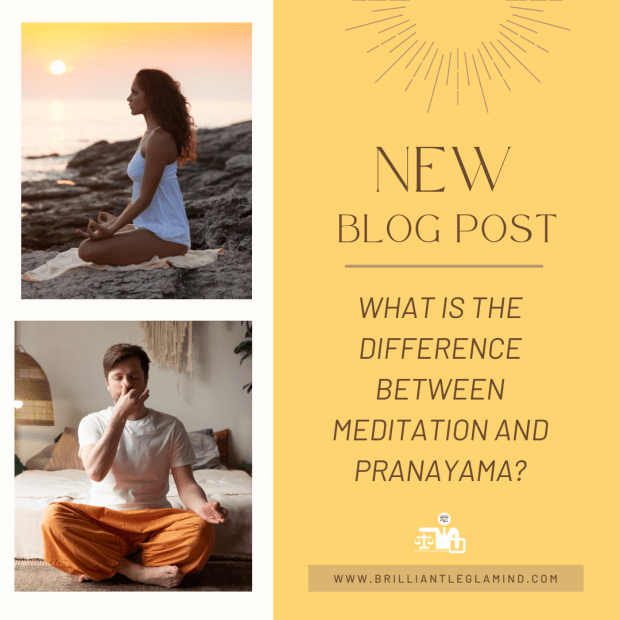
What Is the Difference Between Pranayama and Meditation?

Having taught meditation now for nearly 5 years, I commonly get comments in my sessions with comments about practices that aren’t, strictly speaking, meditation. They will rave about the benefits of box breathing or mention that their therapist/coach/yoga teacher taught them 4-7-8 breathing and it changed their life. I always welcome these comments and express agreement with their efficacy, since getting into technical differences of the practices is not always beneficial.

Even so, questions like these have made me curious about the differences between pranayama and meditation. Because my experience with meditation has primarily been based on practices derived from Buddhism and yoga has never been my first love, I used pranayama very little in my own practice. This summer, I decided to change that and obtained a certification to teach pranayama to expand my knowledge on the subject.

In truth, there are distinct differences between meditation and pranayama and these differences matter. That is not to say, however, that the practices cannot be effectively combined. This blog post will explore the differences to give you context so that you can decide how best to use them both to support your own practice.

Differences

The first notable difference between pranayama and meditation is origin. This issue can be a little tricky, of course, since there are many types of pranayama and many types of meditation. The secular study of both yogic and Buddhist practices and concepts has also led to a the development of further practices that may intertwine some of these ideas further.

The first fundamental difference between meditation and pranayama is breath. Though meditation very commonly involves the breath, focus on the breath is not required for meditation. Practices like loving-kindness or body scan, for instance, don’t use the breath as a focal point and numerous other focal points (such as a mantra, candle flame, sounds, or mental images) can be used in place of the breath. Pranayama, on the other hand, is the practice of working with the breath.

A less obvious difference is that pranayama derives from yogic practices and most of the most popular forms of meditation (Vipassana, Zen, loving-kindness, tonglen, etc.) derive from Buddhist philosophy. This distinction may not matter so much for practitioners who just want relief or a good support, but the different origins shed light on the different focuses of the practices.

Clearly, different teachers and schools of thought can modify this idea, but yogic philosophy is much more concerned with clearing the mind while Buddhist meditation is more intended to make peace with the mind. Thus, Vipassana or Zen meditators are usually encouraged to observe the breath and allow the mind to calm on its own. With pranayama, however, the breath is used as a tool and often manipulated for the purpose of clearing the mind, balancing energy, and creating physical benefits.

Similarities

Though there are differences between pranayama and meditation, they are not entirely distinct and need not always be kept separate. The first thing that pranayama and meditation share are the potential benefits. Because they both address the fundamentals of human life, both meditation and pranayama can result in mental and physical benefits. Done correctly, both practices can help the mind and body sync up and calm down.

For this very reason, both meditation and pranayama can be important and beneficial supports for individuals. They both deserve a place in a regular self-care regimen and they both can be used in the moment to maintain balance during difficult times. As one example, I really enjoy using alternate nostril breath during the day as a quick break to refresh myself and take a pause.

Another similarity is that pranayama and meditation go very nicely together. Yogic philosophy deems meditation as one of its eight limbs and so it is not uncommon for yoga classes to feature breath work and meditation. In the same way, many meditation teachers brought up in the Buddhist tradition (myself included) often incorporate pranayama into their guided meditation.

For instance, one way that I began experimenting with pranayama recently is to use it at the beginning of my meditation sessions as a way to quickly ground and relax myself. I have found ujayi breath to be a great tool for reconnecting with the breath due to its physical and auditory enhancements of the breath.

In short, pranayama and meditation are not the same. They have different origins and in many cases the purposes of the practices are distinct. Even so, they both have benefits for mental and physical health and they can complement each other nicely. Now that you understand how the practices are different but similar, the next step is to explore them both and determine what combination of practices work best for you.

Want to learn more about mindfulness and compassion? Check out my new book, How to Be a Badass Lawyer, for a simple guide to creating a meditation practice of your own in 30 days. And to share mindfulness with your little one, check out my new children’s book, Mommy Needs a Minute.

Like this post? Subscribe to the blog here or follow us on social media:

Four Situations in Which Meditation May Not Be the Answer

On a blog about mindfulness, the title for this post may be surprising. I have touted the benefits of meditation for more than two years now and explained myriad meditation practices. Nevertheless, I seem to be admitting here that meditation is not a solution for all problems.

To be perfectly clear, I am not merely seeming to make this admission; I am freely and fully admitting it. Meditation is not always the answer. Over the last ten years, meditation has served so many purposes in my life that I probably couldn’t account for them all if I tried to compile a list. It was foundational to personal growth and healing and it has served as the hub for developing other useful habits, like exercise.

Even so, one of biggest power moves I made in my meditation practice was learning when meditation wasn’t the answer. Ironically, this happened because cultivating mindfulness helped me pay more attention to what I needed and what practices supported me best in different situations.

To help support your own discernment in this manner, here is the list of situations in which meditation is not my first go-to practice.

1. Too Much Energy.

If I am feeling physically energetic, the last thing I want to do is sit for an extended period of time. This could be because I am experiencing stress or anger or even excitement. When you pay attention, you may notice that all of these states create physical energy in the body. My experience has taught me that it works better to go with the energy rather than fight against it. For me, this usually means I need some form of movement.

So, when I feel too jittery, I don’t push meditation. Instead, I take it as an opportunity to get my workout done for the day. If I am strapped for time, I may take a brief walk or do a quick stretch. This is not a hard and fast rule, but using up energy when I feel amped up is using mindfulness as self-care even if I choose not to meditate in that moment.

2. Intense Spiraling Thoughts.

Movement may help when the body has too much energy, so it may stand to reason that meditation may be perfect when the mind is overactive. This can be true. I intentionally choose to meditate often when my mind has thoughts rattling around in it. When the energy level on this is noticeable but moderate, meditation is ideal because it allows the mind to calm down and sort itself out.

But when the energy is high–signified by the volume, amount, or quality of the thoughts–I don’t meditate first. Instead, I have experienced greater relief and clarity from letting the thoughts go in other ways. The option that is most convenient and fully within my control is writing. I will write or type out any thoughts that come to mind for a few minutes just to get them out. If you aren’t a writer, you can also just say the thoughts out loud or do a voice memo if you don’t like talking to yourself.

If you’re lucky, you may end up writing something pretty darn good. Regardless, there’s no need for you to show what you write to anyone or even look at it again yourself. The point here isn’t to create a perfect monologue but just to get some distance from the thoughts. When the thoughts are spiraling hard, I use this strategy first before I meditate.

3. Overwhelming Emotions.

Emotions will come up in meditation so I am not telling you not to meditate if you have emotional responses or to stop practicing if they arise. With that said, when your emotions are very high, you may be best served by not trying to deal with them all by yourself. In the case of strong emotions, especially ones that seem overwhelming, it may work better to seek social support.

I have struggled with this in the past because I had the seemingly logical but misleading idea that talking about a situation wouldn’t help. While sadly true in many cases, this thought is misleading. There is more than one way to address a problem. You can address the root cause or the symptoms. Even if talking with a confidant won’t solve the problem, it may help you handle the symptoms.

Meditators may also have the idea that they need to learn to handle their emotions by themselves. This too is misleading. While it’s empowering and commendable to develop skills for emotional self-care, knowing when to seek support from others is part of that skill set. Sitting in meditation is one great part of your toolkit, but when emotions approach overwhelm seeking social support may serve you better.

4. It’s Time for Action.

Meditation helps you get clarity about a lot of things, but the practice in itself won’t create any change unless conduct follows. Sometimes in mediation practice, you may experience difficulty because you recognize things that need to change. Perhaps you feel regret or guilt because of something you did. Or perhaps you notice real hurt or difficulty in your life that being busy in life had allowed you to overlook.

Meditation practice is intended to cultivate present moment awareness, but if we let it, it can also cultivate wisdom too. Sometimes that wisdom is trying to tell us we need to take action out in the world. If I recall a recent situation and feel strong feelings of guilt, self-compassion may help me in my meditation practice. But in my life, a conversation with the affected person and an apology will serve me better.

If you are reeling from a personal loss, mental health challenge, or major life decision, meditation may also not be ideal (at least on its own). For those new to the practice, trying meditation in such circumstances may just add stress to life. Even very experienced meditators may struggle with the practice in challenging life circumstances. In short, sometimes it makes more sense to focus on cultivating stability in our lives before or instead of cultivating mindfulness in meditation practice.

In short, though I stand by my years of proclaiming the benefits of meditation, I admit that the practice is no panacea. If you practice meditation long enough, you are bound to see that other supports may be more helpful to you in certain situations. Thus, as you work to cultivate mindfulness in your life, never forget to develop self-compassion and wisdom too. Meditation is there as a practice to support a good life and it’s a good thing that it’s not the only one.

Want to learn more about mindfulness and compassion? Check out my new book, How to Be a Badass Lawyer, for a simple guide to creating a meditation practice of your own in 30 days. And to share mindfulness with your little one, check out my new children’s book, Mommy Needs a Minute.

Like this post? Subscribe to the blog here or follow us on social media:

Five Things to Know about Meditation with Trauma

Though I am trained to teach mindfulness, yoga, and compassion and have undergone trauma-sensitive training, I am not a trauma healer. As a meditation teacher, however, I have had questions arise about whether meditation is right for a person who has been diagnosed with trauma or had a traumatic experience.

To be sure, meditation is something that can help people who have experienced trauma because it can increase mental focus, body awareness, and self-compassion.

Concerns about Meditation for People who Have Experienced Trauma

Even so, meditation could include some risks for those who have experienced trauma. The experience of meditation can allow traumatic experiences to resurface, whether in the body or mind, and this can result in adverse symptoms.

Moreover, trauma is exceedingly common and researchers now understand that it can be caused by a broad range of experiences. Thus, the reality is that past trauma may be a concern for a large portion of people who explore meditation.

With this background in mind, my perspective as a mindfulness teacher and someone is that meditation practice can be beneficial for those who have experienced trauma. With that said, individuals who are experiencing symptoms associated with trauma may need additional supports to ensure that their practices help them heal. Here are my recommendations for those supports.

1. Take Your Time.

I recommend a gradual approach to building a meditation practice for all people. It makes sense to give yourself time to acclimate to the experience of mindfulness and it is much easier to find a few minutes of free time in your schedule.

When it comes to trauma, though, this is even more essential. Trauma is more common than you’d think. Though less than 10% of people are diagnosed with PTSD, it is estimated that as many as 70% of people worldwide have experienced a traumatic event.

Traumatic experiences can occur for incidents that may fall outside of the incidents that give rise to a PTSD diagnosis, including medical procedures, auto collisions, work-related incidents, or interpersonal experiences especially when they intersect with issues of race, class, religion, sex, gender identity, or sexual orientation.

This can even be true if we don’t have a clear memory of the traumatic event. Thus, the reality is that many of us may not know how a practice will affect us or what might surface in practice. Taking a gradual approach can allow you to monitor this more carefully and adjust or seek support if you need it.

2. Get Support.

Technology has enabled us to learn meditation on our own but this doesn’t mean it is necessarily ideal. Social support is helpful when it comes to meditation and can be essential for dealing with trauma. If you are working with a care provider to treat symptoms associated with trauma, consult them first and keep them updated about your progress.

Likewise, skilled meditation teachers or meditation groups may offer social or technical support for your practice. Trusted relatives and friends may also be able to help you process your experience if you feel comfortable sharing your experience.

Even if you meditate on your own, you do not have to face whatever arises during meditation alone. Moreover, there is no reason for you to strive to use meditation alone to support your healing.

Meditation is a powerful tool but it is most effective as part of an overall self-care regimen that may include therapy, medication, coaching, exercise, and robust social support. Getting support with your practice may help you find or learn the strategies that will work best for you and accelerate the healing process.

3. Protect and Use Your Own Agency.

Many people start meditation thinking that they must do exactly as they are told. This isn’t necessarily true and when it comes to trauma it is certainly not true. Trauma can create a variety of different symptoms for different people.

Some have difficulty with mental images or scenes. Some struggle with intense physical sensations or sensory experiences. Some may not be able to relax because they don’t feel safe. And some people may not be immediately aware how an experience has affected them due to unclear or missing memories.

The good news is that you can modify most meditation practices just like you could any physical exercise. Some helpful modifications might include:

Since trauma can affect the agency of the people it affects, modifying your meditation practice to suit your needs is a way to build skills and personal efficacy. For more ways to modify and support a mindfulness practice in a trauma-sensitive way, I highly recommend the book Trauma-Sensitive Mindfulness by David A. Treleaven (paid link).

4. Find Your Window – Not Your Edge.

Some yoga teachers and internet gurus encourage people to find there “edge.” The use of this term has rarely been defined but I generally understand it to mean that one should toe the line of their personal limits. This may sound cool and there may be times when it is empowering to see what you can do. But when it comes to meditation, I strongly prefer windows to edges.

By this, I mean the window of tolerance, a term coined by Dr. Dan Siegel. It refers to the optimal zone of arousal, where you aren’t bored and listless but not dysregulated.

Segal wasn’t necessarily referring to meditation practice when he coined this term, but it applies. When it comes to trauma or any deep-seated emotional issue, going for the edge too fast runs the risk of overwhelm, repeating trauma, and demoralization.

Focusing instead on finding your window of tolerance, however, is about building skills over time. You focus on facing what you can handle from a mental, emotional, and physical standpoint and you allow that window to gradually open.

For difficulty in life, most of us want the suffering to go away immediately. We want to feel like we can just push a bit harder and get over the mountaintop. Though mindfulness can help us get there, it rarely happens so quickly.

While discipline is a part of the process, so is developing wisdom about what you can’t control. Identifying and staying within your window of tolerance in meditation paradoxically may help you learn to honor your limits and expand them over time.

5. Start with Kindness.

Many people who start meditating want focus and calm, but in the pursuit of that we find something much more important: self-compassion. People who are experiencing trauma may benefit from this because shame and self-judgment are common symptoms following a traumatic experience. Even though self-compassion isn’t automatic for many people, you don’t have to wait weeks and months to learn this lesson.

If you have past trauma or challenging life experiences, kindness should be a cornerstone of your practice. It may take some time to internalize this, but any meditation practice should reinforce the ideas that you are worthy, loved, and deserve to be respected, feel good, and have your wishes honored.

Thus, in starting or structuring a practice, self-kindness should be a focal point. As one of my teachers aptly noted, meditation is a healing art instead of a material art. We shouldn’t be battling through every session, but instead learning how to take better care of ourselves.

Sometimes meditation gets tangled up with self-improvement because the practices can help you behave better out in the world. But one of the big reasons that is true is because the practices can help you understand and care for yourself better. The practices don’t fix you; they help you see without judgment. The way to achieve this is through self-kindness. As you proceed with your practice, kindness should be the focal point and the guide.

Conclusion

These are a few ideas to raise awareness about trauma in the context of mindfulness from the perspective of a meditation teacher and fellow practitioner who has used mindfulness as one aspect of personal healing. In the end, you and your care providers know best whether meditation can support a healthy lifestyle for you.

Meditation can support healing for people who have experienced trauma but supports, including help from trained professionals may be needed. Whether you meditate or not for personal healing, know that your efforts to care for yourself are so important and will contribute to a better world.


Want to learn more about mindfulness and compassion? Check out my new book, How to Be a Badass Lawyer, for a simple guide to creating a meditation practice of your own in 30 days. And to share mindfulness with your little one, check out my new children’s book, Mommy Needs a Minute.

Like this post? Subscribe to the blog here or follow us on social media: