New Free Download: Coping Strategies Ebook

Cover image for blog post sharing free download, Coping Strategies for Difficult Time ebook

When I teach mindfulness, I try to remind people that it is more than coping strategies. For one thing, mindfulness is not a practice or a strategy at all. Mindfulness is a faculty of mind that most human beings have. In addition, mindfulness is not merely about coping. A big part of it is, instead, being with an experience as it is.

Even so, the reality remains that mindfulness practices can help us cope. Mindfulness isn’t a practice, but practices and strategies may be needed to help many of us (myself included) tap into it. In this way, one of the benefits that many people experience when they explore mindfulness practices is an increased ability to cope.

Coping Strategies Can Make a Difference

As a lawyer who deals with stress myself and represents officials who themselves face many stressful situations, I have seen firsthand how much better coping can mean. It can mean less fighting. It can mean less fear and angst. It also mean more creativity, better communication, and better results.

It’s an exceptionally hard time for most of us right now. This week, I will be speaking for two separate groups about stress management practices. Both groups specifically requested demonstrations of coping strategies. I endorse a holistic and long-term approach when it comes to stress management but I can understand the desire for in-the-moment coping strategies too.

What’s in the Coping Strategies Ebook?

To that end, I created the Coping Strategies for Difficult Times Ebook. It is an approximately twenty-page guide with practices offered to help you cope in difficult situations. It is divided into 5 chapters:

  1. Using the breath;
  2. Relaxing the body;
  3. Opening the heart;
  4. Dealing with overwhelm; and
  5. When you feel fidgety.

Each chapter has simple practice that can be done quickly in the midst of a difficult situation. It explains why and how to use the breath to quickly regain calm. It also offers a quick practice for connecting with the body or offering yourself compassion when needed. The last two chapters have practices that are ideal for times of overwhelm or when movement is needed to cause a surge of energy.

The Best Coping Strategy Is Social Support

I offer this book as a simple resource that may offer some support in difficult times. This is not to say that one can or should be expected to cope with all life situations on one’s own. In case you are like me and struggle to ask for help, let this serve as a reminder. Social support is the very best coping strategy available. If you need or might benefit from the support of loved one or trained medical professionals, please give that gift to yourself.

How You Can Get the Coping Strategies Ebook

Getting the ebook is easy. You can find it available for download here. While you are there, you can check out our other downloads and resources and Guided Meditations too.


Want to learn more about mindfulness and compassion? Check out my new book, How to Be a Badass Lawyer, for a simple guide to creating a meditation practice of your own in 30 days. And to share mindfulness with your little one, check out my new children’s book, Mommy Needs a Minute.

Like this post? Subscribe to the blog here or follow us on social media:

A Few Breaths Really Can Make a Big Difference

Cover image for blog post explaining why a few breaths can make a difference for lawyers

“Take a breath” they say. The world is crashing down. You are filled with anxiety/rage/existential dread/fatigue or a combination of them all. And they have the audacity to tell you to take a breath. Really? Are they–those unspecified hobgoblins who clearly don’t get it–even in touch with reality?

Look, I get it. I have been on the receiving end of the “take a breath!” comment in the midst of high emotions. It was far more likely to induce me to take a swing at the person who uttered it than to help me calm down. Nonetheless, it is good advice. (Though I must also add that not giving advice to someone experiencing the throes of high emotions is also good advice.)

Sorry to be annoying in this way, but a few breaths really can make a big difference. Here are a few reasons why.

1. 5 Deep Breaths = A Minute

Have you ever paid attention to how long a deep breath takes? By a deep breath, I mean a breath where you fill up the lungs, pause for a beat, empty the lungs, and pause again? Try it and time yourself. It probably takes somewhere between 5 and 10 seconds.

You don’t have to be a math whiz to realize that this means 5 breaths is equivalent to about a minute. When it comes to calming down, easing back, or taking a break, a minute can be a game changer. If you bring the breath tally up to 10, you are in the 2 to 3 minute range. In my book, that’s a full blown meditation.

The point here is that 5 breaths is not nothing. It’s a meaningful chunk of time when used strategically in critical situations.

An image explaining how a few mindful breaths can help lawyers manage stressful situations

2. The Breath Is the Link Between Body and Mind

How can a few breaths have an impact so quickly? As I have written before, the breath is the link between body and mind. Our breath is literally linked to our nervous system. It is the only non-chemical way our brains can consciously modulate our nervous systems.

Thus, if time is short or quick stability is needed, noticing the breath is the most direct route to managing emotions. We can’t always have perfect control over this in difficult times but with practice we can learn to slow down or disrupt an emotional chain reaction. This can give us more agency to care for ourselves and maintain stability in difficult circumstances.

3. Emotions Don’t Last Long

Now you might be thinking, “there’s nothing magical about the 1-3 minute range.” If so, that’s understandable but it is overlooking something.

Did you know that emotions, at least the physical experience of them, only last about 90 seconds in the body? One reason why meditation can be so impactful is that it helps us watch this play out.

Not only can pausing and sitting with emotions help us see that they quickly shift from one emotion to another. But also watching emotions helps us see that they are often short-lived when we don’t let them mix too much with protracting thoughts.

What on earth are we to do while waiting for this 90-second bout of physical intensity to subside? Ahem, allow me to suggest 5 to 10 deep breaths. Now do you get my drift?

An image explaining that emotions don't last long which is why a few breaths can offer meaningful help

4. Just Pausing Can Help with Overwhelm

So what about the times when you are so overwhelmed that you can’t even identify emotions in your body? This, I know, is one of the worst experiences to have.

Overwhelm happens when you encounter something difficult and you feel like you don’t have the support, resources, or personal fortitude to survive it. Obviously, calming down, reassessing, and reconnecting with sources of strength is essential. But before you can do that you have to get your bearings.

In my experience, overwhelm usually calls for an initial pause. When things are tough, taking a moment to come back to your body and reestablish some calm can help. Complicated practices are a challenge here because you may not have the presence of mind to use them.

This is why so many people swear by box breathing or other pranayama strategies. They are simple and effective and can be a link back to reality and yourself. In the same way, remembering to take just a few breaths can help you deal with overwhelm.

5. A Few Breaths Can Grow Into More

And the final reason that a few breaths really matters? You don’t have to stick to just a few breaths. Ten years ago, I started meditating at 1 to 2 minutes a day. Over time, I gradually increased the time I could spend sitting.

A few breaths can make a world of difference in tense times, but as you get more comfortable those few breaths can serve as a foundation for further practice and exploration. You can learn to sit for longer periods, you can try other transformative practices, or you can incorporate breathwork into your physical fitness routine. In themselves, a few breaths can make an impact but honing the skill of connecting with the breath can support you in myriad other ways beyond momentarily calming down.

I’m sorry if this post was annoying or kind of basic. If there’s anything meditation can teach us, though, it’s that basic things are often true and can be impactful. The breath is one of those things and a few breaths really can make a big difference.

If you want to test this theory, check out our 5 and 10 breath meditations here or on Insight Timer:


Want to learn more about mindfulness and compassion? Check out my new book, How to Be a Badass Lawyer, for a simple guide to creating a meditation practice of your own in 30 days. And to share mindfulness with your little one, check out my new children’s book, Mommy Needs a Minute.

Like this post? Subscribe to the blog here or follow us on social media:

Why Do We Focus on the Breath?

Cover image for blog post explaining why we focus on the breath in meditation

Nearly every guided meditation and meditation teacher out there tells you to focus on the breath. It’s something so basic that you may have never asked why. The breath calms us down, right? Doesn’t that make it the obvious focal point for mindfulness practice?.

Though a common assumption, that’s not entirely true. The reason we focus on the breath in meditation may surprise you.

The Breath Is a Link to Your Nervous System

The breath is a way to regulate our nervous systems. In fact, it is the only non-chemical way to do so. Our breath is directly linked to our autonomic nervous systems. And when I say linked, I mean it literally.

As you are reading. put your hand on your diaphragm in your mid to lower abdomen and pay attention to its position. Your diaphragm is below the lungs and heart and they all rest against your spinal column. The diaphragm is controlled by the phrenic nerve and, in turn, it can activate the vagus nerve.

This connection means that your breath sends signals to the your body and mind constantly. Any change in breath can create a domino affect that can affect your behavior, mood, emotions, and thoughts.

Image with quote explaining that the breath links the mind to the nervous system

The Breath Does More Than Calm Us Down

When I said above that it’s not “entirely true” that the breath calms you down, I wasn’t lying. In most daily experiences, we focus on the breath to calm down. That usually means we try to “catch our breath” by slowing down our rate of breathing and breathing more deeply.

Whether we notice this or not, in situations like this we may be focusing on the exhale in our breath. Focusing on the exhale and slowing down our rate of breath will calm us down. The exhale is linked to our parasympathetic nervous system. When our exhale becomes slower and longer than our inhale, it sends a signal to our body and brain that we are safe and can enter “rest and digest” mode.

The inhale, though, can do the opposite. If we try deeper and faster inhales, we may notice our heart rate start to increase and other bodily systems activating. While many lawyers try meditation and breathwork to calm down, there are some styles of practice intended to rev the body and mind back up.

An image explaining how the breath connects mind and body in mindfulness and meditation practice

Why Understanding the Breath Matters

So why is this important to know? It is useful for several reasons. First, remembering the breath’s role as a bodily function may help you see it more functionally in your meditation practice. If your breath is not smooth or slow or even, it can be very easy in meditation practice to get upset about that or feel like you are doing something wrong. Remembering the role of the breath from a functional anatomical perspective may help reduce judgment.

Another reason that understanding the purpose of breath focus helps is that it can help us give ourselves what we need. If you experience difficult feelings or thoughts during meditation, you can learn to use the breath like the break pedal in your car. Not only will focusing on the breath disrupt the thoughts and emotions; it can help you slow down and ease back in your body.

In the same way, you could use breathwork to re-energize yourself when you are in a slump. Instead of a coffee, you could try some breathwork with more intense inhales and see how it affects you. If pranayama is not your thing, try some physical movement or exercise to achieve the same thing. Even a walk around the block is likely to automatically trigger bigger and deeper inhales which will energize the body and mind.

Image with options for focusing on the breath for mindfulness and meditation practice

You Have Options for Breath Focus

As I have written before, the particular location of your focus is not essential to notice these things. You can focus on your breath at your nose, sinuses and throat, chest or shoulders, or belly. To bring attention to the energetic impacts of your breath though, pay particular attention to your inhale v. exhale, the lengths of each, and any pauses in between.

With this background, hopefully it is clearer now why meditations and teachers so frequently direct you to focus on your breath. Of course, it is always with you and that makes it a great focal point for formal and informal practice.

Practicing breath focus or breathwork, though, gives you a tool for self-regulation that can serve you well in formal practice and in life. If you can learn to notice your breath, you can also learn to manage it. That can give you greater agency for handling the stresses and energy slumps of life. And if you can do that, it opens doors for facing many other challenges with a little more skill and ease.

To try some breath focus practices, check out our meditations on Insight Timer or here:


Want to learn more about mindfulness and compassion? Check out my new book, How to Be a Badass Lawyer, for a simple guide to creating a meditation practice of your own in 30 days. And to share mindfulness with your little one, check out my new children’s book, Mommy Needs a Minute.

Like this post? Subscribe to the blog here or follow us on social media:

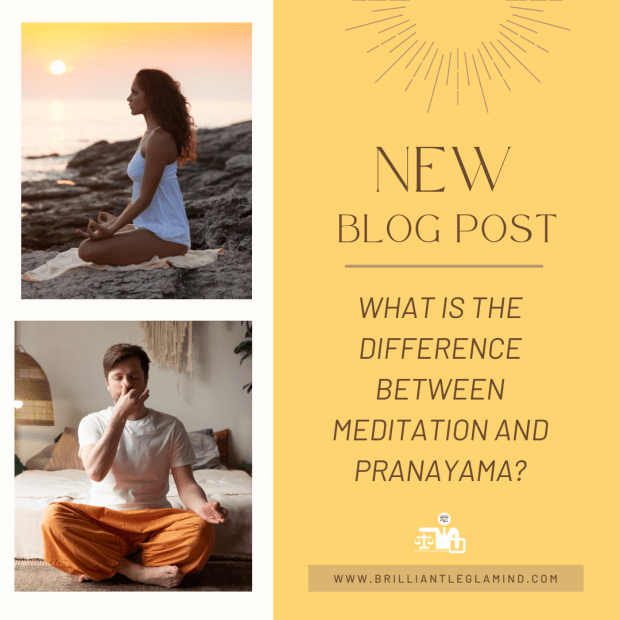
What Is the Difference Between Pranayama and Meditation?

Having taught meditation now for nearly 5 years, I commonly get comments in my sessions with comments about practices that aren’t, strictly speaking, meditation. They will rave about the benefits of box breathing or mention that their therapist/coach/yoga teacher taught them 4-7-8 breathing and it changed their life. I always welcome these comments and express agreement with their efficacy, since getting into technical differences of the practices is not always beneficial.

Even so, questions like these have made me curious about the differences between pranayama and meditation. Because my experience with meditation has primarily been based on practices derived from Buddhism and yoga has never been my first love, I used pranayama very little in my own practice. This summer, I decided to change that and obtained a certification to teach pranayama to expand my knowledge on the subject.

In truth, there are distinct differences between meditation and pranayama and these differences matter. That is not to say, however, that the practices cannot be effectively combined. This blog post will explore the differences to give you context so that you can decide how best to use them both to support your own practice.

Differences

The first notable difference between pranayama and meditation is origin. This issue can be a little tricky, of course, since there are many types of pranayama and many types of meditation. The secular study of both yogic and Buddhist practices and concepts has also led to a the development of further practices that may intertwine some of these ideas further.

The first fundamental difference between meditation and pranayama is breath. Though meditation very commonly involves the breath, focus on the breath is not required for meditation. Practices like loving-kindness or body scan, for instance, don’t use the breath as a focal point and numerous other focal points (such as a mantra, candle flame, sounds, or mental images) can be used in place of the breath. Pranayama, on the other hand, is the practice of working with the breath.

A less obvious difference is that pranayama derives from yogic practices and most of the most popular forms of meditation (Vipassana, Zen, loving-kindness, tonglen, etc.) derive from Buddhist philosophy. This distinction may not matter so much for practitioners who just want relief or a good support, but the different origins shed light on the different focuses of the practices.

Clearly, different teachers and schools of thought can modify this idea, but yogic philosophy is much more concerned with clearing the mind while Buddhist meditation is more intended to make peace with the mind. Thus, Vipassana or Zen meditators are usually encouraged to observe the breath and allow the mind to calm on its own. With pranayama, however, the breath is used as a tool and often manipulated for the purpose of clearing the mind, balancing energy, and creating physical benefits.

Similarities

Though there are differences between pranayama and meditation, they are not entirely distinct and need not always be kept separate. The first thing that pranayama and meditation share are the potential benefits. Because they both address the fundamentals of human life, both meditation and pranayama can result in mental and physical benefits. Done correctly, both practices can help the mind and body sync up and calm down.

For this very reason, both meditation and pranayama can be important and beneficial supports for individuals. They both deserve a place in a regular self-care regimen and they both can be used in the moment to maintain balance during difficult times. As one example, I really enjoy using alternate nostril breath during the day as a quick break to refresh myself and take a pause.

Another similarity is that pranayama and meditation go very nicely together. Yogic philosophy deems meditation as one of its eight limbs and so it is not uncommon for yoga classes to feature breath work and meditation. In the same way, many meditation teachers brought up in the Buddhist tradition (myself included) often incorporate pranayama into their guided meditation.

For instance, one way that I began experimenting with pranayama recently is to use it at the beginning of my meditation sessions as a way to quickly ground and relax myself. I have found ujayi breath to be a great tool for reconnecting with the breath due to its physical and auditory enhancements of the breath.

In short, pranayama and meditation are not the same. They have different origins and in many cases the purposes of the practices are distinct. Even so, they both have benefits for mental and physical health and they can complement each other nicely. Now that you understand how the practices are different but similar, the next step is to explore them both and determine what combination of practices work best for you.

Want to learn more about mindfulness and compassion? Check out my new book, How to Be a Badass Lawyer, for a simple guide to creating a meditation practice of your own in 30 days. And to share mindfulness with your little one, check out my new children’s book, Mommy Needs a Minute.

Like this post? Subscribe to the blog here or follow us on social media: